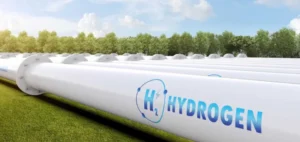

Hydrogen Germany, China, the Central Asian country can also count on its inexpensive renewable energies, its potential abundance compared with Germany, and the possibility of achieving economies of scale directly in its domestic market.
When it comes to electrolysis, on the other hand, while Chinese electrolysers are the cheapest and most widespread, they are not the most technologically viable.
In this respect, Germany still stands out, but is this enough to maintain global leadership in green hydrogen?
Hydrogen Germany, China: who’s the leading producer?
China is the world’s leading producer of grey hydrogen
China is currently the world’s leading producer ofhydrogen, accounting for 1/3 of total output.
The country produces nearly 20 million tonnes of hydrogen a year, mainly from the industrial and petrochemical sectors.
Hydrogen is mainly used in the production of ammonia for fertilizers, and is derived from fossil fuels.
This type of hydrogen is known as grey hydrogen.
It accounts for nearly 95% of global production.
Unlike grey hydrogen, which is particularly polluting, green hydrogen accounts for just 3% of the world market.
In China, most hydrogen is produced from coal, making it a major source of pollution.
But Beijing wants to go green with hydrogen
Under these conditions, the Chinese government is placing increasing emphasis on decarbonizedhydrogen production from renewable energies (RE).
Two methods are currently being used to decarbonize production.
The first consists of installing a carbon capture and storage (CCS) unit along the production chain.
The second relies on electrolyzers that produce hydrogen from the separation of water.
In 2015, Beijing included decarbonized hydrogen production in its Made in china 2025 plan.
However, it wasn’t until 2019 that China really got into the global game.
The country’s plan includes tax cuts and massive subsidies for the sector.
China accumulates competitive advantages
No. 1 global investor in renewable energies
To produce greenhydrogen, manufacturers will need large quantities of electricity from renewable sources.
The availability and cost of these sources will play a decisive role in the deployment of hydrogen.
In this respect, China has a major comparative advantage over Germany.
The country can count on its status as the world’s leading producer of renewable energies.
China accounts for almost a third of the world’s installed solar and wind power capacity.
Conversely, Germany suffers from a low solar energy endowment, coupled with limited wind power potential in the north of the country.
As a result, Berlin is investing in Morocco to compensate for its low solar output, which is driving up costs.
The advantage of economies of scale
Added to this advantage in terms of RE endowments is the major advantage of economies of scale for China.
Benefiting from a huge, highly protected domestic market, Chinese companies can rapidly become competitive on the export market for hydrogen.
For solar and wind power, for example, Beijing has been able to use these economies of scale to catch up.
For Germany, this brings to mind the traumatic experience of the solar industry crisis.
Long a leader in the manufacture of photovoltaic panels, the country had seen the Chinese literally flood European markets.
In just a few years, economies of scale enabled Chinese producers to wipe out virtually all German manufacturers.
All the signs are that Beijing intends to use the same strategy to dominate the hydrogen market.
Competition for electrolyzers
China’s advantage in alkaline electrolyte
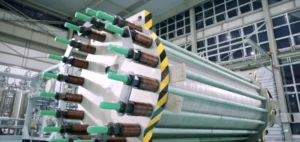
In the future, electrolyzers will represent a major technological challenge in the global competition for greenhydrogen.
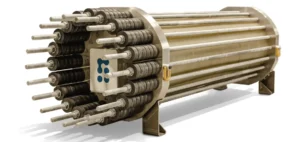
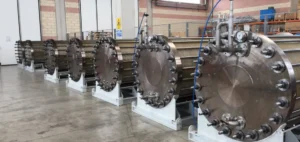
Today, electrolyzers can be divided into three technologies: proton exchange membrane (PEM), alkaline electrolyte and solid oxide electrolyte.
PEM electrolyzers are the latest on the market.
Conversely, alkaline electrolysis is the most widely used technology in water electrolysis, and has been for a long time.
In this technology, China has an enormous comparative advantage in terms of cost.
According to BloombergNEF, Chinese electrolyzers cost 80% less than their foreign competitors.
In fact, Beijing boasts nearly 50% of the global alkaline electrolyte market.
Germany’s advantage in PEM and solid oxide electrolyte technologies
Germany, on the other hand, has a head start in PEM and solid oxide electrolyte technologies.
In the PEM market, Germany alone accounts for almost 20% of global production.
It is also home to the main industry leaders, such as Siemens, ThyssenKrupp and Sunfire.
This technological advantage could prove crucial in the years to come.
In fact, PEM technologies make it easier to integrate the intermittency of renewable energies into the electrolysis process.
This is due to the ease with which the machine can be stopped or restarted.
In other words, PEMs make it easier to reduce the costs associated with the variability of renewable energy production.
This is why Germany still has a head start over China in the production of greenhydrogen.
Despite recent interest, China’s specialization in alkaline electrolytes is not conducive to integrating renewable energies into hydrogen production.
To remain competitive in the long term, however, Germany will need to secure a low-cost supply of low-carbon electricity.
The recent agreement with Morocco could play a decisive role here.