Ankara warns over energy security after attacks on Russian tankers
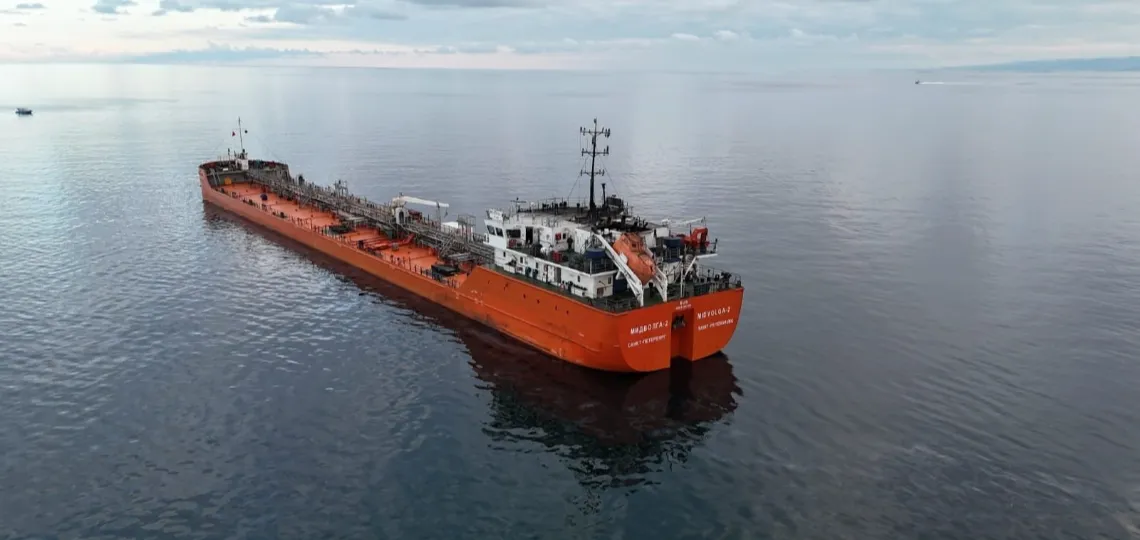
Three Russian tankers targeted off the Turkish coast have reignited Ankara’s concerns about oil and gas supply security in the Black Sea and the vulnerability of its subsea infrastructure.
| Sectors | Nuclear Energy, Gas, Fission, Natural Gas |
|---|---|
| Themes | Policy & Geopolitics, Energy Security |
Turkey has raised concerns over increasing threats to its energy supply after three Russian tankers were attacked in the Black Sea. Minister of Energy and Natural Resources Alparslan Bayraktar highlighted the risk to two undersea pipelines connecting Russia to Turkey: Blue Stream and TurkStream.
Vulnerable energy infrastructure
During a press conference, Bayraktar stated that energy infrastructure must remain outside the scope of armed conflicts, referencing the sabotage of the Nord Stream pipeline in 2022. He said Turkey is heavily dependent on imported natural gas, with Russia supplying nearly half of the country’s energy needs. He called for uninterrupted energy flows in the Black Sea region and through the Bosphorus and Dardanelles straits.
The recent attacks were claimed by Ukraine, which reported that naval drones had struck two tankers on November 28, followed by a third on December 2 as it headed towards the Turkish port of Sinop. President Recep Tayyip Erdogan condemned the attacks, calling them a threat to navigational safety and the environment, particularly within Turkey’s exclusive maritime zone.
Energy diversification in focus
In response to international pressure, particularly from the United States, to reduce its reliance on Russian hydrocarbons, Ankara is working to diversify its energy sources. Recent deals have been signed with American firms for the purchase of liquefied natural gas. Bayraktar nevertheless defended Turkey’s energy relationship with Russia, calling Moscow “a reliable supplier” since the 1980s.
State-owned energy company BOTAS recently renewed a gas import contract with Gazprom. Meanwhile, energy cooperation also includes nuclear development, with Russian state conglomerate Rosatom constructing the Akkuyu nuclear power plant.
Nuclear project faces financial bottlenecks
The Akkuyu project, located on the Mediterranean coast, will include four reactors expected to supply around 10% of Turkey’s electricity demand. Despite progress, the site has experienced delays linked to international sanctions restricting the transfer of Western components to Russian entities.
Bayraktar said Turkey had turned to Chinese suppliers for some equipment. However, financing difficulties persist, including $2 billion “stuck in JP Morgan for a long time” as a result of frozen Russian assets by Western countries. “We need to play a moderator role to help release this money because this is going to be used in the project,” the minister stated.