The French Chemical Industry in Peril Faced with EDF Reform

EDF's recent reform of electricity tariffs is causing tension in the French chemical industry, raising fears of relocation and job losses.

Share:

Comprehensive energy news coverage, updated nonstop

Annual subscription

8.25$/month*

*billed annually at 99$/year for the first year then 149,00$/year ​

Unlimited access • Archives included • Professional invoice

OTHER ACCESS OPTIONS

Monthly subscription

Unlimited access • Archives included

5.2$/month*
then 14.90$ per month thereafter

FREE ACCOUNT

3 articles offered per month

FREE

*Prices are excluding VAT, which may vary depending on your location or professional status

Since 2021: 35,000 articles • 150+ analyses per week

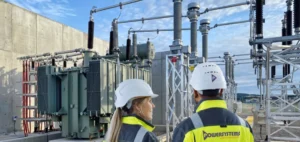
The change in electricity prices announced on November 14 by EDF, in consultation with the French government, has met with a frosty reception from the chemical industry. The latter, major consumers of electricity, are worried about the risk of relocation and job losses. Arkema’s Luc Benoit-Cattin points out that EDF’s new “scheme” does not take into account the specific needs of “electro-sensitive” plants, particularly in terms of protection against price volatility and fairness.

Industry Impacts and Reactions

EDF’s proposals to replace the current system of price regulation have not met with a favorable response from manufacturers. Their main concern is increased exposure to market prices, with no fixed ceiling. Luc Benoit-Cattin pointed to the risk of tariffs rising well above the current threshold in the event of a crisis, citing the example of 2022 tariffs. What’s more, France Chimie’s modeling suggests an average cost well above EDF’s estimates for the coming years.

Economic and social consequences

Frédéric Gauchet of France Chimie draws attention to the doubled cost of electricity post-Covid, a competitive advantage offered to Asian and North American players, and an increased risk of de-industrialization. Insee corroborates this fear, noting a significant drop in production in the chemicals sector following the rise in energy costs linked to the war in Ukraine.

The Financing and Equity Challenge

The new contract system proposed by EDF, involving pre-financing of new power plant construction by customers, is perceived as unfair and financially restrictive. The chemical industry is calling for a revision of this model, including a lowering of the price trigger threshold, the maintenance of tax breaks, and fairer access to capacity reservation contracts.

EDF’s reform poses a major dilemma for the French chemical industry, as it faces financial, competitive and equity challenges. Current negotiations with EDF are crucial to the future of the sector, the country’s largest energy consumer.

The Norwegian government establishes a commission to anticipate the decline of hydrocarbons and assess economic options for the country in the coming decades.
Kazakhstan plans to allocate 3 GW of wind and solar projects by the end of 2026 through public tenders, with a first 1 GW tranche in 2025, amid efforts to modernise its power system.
Hurricanes Beryl, Helene and Milton accounted for 80% of electricity outages recorded in 2024, marking a ten-year high according to federal data.
The French Energy Regulatory Commission introduces a temporary prudential control on gas and electricity suppliers through a “guichet à blanc” opening in December, pending the transposition of European rules.
The Carney–Smith agreement launches a new pipeline to Asia, removes oil and gas emission caps, and initiates reform of the Pacific north coast tanker ban.
The gradual exit from CfD contracts is turning stable assets into infrastructures exposed to higher volatility, challenging expected returns and traditional financing models for the renewable sector.
The Canadian government introduces major legislative changes to the Energy Efficiency Act to support its national strategy and adapt to the realities of digital commerce.
Quebec becomes the only Canadian province where a carbon price still applies directly to fuels, as Ottawa eliminated the public-facing carbon tax in April 2025.
New Delhi launches a 72.8 bn INR incentive plan to build a 6,000-tonne domestic capacity for permanent magnets, amid rising Chinese export restrictions on critical components.
The rise of CfDs, PPAs and capacity mechanisms signals a structural shift: markets alone no longer cover 10–30-year financing needs, while spot prices have surged 400% in Europe since 2019.
Germany plans to finalise the €5.8bn ($6.34bn) purchase of a 25.1% stake in TenneT Germany to strengthen its control over critical national power grid infrastructure.
The Ghanaian government is implementing a reform of its energy system focused on increasing the use of local natural gas, aiming to reduce electricity production costs and limit the sector's financial imbalance.
On the 50th anniversary of its independence, Suriname announced a national roadmap including major public investment to develop its offshore oil reserves.
In its latest review, the International Energy Agency warns of structural blockages in South Korea’s electricity market, calling for urgent reforms to close the gap on renewables and reduce dependence on imported fossil fuels.
China's power generation capacity recorded strong growth in October, driven by continued expansion of solar and wind, according to official data from the National Energy Administration.
The 2026–2031 offshore programme proposes opening over one billion acres to oil exploration, triggering a regulatory clash between Washington, coastal states and legal advocacy groups.
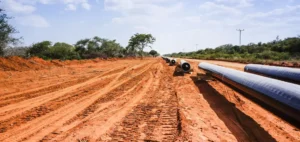
The government of Mozambique is consolidating its gas transport and regasification assets under a public vehicle, anchoring the strategic Beira–Rompco corridor to support Rovuma projects and respond to South Africa’s gas dependency.
The British system operator NESO initiates a consultation process to define the methodology of eleven upcoming regional strategic plans aimed at coordinating energy needs across England, Scotland and Wales.
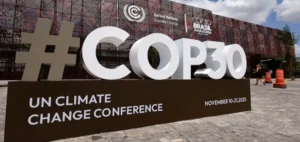
The Belém summit ends with a technical compromise prioritising forest investment and adaptation, while avoiding fossil fuel discussions and opening a climate–trade dialogue likely to trigger new regulatory disputes.
The Asian Development Bank and the Kyrgyz Republic have signed a financing agreement to strengthen energy infrastructure, climate resilience and regional connectivity, with over $700mn committed through 2027.

All the latest energy news, all the time

Annual subscription

8.25$/month*

*billed annually at 99$/year for the first year then 149,00$/year ​

Unlimited access - Archives included - Pro invoice

Monthly subscription

Unlimited access • Archives included

5.2$/month*
then 14.90$ per month thereafter

*Prices shown are exclusive of VAT, which may vary according to your location or professional status.

Since 2021: 30,000 articles - +150 analyses/week.