COP30 locks in adaptation, avoids fossil phase-out and opens a climate regulatory front
The Belém summit ends with a technical compromise prioritising forest investment and adaptation, while avoiding fossil fuel discussions and opening a climate–trade dialogue likely to trigger new regulatory disputes.
| Sectors | Carbon, Carbon Market, Oil, Gas |
|---|---|
| Themes | Policy & Geopolitics |
| Companies | Banque Mondiale |
| Countries | Brazil, China, Germany, France, United States |
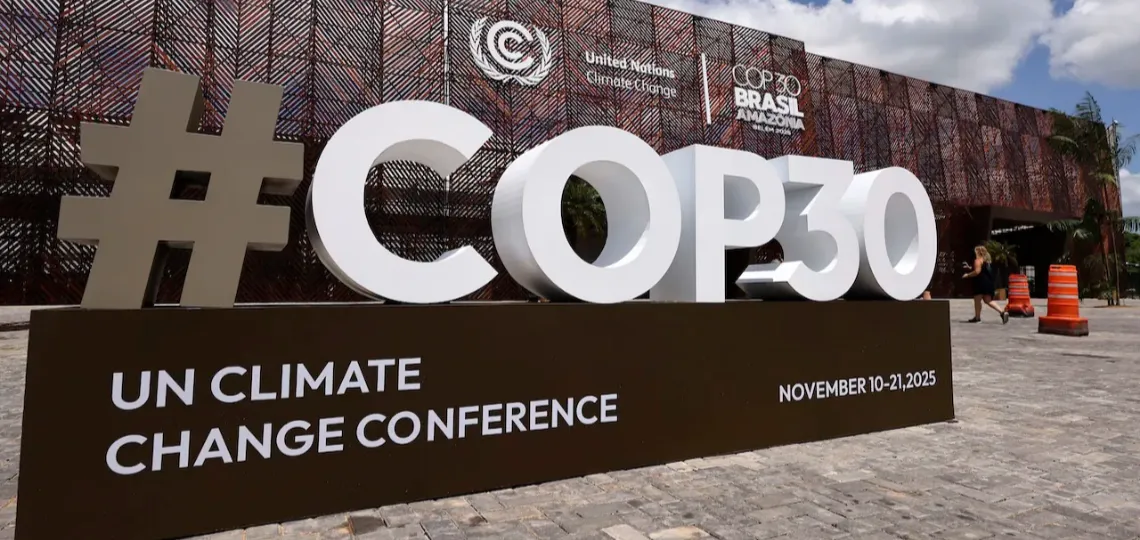
COP30 concluded in Belém with a final text that avoids any binding rule on fossil fuel phase-out, while confirming a pledge to triple adaptation financing by 2035. The agreement also establishes a new framework for dialogue on climate-related trade tensions, signalling a shift in regulatory debate towards the multilateral climate arena.
A voluntary framework that neutralises fossil constraints
The fossil fuel initiative launched in Belém is not supported by any legally binding mandate. Led by the Brazilian presidency, it is structured as a voluntary mechanism outside the decision-making framework of the United Nations Framework Convention on Climate Change (UNFCCC). This architecture prevents direct legal invocation in domestic climate litigation, limiting the normative impact of the text.
The removal of any explicit fossil fuel phase-out roadmap was driven by an alliance of oil and gas exporting countries, including members of the Organization of the Petroleum Exporting Countries (OPEC+), and several major emerging economies. This coalition imposed vague language, avoiding wording that could establish obligations subject to regulatory interpretation at national or international level.
Adaptation: budget priority without new cash flow
The text calls for tripling adaptation finance within an annual climate budget capped at approximately $300bn. This constraint limits the significance of the signal for the most vulnerable countries, as the effort must come from budget reallocation rather than new financial commitments.
Expected projects will focus on resilient infrastructure (ports, roads, networks, water management), heavily reliant on concessional loans. This orientation raises the risk of increased sovereign debt in some countries, without significantly altering the current financing hierarchy, still dominated by mitigation spending.
Trade–climate: China opens a regulatory counterweight
Under Chinese leadership, COP30 endorsed the launch of a “dialogue on trade tensions” related to climate policy. This forum aims to discuss measures seen as protectionist, such as the European Union’s Carbon Border Adjustment Mechanism (CBAM) or certain subsidies under the US Inflation Reduction Act (IRA).
The new multilateral forum increases the likelihood of legal overlap between the UNFCCC and the World Trade Organization (WTO). Positions debated at COP may now be used in future trade disputes, especially regarding non-discrimination and recognition of common but differentiated responsibilities.
A legal–political dialogue with variable geometry
The Belém “mutirão” also introduces the Mission to 1.5, designed to encourage upward revision of Nationally Determined Contributions (NDCs), without setting binding national targets. This mechanism may still be used in domestic litigation or by NGOs to pressure for stronger regulatory alignment.
For companies, this initiative increases regulatory uncertainty. It could drive unilateral tightening of public policies (moratoriums, bans, sectoral taxation) in climate-ambitious jurisdictions, without any stabilised multilateral framework defining implementation thresholds.
Forests: the rise of a hybrid regulatory financial vehicle
The Tropical Forests Forever Facility (TFFF), structured as a $125bn international financial mechanism, combines junior public debt and senior private debt to generate returns used to protect tropical forests. The facility is coordinated with the World Bank but remains legally independent from REDD+ or voluntary offset markets.
Ambiguity regarding the interaction between the TFFF, carbon markets and corporate climate reporting creates a risk of double counting and regulatory fragility. Companies operating in these markets must adjust compliance strategies to anticipate future rules on additionality.
Industrial value chains and regulatory anticipation
The creation of a trade–climate dialogue at COP increases pressure on export-driven industries, particularly those targeting the EU, to anticipate evolving regulatory frameworks. The CBAM is now embedded in a political arena where technical parameters—such as default emission factors or recognition of domestic systems—will be contested multilaterally.
In this context, exporters of steel, aluminium, fertilisers or cement must reinforce carbon compliance and prepare for a decade of rising regulatory variability. The absence of binding multilateral norms shifts the burden to national frameworks, increasing the legal fragmentation of global trade.