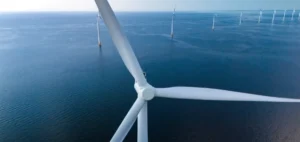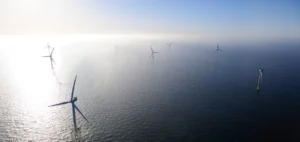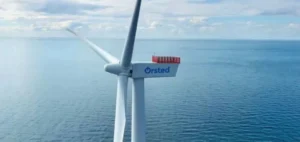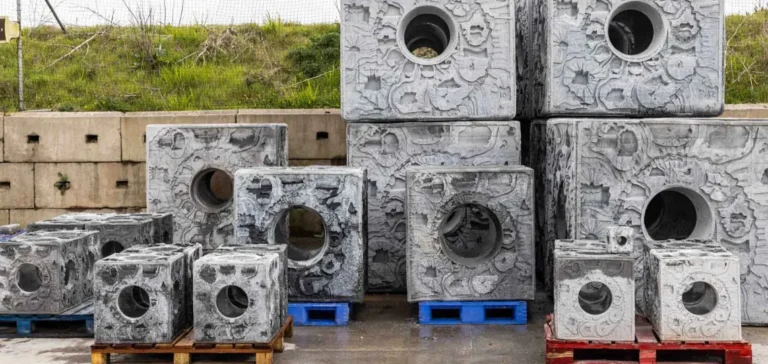

German group RWE and French company TotalEnergies have signed an agreement with ARC Marine for the supply of 66 Reef cubes® structures to be used at the future OranjeWind offshore wind farm, located in the Dutch North Sea. These blocks will be placed around the scour protection of 11 turbines once construction is completed, following the start of foundation work in 2026.
Large-scale deployment of artificial reefs
The 66 units will provide a total habitat surface of 1,440 m². Each cube, weighing nearly 6,000 kg and measuring 1.5 metres in height, is made from low-carbon, recycled materials certified for marine environmental safety. Their cuboid design ensures stability, facilitates transport and enables simplified deployment, remaining in place throughout the operational lifespan of the wind farm.
Shell-based materials will also be integrated into the mix to support native oyster settlement and long-term habitat formation. These structures aim to create suitable conditions for marine flora and fauna, particularly species such as cod and native oysters, selected for their positive ecological impact.
Expected results on local ecosystems
Previous research conducted by ARC Marine has shown that a wide range of species inhabited areas in and around the Reef cubes® during trials in the North Sea. The implementation at OranjeWind represents one of the most extensive deployments of this type at commercial scale. The selected approach aligns with Dutch regulatory guidance for offshore environmental integration.
RWE and TotalEnergies confirmed their intent to combine renewable energy production with marine ecosystem stability, without altering standard offshore construction procedures. The Reef cubes® will remain in place for the full asset lifecycle while providing valuable data for future assessments of underwater biodiversity.
Shift towards commercial delivery
According to ARC Marine, the order marks a transition to full-scale commercial delivery of their solutions. The company states that nature-inclusive design is no longer limited to pilot projects but is now integrated into mainstream marine infrastructure standards.