Ørsted and ESB secure 900 MW offshore contract off the coast of Ireland
The Irish government has provisionally awarded development rights for the Tonn Nua offshore site to the Ørsted-ESB joint venture under a 20-year contract supporting a 900 MW project.

| Sectors | Wind Energy, Offshore |
|---|---|
| Themes | Investments & Transactions, Financing, Project Development |
The joint venture between Danish energy company Ørsted and Irish utility Electricity Supply Board (ESB) has been provisionally granted rights to develop the Tonn Nua site, located off County Waterford. The award was made under Ireland’s second Offshore Renewable Electricity Support Scheme (ORESS), led by the Department of Climate, Energy and the Environment.
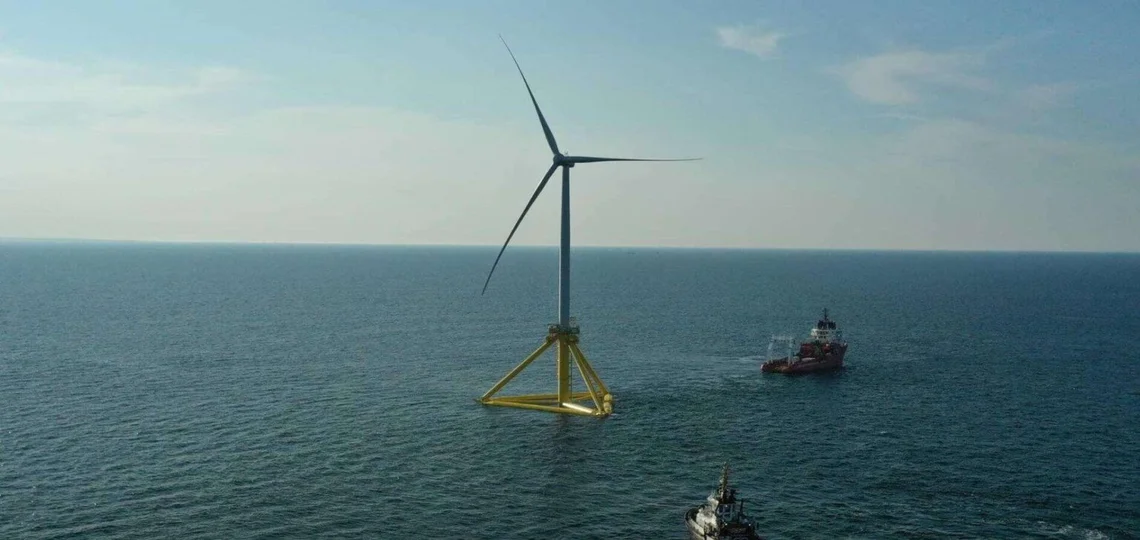
Tonn Nua is the only designated site under this auction. Spanning 306 km², it will host a 900-megawatt fixed-bottom offshore wind farm. The 20-year partially indexed contract for difference (CfD) also grants the right to apply for a seabed lease and a national grid connection.
An early-stage development project
The Ørsted-ESB joint venture must now secure the necessary permits, including Maritime Area Consent and a Marine Usage Licence from the Irish Maritime Area Regulatory Authority. These are required to begin site assessments and surveys ahead of submitting a planning application for construction.
The project remains at an early development phase and must pass several internal decision gates, including a detailed value creation review. Final investment decision is expected around 2031, with first power generation projected for the mid-2030s.
Scaling up Ireland’s offshore wind capacity
This is the first project selected under Ireland’s new state-led planning framework for offshore wind. The exclusive designation of Tonn Nua for the current auction reflects the government’s approach to focused offshore development while providing investment stability for awarded operators.
The awarded contract ensures a fixed revenue stream for 20 years amid ongoing energy market volatility. For investors, this framework offers long-term visibility over cash flows, particularly as the project moves toward its final investment decision milestone.