Favoritism at EDF: The PNF Appeals Henri Proglio’s and the Group’s Acquittal

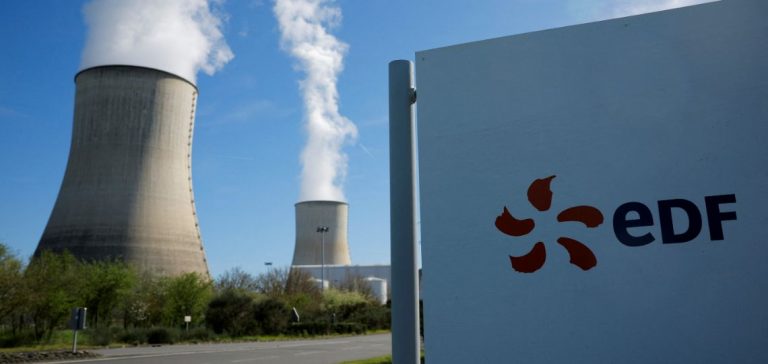
The Parquet National Financier (PNF) has announced its decision to appeal the Paris Correctional Court’s ruling, which acquitted Henri Proglio, former Chairman and CEO of EDF, along with the group and eleven other individuals, in a case involving allegations of favoritism. The case centers on a series of consulting contracts directly awarded by EDF between 2010 and 2016, raising concerns about the transparency of the company’s contracting practices.

Share:

Comprehensive energy news coverage, updated nonstop

Annual subscription

8.25$/month*

*billed annually at 99$/year for the first year then 149,00$/year ​

Unlimited access • Archives included • Professional invoice

OTHER ACCESS OPTIONS

Monthly subscription

Unlimited access • Archives included

5.2$/month*
then 14.90$ per month thereafter

FREE ACCOUNT

3 articles offered per month

FREE

*Prices are excluding VAT, which may vary depending on your location or professional status

Since 2021: 35,000 articles • 150+ analyses per week

At the core of the issue are 44 contracts awarded without competitive bidding, ranging from 40,000 to 4 million euros, to consultants from various sectors, including lawyers, journalists, former corporate executives, and communication experts. The services provided included strategic consulting, crisis management, lobbying, and communication services. Most of these contracts were signed under the leadership of Henri Proglio, at a time when EDF was seeking to refine its strategy in a complex competitive environment.

For the PNF, these engagements should have been subject to a competitive bidding process in accordance with the public procurement rules for a semi-public company. However, the court found that “criminal intent” was not proven, thereby acquitting Proglio and the other defendants, some of whom held influential positions in the energy and media sectors, such as Loïk Le Floch-Prigent, former CEO of Gaz de France, and Jean-Marie Messier, former Chairman of Vivendi.

PNF Criticizes Public Procurement Management

The PNF’s appeal is based on the belief that EDF’s management of public contracts operated outside of the regulatory framework, leading to potential misuse of allocated funds. These contracts, awarded without competitive bidding, raise questions about the transparency of financial resource use in large French companies with state ownership. According to the prosecution, these practices are contrary to public procurement regulations and could harm sector competition.

The decision to appeal reflects a desire to strengthen oversight of large public or semi-public companies in terms of compliance with governance standards. The PNF’s goal is to establish clear accountability for the management of these contracts, particularly in times of economic transition when cost control becomes crucial for the competitiveness of these entities.

Personalities Involved in the Case

The consultants acquitted alongside Henri Proglio include several notable figures, such as criminologist Alain Bauer and former SNCF CEO Loïk Le Floch-Prigent. These individuals received consulting contracts in various fields, often related to risk management or communication strategy. The court emphasized that the missions were legitimate and that the lack of evidence of intent to circumvent the rules made a conviction for favoritism impossible.

The case, dating back a decade, is part of a broader context of scrutiny over contract management within companies where the state holds a significant stake. EDF, as a strategic player in the French energy sector, is regularly subject to rigorous oversight by authorities, particularly in terms of transparency in contractual practices and regulatory compliance.

Towards a New Judicial Evaluation

The PNF’s appeal paves the way for a new trial that could last several years, during which the defense strategy of EDF and Henri Proglio will be closely examined. Proglio, who led the group from 2009 to 2014, implemented a system aimed at standardizing the use of consultants in specific areas, believing that this approach optimized the company’s responsiveness to regulatory and competitive challenges.

If the appeal succeeds, it could signal a tightening of jurisprudence on management practices within large semi-public companies, with implications for procurement policies. The initial judgment had highlighted the non-systematic nature of competitive bidding for consultants, which, according to the PNF, could potentially lead to abuses of position by certain senior executives.

The outcome of this case will be closely monitored by energy sector professionals and regulators, as it could influence how major companies handle contractual relationships and the recruitment of external consultants in an increasingly complex market context.

National operator PSE partners with armed forces to protect transformer stations as critical infrastructure faces sabotage linked to foreign interference.
Kazakhstan plans to allocate 3 GW of wind and solar projects by the end of 2026 through public tenders, with a first 1 GW tranche in 2025, amid efforts to modernise its power system.
Hurricanes Beryl, Helene and Milton accounted for 80% of electricity outages recorded in 2024, marking a ten-year high according to federal data.
The French Energy Regulatory Commission introduces a temporary prudential control on gas and electricity suppliers through a “guichet à blanc” opening in December, pending the transposition of European rules.
The Carney–Smith agreement launches a new pipeline to Asia, removes oil and gas emission caps, and initiates reform of the Pacific north coast tanker ban.
The gradual exit from CfD contracts is turning stable assets into infrastructures exposed to higher volatility, challenging expected returns and traditional financing models for the renewable sector.
The Canadian government introduces major legislative changes to the Energy Efficiency Act to support its national strategy and adapt to the realities of digital commerce.
Quebec becomes the only Canadian province where a carbon price still applies directly to fuels, as Ottawa eliminated the public-facing carbon tax in April 2025.
New Delhi launches a 72.8 bn INR incentive plan to build a 6,000-tonne domestic capacity for permanent magnets, amid rising Chinese export restrictions on critical components.
The rise of CfDs, PPAs and capacity mechanisms signals a structural shift: markets alone no longer cover 10–30-year financing needs, while spot prices have surged 400% in Europe since 2019.
Germany plans to finalise the €5.8bn ($6.34bn) purchase of a 25.1% stake in TenneT Germany to strengthen its control over critical national power grid infrastructure.
The Ghanaian government is implementing a reform of its energy system focused on increasing the use of local natural gas, aiming to reduce electricity production costs and limit the sector's financial imbalance.
On the 50th anniversary of its independence, Suriname announced a national roadmap including major public investment to develop its offshore oil reserves.
In its latest review, the International Energy Agency warns of structural blockages in South Korea’s electricity market, calling for urgent reforms to close the gap on renewables and reduce dependence on imported fossil fuels.
China's power generation capacity recorded strong growth in October, driven by continued expansion of solar and wind, according to official data from the National Energy Administration.
The 2026–2031 offshore programme proposes opening over one billion acres to oil exploration, triggering a regulatory clash between Washington, coastal states and legal advocacy groups.
The government of Mozambique is consolidating its gas transport and regasification assets under a public vehicle, anchoring the strategic Beira–Rompco corridor to support Rovuma projects and respond to South Africa’s gas dependency.
The British system operator NESO initiates a consultation process to define the methodology of eleven upcoming regional strategic plans aimed at coordinating energy needs across England, Scotland and Wales.
The Belém summit ends with a technical compromise prioritising forest investment and adaptation, while avoiding fossil fuel discussions and opening a climate–trade dialogue likely to trigger new regulatory disputes.
The Asian Development Bank and the Kyrgyz Republic have signed a financing agreement to strengthen energy infrastructure, climate resilience and regional connectivity, with over $700mn committed through 2027.

All the latest energy news, all the time

Annual subscription

8.25$/month*

*billed annually at 99$/year for the first year then 149,00$/year ​

Unlimited access - Archives included - Pro invoice

Monthly subscription

Unlimited access • Archives included

5.2$/month*
then 14.90$ per month thereafter

*Prices shown are exclusive of VAT, which may vary according to your location or professional status.

Since 2021: 30,000 articles - +150 analyses/week.