Oil, New Fracture Between Americans and Saudis

By pushing for a reduction in oil production, Saudi Arabia has strained its relationship with the United States.

Share:

Comprehensive energy news coverage, updated nonstop

Annual subscription

8.25€/month*

*billed annually at 99€/year for the first year then 149,00€/year ​

Unlimited access • Archives included • Professional invoice

OTHER ACCESS OPTIONS

Monthly subscription

Unlimited access • Archives included

5.2€/month*
then 14.90€ per month thereafter

FREE ACCOUNT

3 articles offered per month

FREE

*Prices are excluding VAT, which may vary depending on your location or professional status

Since 2021: 35,000 articles • 150+ analyses per week

By pushing for a reduction in oil production, Saudi Arabia has put a strain on its already difficult relationship with the United States, but a rupture between these two partners is to be ruled out in the immediate future, analysts believe.

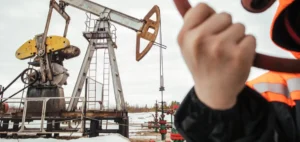
On October 5, Opec+ – the 13 members of the Organization of the Petroleum Exporting Countries (Opec) led by Saudi Arabia and their 10 partners led by Russia – decided to slash its production quotas, in order to support crude prices that were falling.

A rise in prices would also help to fill the coffers of Russia, which relies on its hydrocarbon sales to finance its war in Ukraine, a country it invaded in February.

Against a backdrop of global inflation and soaring energy prices accelerated by the war, and as Americans prepare to vote in the mid-term elections in November, the Opec+ decision has provoked the ire of the White House.

“There will be consequences for what they did with Russia,” U.S. President Joe Biden warned Tuesday, without further elaboration.

Officials in Saudi Arabia, the world’s largest oil exporter, have rejected accusations of collusion with Russia against the West, ruling out any “diktat”.

On Thursday, the Saudi Foreign Ministry assured that the decision of the Opec+ was motivated by “economic considerations” consisting of “protecting the global economy from the volatility of oil markets”.

For the White House, Riyadh “may beat around the bush but the facts are simple”.

“The U.S.-Saudi relationship has gone through periods of intense tension in the past,” notes Anna Jacobs, an analyst with the NGO International Crisis Group. But the current crisis represents “a fracture but not a break,” she emphasizes: “The reality is that Saudi Arabia and the United States need each other.”

– “Kings of traitors” –

In July, Joe Biden visited Saudi Arabia where he greeted Crown Prince Mohammed bin Salmane, provoking outrage from international NGOs that accuse this conservative Gulf monarchy of serious human rights violations.

Before he was elected president, Biden himself promised to make Saudi Arabia a “pariah,” especially in light of the killing of Saudi journalist and critic Jamal Khashoggi in his country’s consulate in Istanbul in 2018.

The objective of Mr. Biden’s visit to Saudi Arabia was to obtain an increase in oil production. In vain.

Members of his Democratic Party then accused the Saudis of being the “kings of traitors” and of having “deceived” the American president.

In addition, some U.S. lawmakers have attempted to revive support for a bill to expose Opec+ to antitrust lawsuits. Others have called on the administration to review the U.S. military presence in Saudi Arabia.

But such measures “would threaten to sever already strained relations, which would increase pressure for higher oil and fuel prices,” warns Torbjorn Soltvedt of risk intelligence firm Verisk Maplecroft.

“The most likely reaction is what we’ve already seen: strong statements from (U.S.) policymakers,” says Ellen Wald, author of Saudi Inc, a history of energy giant Saudi Aramco.

– “Very solid” –

The U.S.-Saudi partnership, dating back to the post-World War II era and often described as an “oil for security” agreement, has been marked by various disagreements, such as on the Israeli-Palestinian conflict or the nuclear agreement with Iran, Saudi Arabia’s great regional rival.

The Saudis were also scalded by the lukewarm U.S. response after attacks on oil facilities in 2019 claimed by the Houthis in neighboring Yemen, rebels backed by Tehran.

In this context, Ali Shihabi, a Saudi analyst close to the government, warns against an “excessive response” by the Americans to the Opec decision.

According to him, it will only accelerate the quest to “diversify Saudi Arabia’s military relations, not only with China and Russia, but also with France, the United Kingdom, India and Pakistan, and even Brazil and South Africa.

But the Saudi officials want to reassure. In an interview with the American channel CNN on Wednesday, Adel al-Jubeir, Minister of State for Foreign Affairs, said that the relationship between the two countries was not “broken”. “Far from it, it is very solid,” he said.

The United States strengthens its energy presence in the Eastern Mediterranean by consolidating a gas corridor through Greece to Central Europe, to the detriment of Russian flows and Chinese logistical influence over the Port of Piraeus.
Paris and Beijing agree to create a bilateral climate task force focused on nuclear technologies, renewable energy and maritime sectors, amid escalating trade tensions between China and the European Union.
Ankara plans to invest in US gas production to secure LNG supply and become a key supplier to Southern Europe, according to the Turkish Energy Minister.
Three Russian tankers targeted off the Turkish coast have reignited Ankara’s concerns about oil and gas supply security in the Black Sea and the vulnerability of its subsea infrastructure.
Bucharest authorises an exceptional takeover of Lukoil’s local assets to avoid a supply shock while complying with international sanctions. Three buyers are already in advanced talks.
European governments want to add review and safeguard mechanisms to the trade deal with Washington to prevent a potential surge of US imports from disrupting their industrial base.
The Khor Mor gas field, operated by Pearl Petroleum, was hit by an armed drone, halting production and causing power outages affecting 80% of Kurdistan’s electricity capacity.
Global South Utilities is investing $1 billion in new solar, wind and storage projects to strengthen Yemen's energy capacity and expand its regional influence.
British International Investment and FirstRand partner to finance the decarbonisation of African companies through a facility focused on supporting high-emission sectors.
Budapest moves to secure Serbian oil supply, threatened by Croatia’s suspension of crude flows following US sanctions on the Russian-controlled NIS refinery.
Moscow says it wants to increase oil and liquefied natural gas exports to Beijing, while consolidating bilateral cooperation amid US sanctions targeting Russian producers.
The European Investment Bank is mobilising €2bn in financing backed by the European Commission for energy projects in Africa, with a strategic objective rooted in the European Union’s energy diplomacy.
Russia faces a structural decline in energy revenues as strengthened sanctions against Rosneft and Lukoil disrupt trade flows and deepen the federal budget deficit.
Washington imposes new sanctions targeting vessels, shipowners and intermediaries in Asia, increasing the regulatory risk of Iranian oil trade and redefining maritime compliance in the region.
OFAC’s licence for Paks II circumvents sanctions on Rosatom in exchange for US technological involvement, reshaping the balance of interests between Moscow, Budapest and Washington.
Finland, Estonia, Hungary and Czechia are multiplying bilateral initiatives in Africa to capture strategic energy and mining projects under the European Global Gateway programme.
The Brazilian president calls for a voluntary and non-binding energy transition during COP30 in Belém, avoiding direct confrontation with oil-producing countries.
The region attracted only a small share of global capital allocated to renewables in 2024, despite high energy needs and ambitious development goals, according to a report published in November.
The United States approves South Korea’s development of civilian uranium enrichment capabilities and supports a nuclear-powered submarine project, expanding a strategic partnership already linked to a major trade agreement.
The EU member states agree to prioritise a loan mechanism backed by immobilised Russian assets to finance aid to Ukraine, reducing national budgetary impact while ensuring enhanced funding capacity.

All the latest energy news, all the time

Annual subscription

8.25€/month*

*billed annually at 99€/year for the first year then 149,00€/year ​

Unlimited access - Archives included - Pro invoice

Monthly subscription

Unlimited access • Archives included

5.2€/month*
then 14.90€ per month thereafter

*Prices shown are exclusive of VAT, which may vary according to your location or professional status.

Since 2021: 30,000 articles - +150 analyses/week.