Romania places Lukoil under temporary control to prevent an energy crisis

Bucharest authorises an exceptional takeover of Lukoil’s local assets to avoid a supply shock while complying with international sanctions. Three buyers are already in advanced talks.

Share:

Comprehensive energy news coverage, updated nonstop

Annual subscription

8.25$/month*

*billed annually at 99$/year for the first year then 149,00$/year ​

Unlimited access • Archives included • Professional invoice

OTHER ACCESS OPTIONS

Monthly subscription

Unlimited access • Archives included

5.2$/month*
then 14.90$ per month thereafter

FREE ACCOUNT

3 articles offered per month

FREE

*Prices are excluding VAT, which may vary depending on your location or professional status

Since 2021: 35,000 articles • 150+ analyses per week

The Romanian government has adopted an emergency decree allowing the appointment of a special administrator to oversee the operations of local entities owned by companies under international sanctions. The move primarily targets Lukoil, whose Romanian assets represent a significant share of the country’s refining and fuel distribution capacity.

A containment mechanism without legal expropriation

The measure would allow the state to ensure business continuity without proceeding with a formal expropriation. The group retains legal ownership of its Romanian entities, but would lose operational control if special administration is triggered. This solution aims to limit the economic fallout of a sudden withdrawal while ensuring compliance with US and EU sanctions.

The decree also provides for the possible transfer of Lukoil’s exploration rights in the Trident and Est Rapsodia offshore blocks, in which the company holds an 85% stake alongside the Romanian state-owned company Romgaz. A legal framework has been established to enable Romgaz to take over the concession if necessary.

Avoiding a supply gap in the oil market

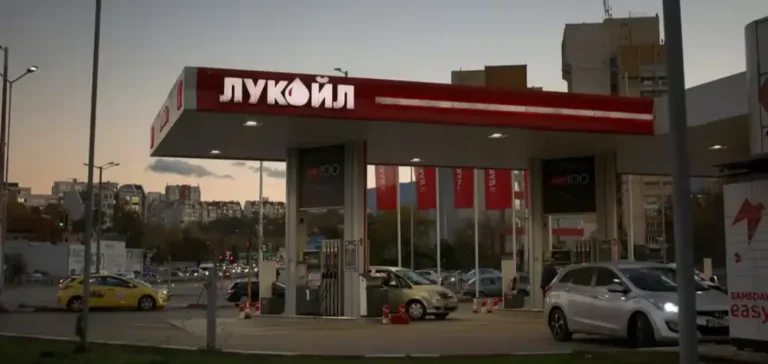
The Petrotel refinery in Ploiești processes around 2.4mn tonnes of crude oil per year, or nearly 25% of the country’s refining capacity. It is a key part of Romania’s petroleum infrastructure. Lukoil also operates 320 service stations, generating annual revenue exceeding RON11bn ($2.41bn).

A shutdown or prolonged stoppage of Petrotel would directly impact fuel supply and could strengthen the market dominance of rival groups, notably OMV Petrom and Rompetrol. The government says it has enough reserves to prevent a short-term price spike, but logistical tensions remain possible.

Three potential buyers in talks with Lukoil

Three unnamed groups are currently negotiating the acquisition of Lukoil’s Romanian assets, within a narrow timeframe authorised by general licences from the US Office of Foreign Assets Control (OFAC). These negotiations are described as a priority by the authorities, aiming for a rapid and orderly transition.

The Romanian model, partially inspired by legislation adopted in Bulgaria in November, allows temporary operational control without immediately affecting legal ownership. This flexibility provides Bucharest with leverage to steer discussions while keeping operations running.

Targeted reduction of Russian presence in critical infrastructure

The potential takeover of exploration rights in the Trident and Est Rapsodia blocks is part of a broader strategy to secure Romania’s offshore gas value chain. These permits, showing limited geological promise based on recent results, retain strategic value due to their Black Sea location.

The shift of public investment focus towards the Neptun Deep project, led by Romgaz and OMV Petrom, aims to make Romania the European Union’s leading natural gas producer by 2027. In this context, full control over offshore assets is viewed as a matter of energy sovereignty.

Implications for Lukoil and potential legal risks

The operational supervision of assets valued between $1.8bn and $2.5bn for Petrotel alone limits Lukoil’s ability to repatriate cash flow from Romania. This adds pressure to the company, which already recorded a 14% drop in net profit in 2024 and faces growing difficulties maintaining its European operations.

Previous disputes, notably in Bulgaria, suggest that Lukoil may consider legal action in international courts. Romania, for its part, justifies the measure on the grounds of energy security and sanctions compliance.
The Khor Mor gas field, operated by Pearl Petroleum, was hit by an armed drone, halting production and causing power outages affecting 80% of Kurdistan’s electricity capacity.
Global South Utilities is investing $1 billion in new solar, wind and storage projects to strengthen Yemen's energy capacity and expand its regional influence.
British International Investment and FirstRand partner to finance the decarbonisation of African companies through a facility focused on supporting high-emission sectors.
Budapest moves to secure Serbian oil supply, threatened by Croatia’s suspension of crude flows following US sanctions on the Russian-controlled NIS refinery.
Moscow says it wants to increase oil and liquefied natural gas exports to Beijing, while consolidating bilateral cooperation amid US sanctions targeting Russian producers.
The European Investment Bank is mobilising €2bn in financing backed by the European Commission for energy projects in Africa, with a strategic objective rooted in the European Union’s energy diplomacy.
Russia faces a structural decline in energy revenues as strengthened sanctions against Rosneft and Lukoil disrupt trade flows and deepen the federal budget deficit.
Washington imposes new sanctions targeting vessels, shipowners and intermediaries in Asia, increasing the regulatory risk of Iranian oil trade and redefining maritime compliance in the region.
OFAC’s licence for Paks II circumvents sanctions on Rosatom in exchange for US technological involvement, reshaping the balance of interests between Moscow, Budapest and Washington.
Finland, Estonia, Hungary and Czechia are multiplying bilateral initiatives in Africa to capture strategic energy and mining projects under the European Global Gateway programme.
The Brazilian president calls for a voluntary and non-binding energy transition during COP30 in Belém, avoiding direct confrontation with oil-producing countries.
The region attracted only a small share of global capital allocated to renewables in 2024, despite high energy needs and ambitious development goals, according to a report published in November.
The United States approves South Korea’s development of civilian uranium enrichment capabilities and supports a nuclear-powered submarine project, expanding a strategic partnership already linked to a major trade agreement.
The EU member states agree to prioritise a loan mechanism backed by immobilised Russian assets to finance aid to Ukraine, reducing national budgetary impact while ensuring enhanced funding capacity.
The Canadian government commits $56 billion to a new wave of infrastructure projects aimed at expanding energy corridors, accelerating critical mineral extraction and reinforcing strategic capacity.
Berlin strengthens its cooperation with Abuja through funding aimed at supporting Nigeria’s energy diversification and consolidating its renewable infrastructure.
COP30 begins in Belém under uncertainty, as countries fail to agree on key discussion topics, highlighting deep divisions over climate finance and the global energy transition.
The United States secures a tungsten joint venture in Kazakhstan and mining protocols in Uzbekistan, with financing envisaged from the Export-Import Bank of the United States and shipment routed via the Trans-Caspian corridor.
The United States grants Hungary a one-year waiver on sanctions targeting Russian oil, in return for a commitment to purchase US liquefied natural gas worth $600mn.
Meeting in Canada, G7 energy ministers unveiled a series of projects aimed at securing supply chains for critical minerals, in response to China’s restrictions on rare earth exports.

All the latest energy news, all the time

Annual subscription

8.25$/month*

*billed annually at 99$/year for the first year then 149,00$/year ​

Unlimited access - Archives included - Pro invoice

Monthly subscription

Unlimited access • Archives included

5.2$/month*
then 14.90$ per month thereafter

*Prices shown are exclusive of VAT, which may vary according to your location or professional status.

Since 2021: 30,000 articles - +150 analyses/week.