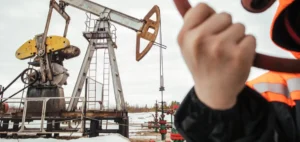
India became the world’s second-largest buyer of Russian fossil fuels in 2025, importing around 1.8 million barrels of crude per day during the first half of the year. This marks a sharp increase compared to 2020 volumes and reflects a strategic redirection of Russian flows following European restrictions. In October, India’s imports from Russia amounted to €3.1bn, of which 81% was crude oil.
US pressure and diplomatic response
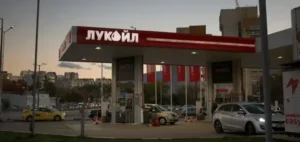
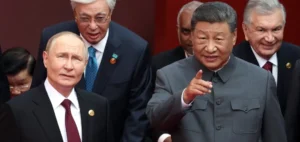
In response to this shift, the United States imposed a 25% surcharge on Indian imports of Russian crude, along with a similar increase on Indian exports to the US. Targeted sanctions were also applied against Rosneft and Lukoil, two of Russia’s main crude suppliers to India. In return, Vladimir Putin declared in New Delhi that oil flows to India would continue uninterrupted, sending a direct signal to Washington.
The Indian government reiterated its commitment to energy security while allowing companies to adjust supplies based on market conditions. This position enables New Delhi to preserve its trade interests without direct confrontation with Western partners.
Refining, re-export and European oversight
Imported Russian oil is often processed in Indian refineries before being exported to the European Union, mainly as diesel and kerosene. This has made India a strategic reprocessing hub for Russian-origin molecules. In response, the EU introduced a 60-day rule: starting January 2026, refined products made from recently imported Russian crude will be excluded from the EU market.
These new constraints are forcing Indian refiners to adapt their supply chains. Operators such as MRPL and HPCL have suspended purchases for December deliveries, while others like IOC and BPCL favour non-sanctioned sellers. Oil flows to India are expected to fall to their lowest level in three years.
Shadow fleet and alternative financial circuits
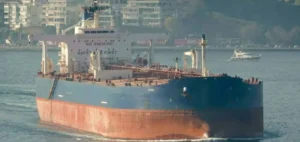
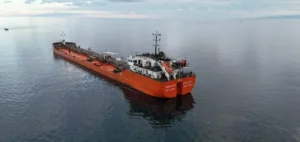
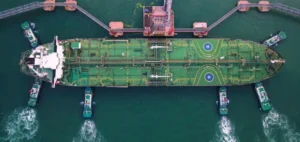
A growing share of Russian shipments to India is now transported by a “shadow fleet” of ageing vessels without G7 flags or insurance. In October 2025, 44% of Russian exports were handled via these routes. This strategy circumvents European maritime service restrictions but exposes logistics chains to increased legal and technical risks.
On the financial side, Moscow is developing dollar alternatives, with settlements in roubles and rupees supported by institutions such as VTB bank. This mechanism aims to neutralise the effect of US extraterritorial financial sanctions while sustaining bilateral oil trade.
Industrial cooperation and converging interests
The energy partnership forms part of a broader economic agreement between India and Russia, targeting $100bn in bilateral trade by 2030. This framework includes hydrocarbons, fertilisers, maritime infrastructure, and civilian nuclear projects. Investments such as Rosneft’s stake in Nayara Energy and the Kudankulam reactors are converting part of Russia’s export surpluses into Indian assets.
These economic commitments provide Moscow with a stable foothold in the Indian market, while New Delhi continues to benefit from significant crude oil discounts, which are essential to managing inflation and its trade deficit.