China shifts mining capital to Russia to bypass Western restrictions
China reduces its mining presence in Canada and Greenland, constrained by hostile regulatory frameworks, and consolidates public investments in Arctic Russia to secure strategic supplies.
| Sectors | Critical Metals, Nickel |
|---|---|
| Themes | Policy & Geopolitics, Diplomacy |
China’s public investment strategy in the Arctic is evolving under pressure. Confronted with tightening regulations in Western jurisdictions, China is redirecting its capital toward Russia, the only Arctic zone still accessible to its state-owned enterprises. This shift marks a turning point in the flow of critical metals—particularly nickel, titanium and rare earths—amid a broader fragmentation of supply chains.
Political tightening in Canada and legal obstacles in Greenland
In Canada, amendments to the Investment Canada Act (ICA) and the introduction of a Sensitive Technology List have restricted access to mining projects deemed strategic. Chinese state-owned enterprises such as Sinosteel or China Minmetals are now subject to in-depth reviews, where extended timelines and regulatory uncertainty drive up transaction costs. Forced divestments in lithium projects have further reinforced the perception of elevated political risk.
In Greenland, the Uranium Act imposed a 100 parts-per-million threshold on uranium concentrations, affecting rare earth projects with radioactive by-products, such as Kvanefjeld. This legal constraint halted technical partnerships with Shenghe Resources, despite prior financial commitments. The ongoing legal dispute, now referred to local courts, illustrates the volatility of the public policy framework.
Building a Sino-Russian corridor of sanctioned minerals
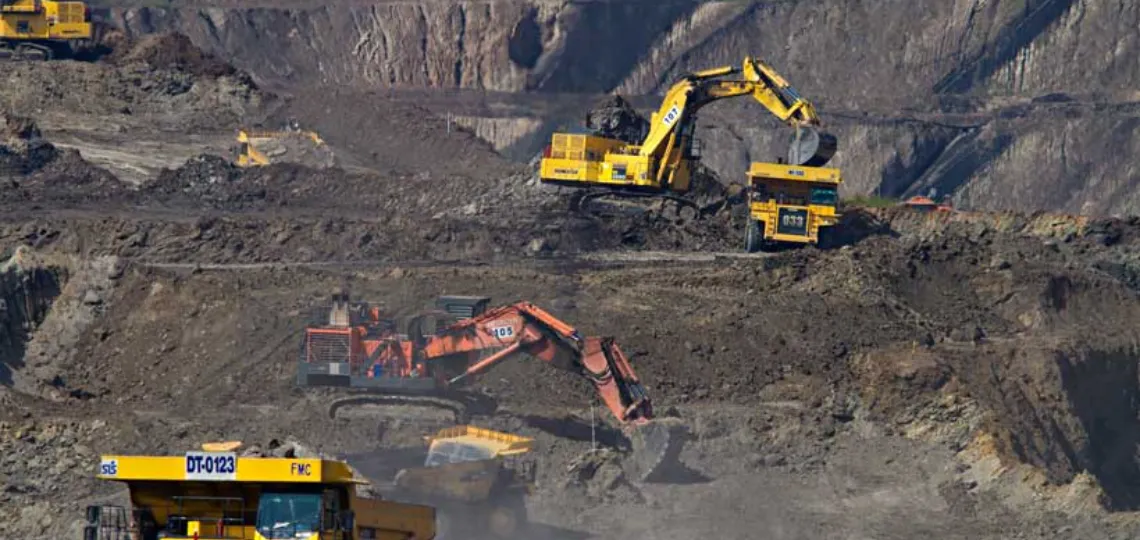
Russia has become the primary destination for Chinese mining capital in the Arctic. Public groups such as CGN (China General Nuclear), MMG (a subsidiary of China Minmetals), and Shenghe Resources are targeting assets in nickel, copper, titanium and lithium. These investments reflect a model of industrial substitution, enabled by the withdrawal of Western capital and the rise of Sino-Russian engineering and financing platforms.
The Russia–China Investment Fund acts as a key vehicle for structuring deals that bypass extraterritorial sanctions. As of now, Nornickel is not listed as a Specially Designated National (SDN) by the U.S. Office of Foreign Assets Control (OFAC), allowing certain transactions to proceed without formally violating U.S. rules. Industrial segments such as refining and metallurgy are increasingly relocated to China to offset restrictions on Western equipment and technologies.
Strategic capital allocation under sovereign constraints
The Arctic—outside Russia—remains economically marginal in China’s global mining flows. Of the approximately $25bn in overseas mining commitments recorded in the first half of 2025, the region captures only a small share, due to extreme costs and infrastructure deficits. This retreat does not reflect disinterest but rather a rational capital reallocation toward politically aligned jurisdictions.
Canadian junior mining firms—typical targets of Chinese partnerships—face growing funding gaps in the absence of comparable alternatives. Regulatory lock-in across traditionally stable zones creates a domino effect on project pipelines. In Greenland, legal uncertainty surrounding the uranium law and ongoing disputes makes project structuring too risky for foreign public investors.
Market fragmentation and diplomatic reconfiguration
This shift contributes to the fragmentation of critical mineral markets. Force majeure, sanctions and traceability clauses are increasingly central to supply contracts. Western and Asian actors are diverging onto separate trade circuits, with growing disparities in pricing, insurance and logistics. Chinese diplomacy is leveraging this split to reinforce its position among non-OECD producers.
Russia is capitalising on this strategic redirection to replace European partners with long-term Chinese commitments. In return, China secures access to critical resources while financing the expansion of an industrial system that operates outside Western frameworks. This dynamic strengthens the Sino-Russian axis in the Arctic space, to the detriment of multilateral cooperation.