Agreement with Israeli-Lebanese, the gas manna will be waiting

Lebanon is close to reaching an agreement with Israel over their disputed waters containing offshore oil deposits

Share:

Comprehensive energy news coverage, updated nonstop

Annual subscription

8.25$/month*

*billed annually at 99$/year for the first year then 149,00$/year ​

Unlimited access • Archives included • Professional invoice

OTHER ACCESS OPTIONS

Monthly subscription

Unlimited access • Archives included

5.2$/month*
then 14.90$ per month thereafter

FREE ACCOUNT

3 articles offered per month

FREE

*Prices are excluding VAT, which may vary depending on your location or professional status

Since 2021: 35,000 articles • 150+ analyses per week

An Israeli-Lebanese agreement, promising an unprecedented gas windfall, will be delayed. Lebanon is close to reaching an agreement with Israel over their disputed waters containing offshore hydrocarbon deposits, but the bankrupt country will have to wait years for a potential gas windfall, analysts say.

“An agreement would mark a step forward, but it does not mean that Lebanon has become a gas or oil producing country,” Marc Ayoub, a research associate at the Issam Fares Institute at the American University of Beirut, told AFP.

“We are talking about a delay of five to six years (..) before the first gas production”

The small Mediterranean country struggling with the worst economic crisis in its history is hoping that an offshore gas discovery will help it turn around its finances amid rising gas demand due to the global energy crisis.

More than a decade after adopting the delineation of its exclusive economic zone (EEZ), Lebanon has yet to announce that it has found any actual natural gas reserves.

A well drilled by a consortium of TotalEnergies, Eni and Novatek off central Lebanon in 2020 revealed only traces of gas but no commercially viable reservoir. Exploration, particularly near the border with Israel, has been hampered by the maritime border dispute between the two countries, which are still technically in a state of war.

After years of negotiations via American mediation, Lebanon and Israel are now close to an agreement, with both countries welcoming a proposal from Washington in early October.

An agreement would allow “offshore exploration activities to continue but it does not mean that Lebanon has become rich (…) or that its crisis has been solved,” Ayoub stressed.

– Corruption –

A 2012 seismic survey of an offshore area by the British company Spectrum estimated recoverable gas reserves in Lebanon at about 720 million cubic meters. Block 9, near the Israeli border, which contains the Qana field, will be a major area of offshore exploration by Total and Eni, who won the contract in 2018. After being partially claimed by Israel, the Qana field is expected to revert entirely to Lebanon under the maritime border agreement, according to Lebanese officials.

“By this time next year, we should know whether or not there is a commercial discovery in Qana,” Ayoub said.

If so, “it will take (…) no less than three to five years” before production can begin. This estimate, according to Mr. Ayoub, assumes that there is no delay on the part of the Lebanese authorities accused by a large part of the population of mismanagement and corruption.

Several tenders for offshore licenses have been delayed since their launch in 2013.

Lebanon is far behind Israel, which is preparing to activate the Karish offshore gas field once an agreement is reached, a key step to boost its natural gas exports to Europe.

Cyprus and Egypt have also begun to find significant reservoirs.

– Risky investment –

Production of gas or oil could begin within three years if reservoirs are discovered, according to energy consultant Roudi Baroudi. But Lebanon will have to implement a series of reforms if it wants to attract energy firms, he tells AFP.

“Lebanon is not a good investment if the government does not implement reforms,” says the expert.
The reforms would provide “the basic safeguards that international companies need to operate with less risk. State institutions have disintegrated under the weight of the crisis, with strikes by civil servants paralyzing most administrations.

More than three years after the onset of the financial crisis, no economic stimulus package has been put in place, despite increasing pressure from foreign donors and the International Monetary Fund (IMF).

And the political stalemate since the May legislative elections is delaying the formation of a new government, against the backdrop of fears of an upcoming presidential vacancy when Michel Aoun’s term expires at the end of October.
With a failed state unable to provide more than an hour of electricity a day, energy companies may choose to work on their projects in Lebanon from Cyprus, according to Baroudi.

“Without the rule of law, Lebanon is a jungle…It’s absolute chaos, whether it’s judicial, financial or in terms of regulatory bodies,” said the consultant.
The Turkish president suggested to Vladimir Putin a limited ceasefire targeting Ukrainian ports and energy facilities to reduce risks to strategic assets and pave the way for negotiations.
New Delhi and Moscow strengthen their energy corridor despite US tariff and regulatory pressure, maintaining oil flows supported by alternative logistical and financial mechanisms.
The United States strengthens its energy presence in the Eastern Mediterranean by consolidating a gas corridor through Greece to Central Europe, to the detriment of Russian flows and Chinese logistical influence over the Port of Piraeus.
Paris and Beijing agree to create a bilateral climate task force focused on nuclear technologies, renewable energy and maritime sectors, amid escalating trade tensions between China and the European Union.
Ankara plans to invest in US gas production to secure LNG supply and become a key supplier to Southern Europe, according to the Turkish Energy Minister.
Three Russian tankers targeted off the Turkish coast have reignited Ankara’s concerns about oil and gas supply security in the Black Sea and the vulnerability of its subsea infrastructure.
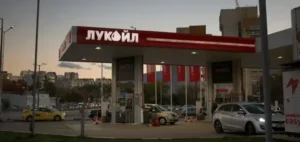
Bucharest authorises an exceptional takeover of Lukoil’s local assets to avoid a supply shock while complying with international sanctions. Three buyers are already in advanced talks.
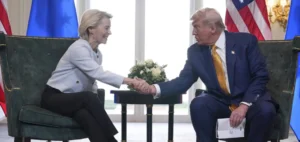
European governments want to add review and safeguard mechanisms to the trade deal with Washington to prevent a potential surge of US imports from disrupting their industrial base.
The Khor Mor gas field, operated by Pearl Petroleum, was hit by an armed drone, halting production and causing power outages affecting 80% of Kurdistan’s electricity capacity.
Global South Utilities is investing $1 billion in new solar, wind and storage projects to strengthen Yemen's energy capacity and expand its regional influence.
British International Investment and FirstRand partner to finance the decarbonisation of African companies through a facility focused on supporting high-emission sectors.
Budapest moves to secure Serbian oil supply, threatened by Croatia’s suspension of crude flows following US sanctions on the Russian-controlled NIS refinery.
Moscow says it wants to increase oil and liquefied natural gas exports to Beijing, while consolidating bilateral cooperation amid US sanctions targeting Russian producers.
The European Investment Bank is mobilising €2bn in financing backed by the European Commission for energy projects in Africa, with a strategic objective rooted in the European Union’s energy diplomacy.
Russia faces a structural decline in energy revenues as strengthened sanctions against Rosneft and Lukoil disrupt trade flows and deepen the federal budget deficit.
Washington imposes new sanctions targeting vessels, shipowners and intermediaries in Asia, increasing the regulatory risk of Iranian oil trade and redefining maritime compliance in the region.
OFAC’s licence for Paks II circumvents sanctions on Rosatom in exchange for US technological involvement, reshaping the balance of interests between Moscow, Budapest and Washington.
Finland, Estonia, Hungary and Czechia are multiplying bilateral initiatives in Africa to capture strategic energy and mining projects under the European Global Gateway programme.
The Brazilian president calls for a voluntary and non-binding energy transition during COP30 in Belém, avoiding direct confrontation with oil-producing countries.
The region attracted only a small share of global capital allocated to renewables in 2024, despite high energy needs and ambitious development goals, according to a report published in November.

All the latest energy news, all the time

Annual subscription

8.25$/month*

*billed annually at 99$/year for the first year then 149,00$/year ​

Unlimited access - Archives included - Pro invoice

Monthly subscription

Unlimited access • Archives included

5.2$/month*
then 14.90$ per month thereafter

*Prices shown are exclusive of VAT, which may vary according to your location or professional status.

Since 2021: 30,000 articles - +150 analyses/week.