Oil Demand Explodes

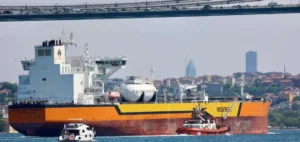
Demand for oil is exploding while soaring gas prices are pushing players to switch fuels. It is expected to increase by 80% over the next six months.

Share:

Comprehensive energy news coverage, updated nonstop

Annual subscription

8.25$/month*

*billed annually at 99$/year for the first year then 149,00$/year ​

Unlimited access • Archives included • Professional invoice

OTHER ACCESS OPTIONS

Monthly subscription

Unlimited access • Archives included

5.2$/month*
then 14.90$ per month thereafter

FREE ACCOUNT

3 articles offered per month

FREE

*Prices are excluding VAT, which may vary depending on your location or professional status

Since 2021: 35,000 articles • 150+ analyses per week

The world demand for oil is exploding. In fact, soaring gas prices are pushing players to turn to oil. As a result, oil demand could increase by 80% over the next six months.

Gas prices impact oil demand

According to Platts, the FTT for the coming month reaches a record high of €319.98/MWh on August 26. While it fell back on September 6, it remains 4 times higher year-on-year.

In addition to the TTF, the price of LNG is also rising. This phenomenon does not only concern Europe. In Asia, LNG spot prices are also rising. The benchmark JKM index hit record highs in August. For example, European benchmark gas prices and Asian LNG prices are 5 to 6 times higher than those of high-source fuel oil.

The increase in oil demand is expected to be driven primarily by refiners, power producers and large industries. These players will account for 633,000 b/d in the first quarter of 2023, compared to 350,000 b/d in the third quarter of 2022.

In Europe, oil demand will also be driven by these three major players: refiners, power producers and large industries. They will be responsible for an increase of 308,000 b/d in the first quarter of 2023. This represents half of the global share.

Specifically, the increase in oil demand is for residential fuel oil. It will account for 348,000 b/d, or 60% of the global increase in the first quarter of next year. LPG will account for 32% of this growth in oil demand, and diesel for 8%.

Are electricity producers the first ones concerned?

Electricity producers are the first to switch fuels. However, refiners are also opting for this fuel switch. They can reduce gas purchases by maximizing the production of distillate gas from refineries for example.

Rassol Barouni, of Platts Analytics, explains:

“While natural gas prices are soaring, naphtha and high-sulfur fuel oil are currently low. We know that southern European countries are consuming more fuel oil because of the shift away from gas.”

TotalEnergies restructures its stake in offshore licences PPL 2000 and PPL 2001 by bringing in Chevron at 40%, while retaining operatorship, as part of a broader refocus of its deepwater portfolio in Nigeria.
Aker Solutions has signed a six-year frame agreement with ConocoPhillips for maintenance and modification services on the Eldfisk and Ekofisk offshore fields, with an option to extend for another six years.
Iranian authorities intercepted a vessel carrying 350,000 litres of fuel in the Persian Gulf, tightening control over strategic maritime routes in the Strait of Hormuz.
North Atlantic France finalizes the acquisition of Esso S.A.F. at the agreed per-share price and formalizes the new name, North Atlantic Energies, marking a key step in the reorganization of its operations in France.
Greek shipowner Imperial Petroleum has secured $60mn via a private placement with institutional investors to strengthen liquidity for general corporate purposes.
Ecopetrol plans between $5.57bn and $6.84bn in investments for 2026, aiming to maintain production, optimise infrastructure and ensure profitability despite a moderate crude oil market.
Faced with oversupply risks and Russian sanctions, OPEC+ stabilises volumes while preparing a structural redistribution of quotas by 2027, intensifying tensions between producers with unequal capacities.
The United Kingdom is replacing its exceptional tax with a permanent price mechanism, maintaining one of the world’s highest fiscal pressures and reshaping the North Sea’s investment attractiveness for oil and gas operators.
Pakistan confirms its exit from domestic fuel oil with over 1.4 Mt exported in 2025, transforming its refineries into export platforms as Asia faces a structural surplus of high- and low-sulphur fuel oil.
Turkish company Aksa Enerji has signed a 20-year contract with Sonabel for the commissioning of a thermal power plant in Ouagadougou, aiming to strengthen Burkina Faso’s energy supply by the end of 2026.
The Caspian Pipeline Consortium resumed loadings in Novorossiisk after a Ukrainian attack, but geopolitical tensions persist over Kazakh oil flows through this strategic Black Sea corridor.
Hungary increases oil product exports to Serbia to offset the imminent shutdown of the NIS refinery, threatened by US sanctions over its Russian majority ownership.
Faced with falling oil production, Pemex is expanding local refining through Olmeca, aiming to reduce fuel imports and optimise its industrial capacity under fiscal pressure.
Brazil’s state oil company will reduce its capital spending by 2%, hit by falling crude prices, marking a strategic shift under Lula’s presidency.
TotalEnergies has finalised the sale of its 12.5% stake in Nigeria’s offshore Bonga oilfield for $510mn, boosting Shell and Eni’s positions in the strategic deepwater production site.
Serbia is preparing a budget law amendment to enable the takeover of NIS, a refinery under US sanctions and owned by Russian groups, to avoid an imminent energy shutdown.
Nigeria’s Dangote refinery selects US-based Honeywell to supply technology that will double its crude processing capacity and expand its petrochemical output.
Iraq secures production by bypassing US sanctions through local payments, energy-for-energy swaps, and targeted suspension of financial flows to Lukoil to protect West Qurna-2 exports.
Restarting Olympic Pipeline’s 16-inch line does not restore full supply to Oregon and Seattle-Tacoma airport, both still exposed to logistical risks and regional price tensions.
Faced with tightened sanctions from the United States and European Union, Indian refiners are drastically reducing their purchases of Russian crude from December, according to industry sources.

All the latest energy news, all the time

Annual subscription

8.25$/month*

*billed annually at 99$/year for the first year then 149,00$/year ​

Unlimited access - Archives included - Pro invoice

Monthly subscription

Unlimited access • Archives included

5.2$/month*
then 14.90$ per month thereafter

*Prices shown are exclusive of VAT, which may vary according to your location or professional status.

Since 2021: 30,000 articles - +150 analyses/week.