UK locks in oil windfall until 2030 with 78% tax pressure

The United Kingdom is replacing its exceptional tax with a permanent price mechanism, maintaining one of the world’s highest fiscal pressures and reshaping the North Sea’s investment attractiveness for oil and gas operators.
Share:

Comprehensive energy news coverage, updated nonstop

Annual subscription

8.25$/month*

*billed annually at 99$/year for the first year then 149,00$/year ​

Unlimited access • Archives included • Professional invoice

OTHER ACCESS OPTIONS

Monthly subscription

Unlimited access • Archives included

5.2$/month*
then 14.90$ per month thereafter

FREE ACCOUNT

3 articles offered per month

FREE

*Prices are excluding VAT, which may vary depending on your location or professional status

Since 2021: 35,000 articles • 150+ analyses per week

The British government has confirmed the implementation of a permanent fiscal framework for oil and gas operators, combining a 40% base tax with an exceptional surcharge extended through 2030. This regime will be succeeded by a mechanism called the Oil and Gas Price Mechanism (OGPM), triggered when oil or gas prices exceed defined thresholds. The structure results in a total levy of 75–78%, despite the decline in Brent and National Balancing Point (NBP) prices.

A system designed to capture cyclical windfalls

The OGPM, intended as a successor to the temporary Energy Profits Levy (EPL) introduced in 2022, is based on inflation-adjusted thresholds. The declared goal is to provide investors with more predictability. However, the system remains structurally asymmetric: it captures price spikes without offering support during price downturns. The instrument strengthens the Treasury’s ability to extract value from high price cycles without sharing downside risks.

Investment allowances remain in place, but their effectiveness is weakened as operators reallocate capital to jurisdictions with more favourable tax regimes. Norway, the United States (Gulf of Mexico), and West Africa continue to attract increased capital flows.

The signal of a managed decline strategy

The continuation of the exceptional levy, alongside the OGPM, reflects the government’s aim to maximise fiscal revenues while mitigating social impacts. Certain tie-back projects — connecting marginal fields to existing infrastructure — are authorised, though the licensing of new full-scale exploration is still restricted. These measures are aimed at preserving short-term industrial activity, particularly in Scotland.

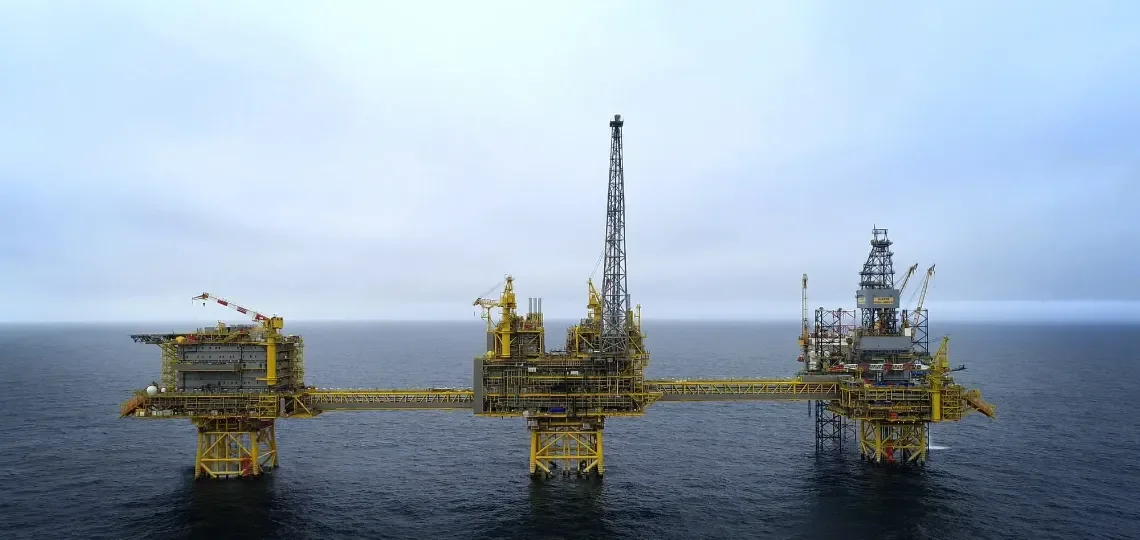
Mid-cap players such as Serica, Jersey Oil & Gas and NEO Energy are focusing their efforts on such redevelopments. The Greater Buchan Area project is emblematic, with a CAPEX of £850–950mn for an expected output of 70 to 100 million barrels of oil equivalent.

Differentiated impact across the value chain

In the short term, the announcement is not expected to impact Brent or NBP spot prices, as the North Sea’s decline has already been priced in. However, the fiscal risk profile for UK projects will shift, prompting firms to delay final investment decisions (FID) and opt for flexible risk-sharing models.

The UK offshore supply chain is seeing reduced visibility. Contractors, EPC firms, subsea service providers and FPSO operators are facing delayed commitments, as operators redirect capital to regions with more predictable tax conditions.

Industry repositioning and investor response

Integrated groups such as INEOS Energy are beginning to treat the UK North Sea as a harvest asset, prioritising short-term cash flows over long-term investment. Mid-caps face mounting pressure to justify continued UKCS exposure amid ongoing fiscal uncertainty.

The UK’s reputation as a fiscally stable jurisdiction has already been eroded by multiple EPL revisions since 2022. Even with the OGPM marketed as more predictable, it is perceived as a latent ratchet mechanism that may intensify in adverse macroeconomic contexts.

Geopolitical consequences and rising dependence

The current strategy implies an accelerated decline in domestic production and growing reliance on imports. Norway and global LNG suppliers — particularly Qatar and the United States — are becoming increasingly central to the UK energy mix. This dependency heightens exposure to global supply disruptions and geopolitical risks.

The UK is also deepening its coordination with the European Union on energy interconnections and gas storage. The country is becoming more of a structured consumer, influenced by market volatility, than a physical influencer of regional energy balances.
Chevron has announced a capital expenditure range of $18 to $19 billion for 2026, focusing on upstream operations in the United States and high-potential international offshore projects.
ExxonMobil is shutting down its oldest ethylene steam cracker in Singapore, reducing local capacity to invest in its integrated Huizhou complex in China, amid regional overcapacity and rising operational costs.
Brazil, Guyana, Suriname and Argentina are expected to provide a growing share of non-OPEC+ oil supply, backed by massive offshore investments and continued exploration momentum.
The revocation of US licences limits European companies’ operations in Venezuela, triggering a collapse in crude oil imports and a reconfiguration of bilateral energy flows.
Bourbon has signed an agreement with ExxonMobil for the charter of next-generation Crewboats on Angola’s Block 15, strengthening a strategic cooperation that began over 15 years ago.
Faced with tighter legal frameworks and reinforced sanctions, grey fleet operators are turning to 15-year-old VLCCs and scrapping older vessels to secure oil routes to Asia.
Reconnaissance Energy Africa completed drilling at the Kavango West 1X onshore well in Namibia, where 64 metres of net hydrocarbon pay were detected in the Otavi carbonate section.
CNOOC Limited has started production at the Weizhou 11-4 oilfield adjustment project and its satellite fields, targeting 16,900 barrels per day by 2026.
The Adura joint venture merges Shell and Equinor’s UK offshore assets, becoming the leading independent oil and gas producer in the mature North Sea basin.
A Delaware court approved the sale of PDV Holding shares to Elliott’s Amber Energy for $5.9bn, a deal still awaiting a U.S. Treasury licence through OFAC.
A new $100mn fund has been launched to support Nigerian oil and gas service companies, as part of a national target to reach 70% local content by 2027.
Western measures targeting Rosneft and Lukoil deeply reorganise oil trade, triggering a discreet yet massive shift of Russian export routes to Asia without causing global supply disruption.
The Nigerian Upstream Petroleum Regulatory Commission opens bidding for 50 exploration blocks across strategic zones to revitalise upstream investment.
La Nigerian Upstream Petroleum Regulatory Commission ouvre la compétition pour 50 blocs d’exploration, répartis sur plusieurs zones stratégiques, afin de relancer les investissements dans l’amont pétrolier.
Serbia's only refinery, operated by NIS, has suspended production due to a shortage of crude oil, a direct consequence of US sanctions imposed on its majority Russian shareholder.
Crude prices increased, driven by rising tensions between the United States and Venezuela and drone attacks targeting Russian oil infrastructure in the Black Sea.
Amid persistent financial losses, Tullow Oil restructures its governance and accelerates efforts to reduce over $1.8 billion in debt while refocusing operations on Ghana.
The Iraqi government is inviting US oil companies to bid for control of the giant West Qurna 2 field, previously operated by Russian group Lukoil, now under US sanctions.
Two tankers under the Gambian flag were attacked in the Black Sea near Turkish shores, prompting a firm response from President Recep Tayyip Erdogan on growing risks to regional energy transport.
The British producer continues to downsize its North Sea operations, citing an uncompetitive tax regime and a strategic shift towards jurisdictions offering greater regulatory stability.

All the latest energy news, all the time

Annual subscription

8.25$/month*

*billed annually at 99$/year for the first year then 149,00$/year ​

Unlimited access - Archives included - Pro invoice

Monthly subscription

Unlimited access • Archives included

5.2$/month*
then 14.90$ per month thereafter

*Prices shown are exclusive of VAT, which may vary according to your location or professional status.

Since 2021: 30,000 articles - +150 analyses/week.