OPEC+ maintains output freeze for 2026 and opens quota battle for 2027

Faced with oversupply risks and Russian sanctions, OPEC+ stabilises volumes while preparing a structural redistribution of quotas by 2027, intensifying tensions between producers with unequal capacities.
Share:

Comprehensive energy news coverage, updated nonstop

Annual subscription

8.25$/month*

*billed annually at 99$/year for the first year then 149,00$/year ​

Unlimited access • Archives included • Professional invoice

OTHER ACCESS OPTIONS

Monthly subscription

Unlimited access • Archives included

5.2$/month*
then 14.90$ per month thereafter

FREE ACCOUNT

3 articles offered per month

FREE

*Prices are excluding VAT, which may vary depending on your location or professional status

Since 2021: 35,000 articles • 150+ analyses per week

The Organization of the Petroleum Exporting Countries and its allies (OPEC+) have confirmed the freeze on production increases for the first quarter of 2026, following a modest increase in December. This decision comes amid expectations of a seasonal surplus, as global inventories rebuild and first-quarter demand remains historically low.

Capacity under pressure and internal arbitration

Since April, eight core OPEC+ members have returned approximately 2.9 Mb/d to the market, initiating a gradual normalisation without disrupting the overall balance. At the same time, the alliance is developing a mechanism to assess maximum production capacities, aimed at reshaping the production quotas in 2027. This tool seeks to distinguish between countries with spare capacity, such as the United Arab Emirates and Saudi Arabia, and those with structurally limited output like Nigeria.

The stable output thus conceals a deeper reallocation of internal market shares. Angola’s withdrawal in 2024, following a dispute over its production target, served as a warning. Now, each member state seeks to ensure its interests are embedded in the upcoming mechanism, the technical and political details of which are still under negotiation.

Russian sanctions and logistical realignment

New sanctions imposed by the United States and the European Union on Rosneft and Lukoil have forced Russia to reorganise its exports, relying on a shadow fleet and less regulated intermediaries. This situation undermines transparency in oil flows and increases logistics costs for refiners in India and China. It also weighs on Russian revenues and limits Moscow’s ability to defend a high quota within OPEC+.

Maintaining the status quo avoids a compensatory increase that could have been interpreted by Washington as indirect support to Russia. It also signals collective discipline at a time when geopolitical balances grow increasingly fragile, amid sanctions, regional tensions, and regulatory transitions.

Market impact and contractual strategies

On futures markets, OPEC+’s decision reinforces expectations of Brent stabilising around $60–65/b. This level is sustainable for Gulf producers while remaining marginal for higher-cost producers. Arbitrage strategies and price spread positioning now dominate trading, replacing directional bets.

For Asian buyers, the apparent stability of OPEC+ supply, combined with Russian constraints, enhances the appeal of long-term contracts with Gulf national oil companies. These producers, capable of rapid output adjustments, are seen as more reliable partners in a fragmented logistical environment.

Outlook for companies and member states

Companies such as Saudi Aramco and ADNOC, backed by their respective states, benefit from the upcoming capacity mechanism. It provides technical justification for their production expansion investments and offers leverage in negotiating future quotas. Conversely, the Nigerian National Petroleum Corporation (NNPC) and other African firms must address internal constraints promptly if they wish to maintain their influence in the alliance.

Russia, for its part, faces reduced prospects due to growing isolation of its export channels. The reliance on unconventional fleets and parallel circuits results in pricing discounts and transaction complexity. OPEC+, while maintaining cohesion, may eventually have to decide whether to replace those volumes or allow a lasting risk premium to develop on Russian crude.
Venezuelan state oil group PDVSA claims it was targeted by a cyberattack attributed to foreign interests, with no impact on main operations, amid rising tensions with the United States.
BUTEC has finalised the financing of a 50 MW emergency power project in Burkina Faso, structured under a BOOT contract and backed by Banque Centrale Populaire Group.
BW Energy has signed a long-term lease agreement with Minsheng Financial Leasing for its Maromba B platform, covering $274mn of the project’s CAPEX, with no payments due before first oil.
Shell will restart offshore exploration on Namibia’s PEL 39 block in April 2026 with a five-well drilling programme targeting previously discovered zones, despite a recent $400mn impairment.
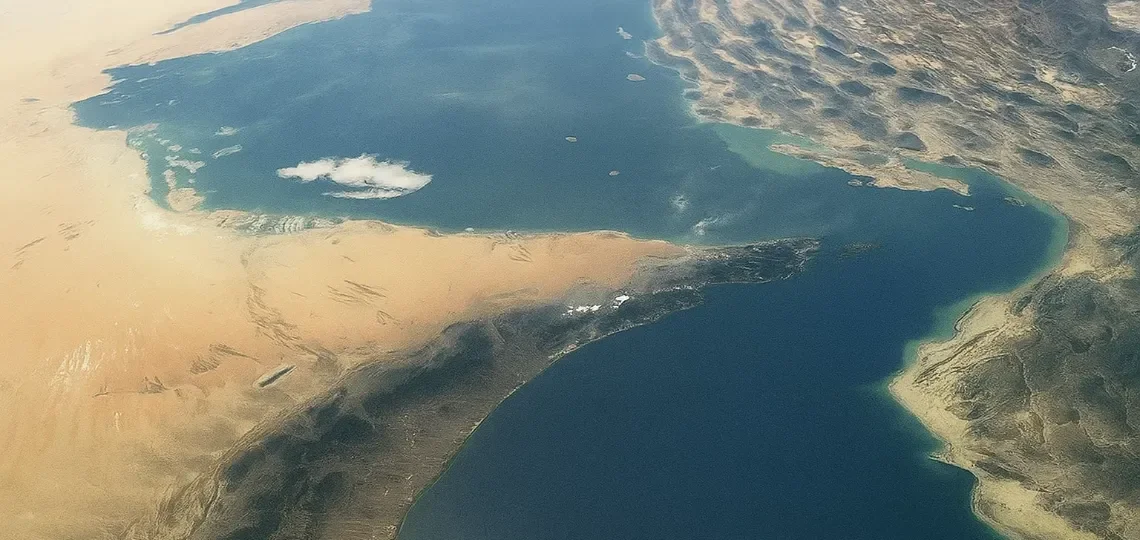
Iranian authorities intercepted a vessel suspected of fuel smuggling off the coast of the Gulf of Oman, with 18 South Asian crew members on board, according to official sources.
Harbour Energy will acquire Waldorf Energy Partners’ North Sea assets for $170mn, increasing its stakes in the Catcher and Kraken fields, while Capricorn Energy settles part of its claims.
The Big Beautiful Gulf 1 sale attracted more than $300mn in investments, with a focused strategy led by BP, Chevron and Woodside on high-yield blocks.
The United States intercepted an oil tanker loaded with Venezuelan crude and imposed new sanctions on maritime entities, increasing pressure on Nicolas Maduro’s regime and its commercial networks in the Caribbean.
OPEC expects crude demand from its members to reach 43 million barrels per day in 2026, nearly matching current OPEC+ output, contrasting with oversupply forecasts from other institutions.
The United States seized a vessel suspected of transporting sanctioned oil from Iran and Venezuela, prompting a strong reaction from Nicolás Maduro's government.
The International Energy Agency lowers its global oil supply forecast for 2026 while slightly raising demand growth expectations amid improved macroeconomic conditions.
South Sudanese authorities have been granted responsibility for securing the strategic Heglig oilfield following an agreement with both warring parties in Sudan.
TotalEnergies acquires a 40% operated interest in the offshore PEL83 license, marking a strategic move in Namibia with the Mopane oil field, while Galp secures stakes in two other promising blocks.
BOURBON will provide maritime services to ExxonMobil Guyana for five years starting in 2026, marking a key step in the logistical development of the Guyanese offshore basin.
Viridien has launched a 4,300 sq km seismic reimaging programme over Angola’s offshore block 22 to support the country’s upcoming licensing round in the Kwanza Basin.
Shell restructures its stake in the Caspian pipeline by exiting the joint venture with Rosneft, with Kremlin approval, to comply with sanctions while maintaining access to Kazakh crude.
Shell acquires 60% of Block 2C in the Orange Basin, commits to drilling three wells and paying a $25mn signing bonus to PetroSA, pending regulatory approval in South Africa.
Malgré la pression exercée sur le gouvernement vénézuélien, Washington ne cherche pas à exclure Caracas de l’OPEP, misant sur une influence indirecte au sein du cartel pour défendre ses intérêts énergétiques.
Kazakhstan redirects part of its oil production to China following the drone attack on the Caspian Pipeline Consortium terminal, without a full export halt.
US investment bank Xtellus Partners has submitted a plan to the US Treasury to recover frozen Lukoil holdings for investors by selling the Russian company’s international assets.

All the latest energy news, all the time

Annual subscription

8.25$/month*

*billed annually at 99$/year for the first year then 149,00$/year ​

Unlimited access - Archives included - Pro invoice

Monthly subscription

Unlimited access • Archives included

5.2$/month*
then 14.90$ per month thereafter

*Prices shown are exclusive of VAT, which may vary according to your location or professional status.

Since 2021: 30,000 articles - +150 analyses/week.