Canada approves second series of energy projects worth $56 billion

The Canadian government commits $56 billion to a new wave of infrastructure projects aimed at expanding energy corridors, accelerating critical mineral extraction and reinforcing strategic capacity.

Share:

Comprehensive energy news coverage, updated nonstop

Annual subscription

8.25$/month*

*billed annually at 99$/year for the first year then 149,00$/year ​

Unlimited access • Archives included • Professional invoice

OTHER ACCESS OPTIONS

Monthly subscription

Unlimited access • Archives included

5.2$/month*
then 14.90$ per month thereafter

FREE ACCOUNT

3 articles offered per month

FREE

*Prices are excluding VAT, which may vary depending on your location or professional status

Since 2021: 35,000 articles • 150+ analyses per week

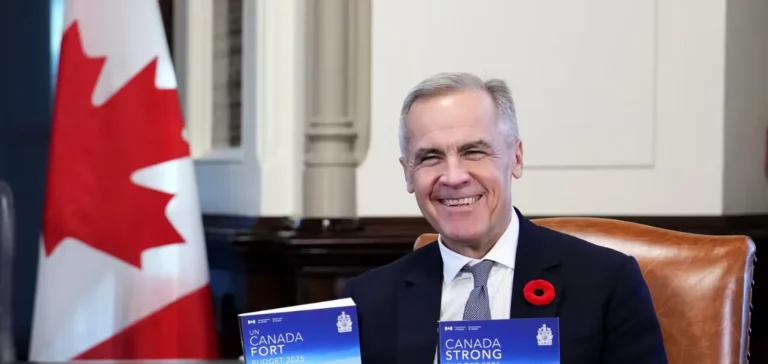
Prime Minister Mark Carney has announced a new wave of major projects totalling over $56 billion in investments, aimed at strengthening Canada’s position as a global energy leader and upgrading the country’s strategic infrastructure. These projects are part of the agenda of the Major Projects Office, created to accelerate the implementation of key national initiatives.

Northwest corridor development and power grid expansion

Among the projects under review is the Northwest Conservation Corridor, which stretches through British Columbia and the Yukon. This strategic corridor, located above significant critical mineral reserves, will facilitate resource extraction while connecting remote regions through upgraded energy and digital infrastructure.

Supporting this development is the North Coast electricity transmission line, designed to connect the corridor to the national grid. The Canada Infrastructure Bank has granted a $139.5 million loan to BC Hydro for initial phases. The line will enable the deployment of industrial initiatives, including the Ksi Lisims liquefied natural gas (LNG) terminal, and is expected to reduce emissions by up to three million tonnes annually.

LNG expansion and export infrastructure

The Ksi Lisims LNG terminal, located on Pearse Island in British Columbia, would become Canada’s second-largest LNG facility. Led by the Nisga’a Nation, the project is expected to attract nearly $30 billion in investment. It includes an 800-kilometre gas pipeline and a dedicated 95-kilometre power line to supply the plant with electricity.

This development is part of a broader plan to more than double Canada’s LNG export capacity, alongside the previously submitted LNG Canada Phase 2 project.

Critical minerals: three mining projects under review

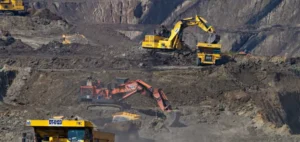
The Crawford nickel project, led by Canada Nickel in Timmins (Ontario), targets the world’s second-largest nickel reserve. It promises high-quality, low-carbon nickel production, with emissions forecasted at 90% below the global average. Total investment is projected at $5 billion.

In Québec, Nouveau Monde Graphite’s Matawinie open-pit mine will supply defence applications and battery supply chains, linking with a planned battery materials plant in Bécancour. The initiative is expected to create over 1,000 jobs and attract $1.8 billion in capital.

Meanwhile, the Sisson mine in New Brunswick, owned by Northcliff Resources, will focus on tungsten extraction — a critical resource in high-strength steel production and defence. The project responds to a global demand concentrated among few producers and positions Canada as a reliable supplier.

Northern infrastructure and energy sovereignty

The hydroelectric project led by Nunavut Nukkiksautiit Corporation in Iqaluit aims to eliminate the city’s reliance on 15 million litres of imported diesel annually by establishing a local, emission-free power source. Fully owned by Inuit interests, the project supports energy sovereignty in Nunavut and local job creation.

These projects fall under a broader national investment plan that has committed over $116 billion through two project rounds. In parallel, Canada has launched 26 partnerships and funding initiatives for critical mineral supply chains worth $6.4 billion.
China reduces its mining presence in Canada and Greenland, constrained by hostile regulatory frameworks, and consolidates public investments in Arctic Russia to secure strategic supplies.
The Turkish president suggested to Vladimir Putin a limited ceasefire targeting Ukrainian ports and energy facilities to reduce risks to strategic assets and pave the way for negotiations.
New Delhi and Moscow strengthen their energy corridor despite US tariff and regulatory pressure, maintaining oil flows supported by alternative logistical and financial mechanisms.
The United States strengthens its energy presence in the Eastern Mediterranean by consolidating a gas corridor through Greece to Central Europe, to the detriment of Russian flows and Chinese logistical influence over the Port of Piraeus.
Paris and Beijing agree to create a bilateral climate task force focused on nuclear technologies, renewable energy and maritime sectors, amid escalating trade tensions between China and the European Union.
Ankara plans to invest in US gas production to secure LNG supply and become a key supplier to Southern Europe, according to the Turkish Energy Minister.
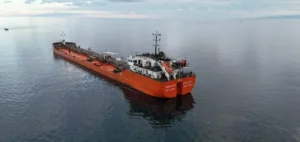
Three Russian tankers targeted off the Turkish coast have reignited Ankara’s concerns about oil and gas supply security in the Black Sea and the vulnerability of its subsea infrastructure.
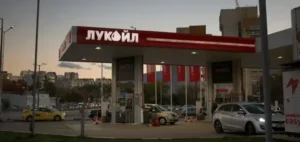
Bucharest authorises an exceptional takeover of Lukoil’s local assets to avoid a supply shock while complying with international sanctions. Three buyers are already in advanced talks.
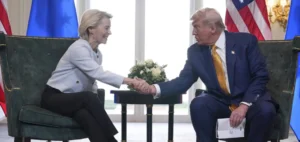
European governments want to add review and safeguard mechanisms to the trade deal with Washington to prevent a potential surge of US imports from disrupting their industrial base.
The Khor Mor gas field, operated by Pearl Petroleum, was hit by an armed drone, halting production and causing power outages affecting 80% of Kurdistan’s electricity capacity.
Global South Utilities is investing $1 billion in new solar, wind and storage projects to strengthen Yemen's energy capacity and expand its regional influence.
British International Investment and FirstRand partner to finance the decarbonisation of African companies through a facility focused on supporting high-emission sectors.
Budapest moves to secure Serbian oil supply, threatened by Croatia’s suspension of crude flows following US sanctions on the Russian-controlled NIS refinery.
Moscow says it wants to increase oil and liquefied natural gas exports to Beijing, while consolidating bilateral cooperation amid US sanctions targeting Russian producers.
The European Investment Bank is mobilising €2bn in financing backed by the European Commission for energy projects in Africa, with a strategic objective rooted in the European Union’s energy diplomacy.
Russia faces a structural decline in energy revenues as strengthened sanctions against Rosneft and Lukoil disrupt trade flows and deepen the federal budget deficit.
Washington imposes new sanctions targeting vessels, shipowners and intermediaries in Asia, increasing the regulatory risk of Iranian oil trade and redefining maritime compliance in the region.
OFAC’s licence for Paks II circumvents sanctions on Rosatom in exchange for US technological involvement, reshaping the balance of interests between Moscow, Budapest and Washington.
Finland, Estonia, Hungary and Czechia are multiplying bilateral initiatives in Africa to capture strategic energy and mining projects under the European Global Gateway programme.
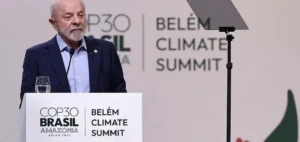
The Brazilian president calls for a voluntary and non-binding energy transition during COP30 in Belém, avoiding direct confrontation with oil-producing countries.

All the latest energy news, all the time

Annual subscription

8.25$/month*

*billed annually at 99$/year for the first year then 149,00$/year ​

Unlimited access - Archives included - Pro invoice

Monthly subscription

Unlimited access • Archives included

5.2$/month*
then 14.90$ per month thereafter

*Prices shown are exclusive of VAT, which may vary according to your location or professional status.

Since 2021: 30,000 articles - +150 analyses/week.