The United Kingdom and the European Union revive cooperation on electricity markets

After three years of separation post-Brexit, the United Kingdom and the European Union have announced their intention to examine conditions for the UK's reintegration into the European electricity market, aiming to optimize cross-border exchanges.

Share:

Comprehensive energy news coverage, updated nonstop

Annual subscription

8.25€/month*

*billed annually at 99€/year for the first year then 149,00€/year ​

Unlimited access • Archives included • Professional invoice

OTHER ACCESS OPTIONS

Monthly subscription

Unlimited access • Archives included

5.2€/month*
then 14.90€ per month thereafter

FREE ACCOUNT

3 articles offered per month

FREE

*Prices are excluding VAT, which may vary depending on your location or professional status

Since 2021: 35,000 articles • 150+ analyses per week

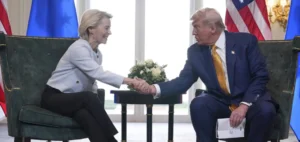
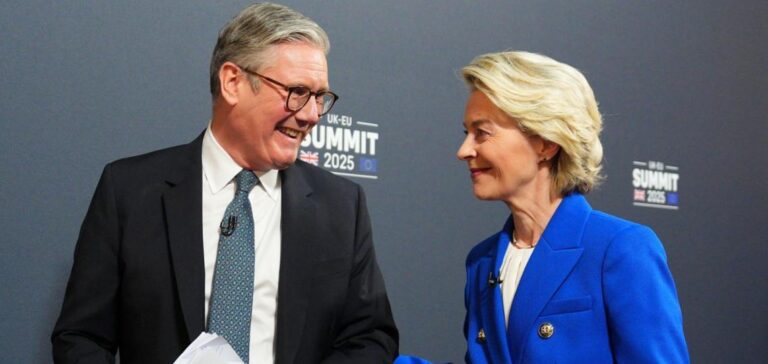
The European Union (EU) and the United Kingdom jointly declared during a recent summit their intention to restart discussions aimed at restoring close cooperation in electricity trading. This decision follows a period of market separation resulting from Brexit, which ended in 2021 the full integration of the United Kingdom into the EU’s Internal Electricity Market (IEM). Both parties have emphasized their mutual interest in exploring concrete solutions allowing the UK to participate again in European trading platforms. The main objective is to enhance efficiency and optimize costs associated with electricity trading through existing interconnections.

Essential interconnections for electricity flows

Currently, nine electricity interconnections link Great Britain to the European Union markets. These infrastructures have a combined capacity of nearly 10 gigawatts (GW), allowing an annual transmission of approximately 80 terawatt-hours (TWh). Electricity flows vary daily, depending on market conditions determined by supply and demand, making Great Britain a net importer from France, Belgium, the Netherlands, Denmark, and soon Germany, while being an exporter to Ireland.

Current arrangements, established post-Brexit, rely on explicit auctions for transmission capacity, primarily managed through the Joint Allocation Office (JAO). This system significantly differs from the implicit market coupling previously in place. The lack of direct integration results in reduced efficiency in daily trading, particularly due to timing discrepancies between UK and EU auction schedules.

Towards a return of market coupling?

The bilateral summit clearly indicated that future cooperation could include “dynamic alignment” with European market rules. However, both parties stressed that any alignment should respect the United Kingdom’s constitutional specifics and parliamentary procedures. Likewise, the role of the Court of Justice of the European Union (CJEU) will need precise definition within a potential arbitration-based dispute resolution mechanism.

Initially, the withdrawal agreement signed in 2020 proposed a model called Multi-Regional Loose Volume Coupling (MRLVC) to manage electricity exchanges between the EU and the UK. However, progress on this matter remains limited, with several market players considering this solution less efficient than full market coupling.

Potential impact on carbon markets

In addition to the anticipated reintegration into electricity markets, discussions also include a potential alignment of the carbon emissions trading systems between the European Union and the United Kingdom. Such an initiative could exempt British electricity from penalties associated with the future EU Carbon Border Adjustment Mechanism (CBAM). Starting in 2026, electricity will be included in the EU’s CBAM, whereas the UK does not plan to include electricity in its own mechanism until 2027.

This context is particularly significant for British producers, who are already subject to the national Carbon Price Support (CPS) tax currently set at £18 per tonne of emitted CO₂. This tax adds to the cost of British carbon allowances (UK Allowances, UKA), directly impacting the price competitiveness of British electricity compared to the continental European market.

Price divergences and economic forecasts

Analysts at S&P Global Commodity Insights forecast that by 2035, the United Kingdom could reverse its current status from a net importer to a net exporter of electricity to continental Europe. Current prices reflect significant differences: British electricity for delivery in 2026 was recently assessed by Platts at £76.56/MWh (€91.09/MWh), compared to €88.58/MWh for Germany and €58.50/MWh for France, placing the UK currently in an intermediate position.

This complex pricing and flow dynamic underscores the economic and strategic relevance of the potential reintegration of the United Kingdom into European electricity trading mechanisms.
The Turkish president suggested to Vladimir Putin a limited ceasefire targeting Ukrainian ports and energy facilities to reduce risks to strategic assets and pave the way for negotiations.
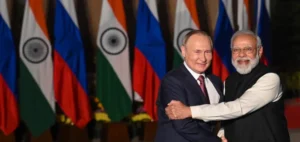
New Delhi and Moscow strengthen their energy corridor despite US tariff and regulatory pressure, maintaining oil flows supported by alternative logistical and financial mechanisms.
The United States strengthens its energy presence in the Eastern Mediterranean by consolidating a gas corridor through Greece to Central Europe, to the detriment of Russian flows and Chinese logistical influence over the Port of Piraeus.
Paris and Beijing agree to create a bilateral climate task force focused on nuclear technologies, renewable energy and maritime sectors, amid escalating trade tensions between China and the European Union.
Ankara plans to invest in US gas production to secure LNG supply and become a key supplier to Southern Europe, according to the Turkish Energy Minister.
Three Russian tankers targeted off the Turkish coast have reignited Ankara’s concerns about oil and gas supply security in the Black Sea and the vulnerability of its subsea infrastructure.
Bucharest authorises an exceptional takeover of Lukoil’s local assets to avoid a supply shock while complying with international sanctions. Three buyers are already in advanced talks.
European governments want to add review and safeguard mechanisms to the trade deal with Washington to prevent a potential surge of US imports from disrupting their industrial base.
The Khor Mor gas field, operated by Pearl Petroleum, was hit by an armed drone, halting production and causing power outages affecting 80% of Kurdistan’s electricity capacity.
Global South Utilities is investing $1 billion in new solar, wind and storage projects to strengthen Yemen's energy capacity and expand its regional influence.
British International Investment and FirstRand partner to finance the decarbonisation of African companies through a facility focused on supporting high-emission sectors.
Budapest moves to secure Serbian oil supply, threatened by Croatia’s suspension of crude flows following US sanctions on the Russian-controlled NIS refinery.
Moscow says it wants to increase oil and liquefied natural gas exports to Beijing, while consolidating bilateral cooperation amid US sanctions targeting Russian producers.
The European Investment Bank is mobilising €2bn in financing backed by the European Commission for energy projects in Africa, with a strategic objective rooted in the European Union’s energy diplomacy.
Russia faces a structural decline in energy revenues as strengthened sanctions against Rosneft and Lukoil disrupt trade flows and deepen the federal budget deficit.
Washington imposes new sanctions targeting vessels, shipowners and intermediaries in Asia, increasing the regulatory risk of Iranian oil trade and redefining maritime compliance in the region.
OFAC’s licence for Paks II circumvents sanctions on Rosatom in exchange for US technological involvement, reshaping the balance of interests between Moscow, Budapest and Washington.
Finland, Estonia, Hungary and Czechia are multiplying bilateral initiatives in Africa to capture strategic energy and mining projects under the European Global Gateway programme.
The Brazilian president calls for a voluntary and non-binding energy transition during COP30 in Belém, avoiding direct confrontation with oil-producing countries.
The region attracted only a small share of global capital allocated to renewables in 2024, despite high energy needs and ambitious development goals, according to a report published in November.

All the latest energy news, all the time

Annual subscription

8.25€/month*

*billed annually at 99€/year for the first year then 149,00€/year ​

Unlimited access - Archives included - Pro invoice

Monthly subscription

Unlimited access • Archives included

5.2€/month*
then 14.90€ per month thereafter

*Prices shown are exclusive of VAT, which may vary according to your location or professional status.

Since 2021: 30,000 articles - +150 analyses/week.