Russia delivers key test rig for ITER project progress

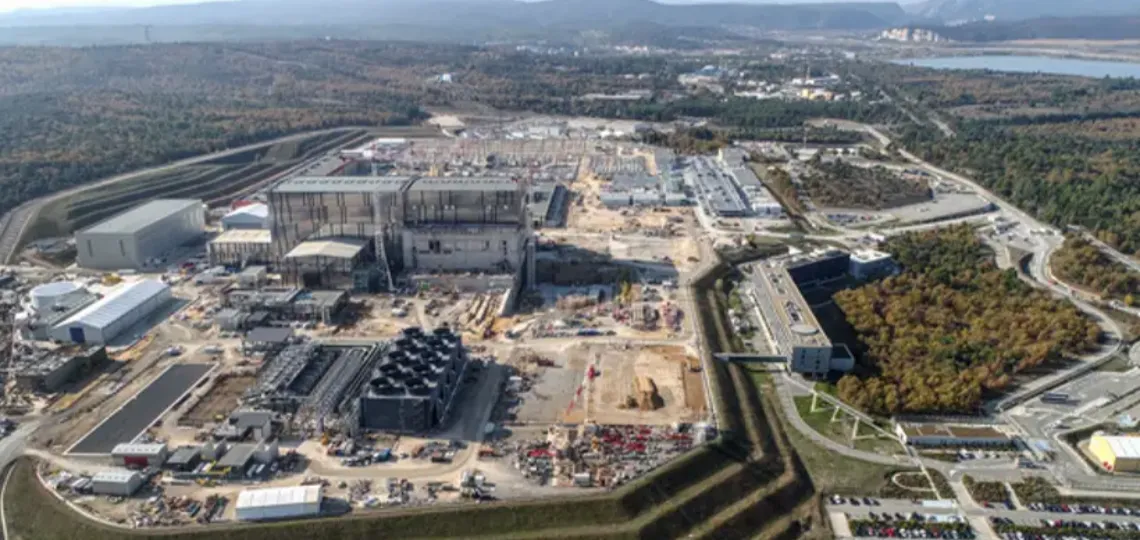
The first Russian test rig for the experimental ITER reactor has been delivered to the site in France, marking a major milestone in the international collaboration on nuclear fusion.
Share:

Comprehensive energy news coverage, updated nonstop

Annual subscription

8.25$/month*

*billed annually at 99$/year for the first year then 149,00$/year ​

Unlimited access • Archives included • Professional invoice

OTHER ACCESS OPTIONS

Monthly subscription

Unlimited access • Archives included

5.2$/month*
then 14.90$ per month thereafter

FREE ACCOUNT

3 articles offered per month

FREE

*Prices are excluding VAT, which may vary depending on your location or professional status

Since 2021: 35,000 articles • 150+ analyses per week

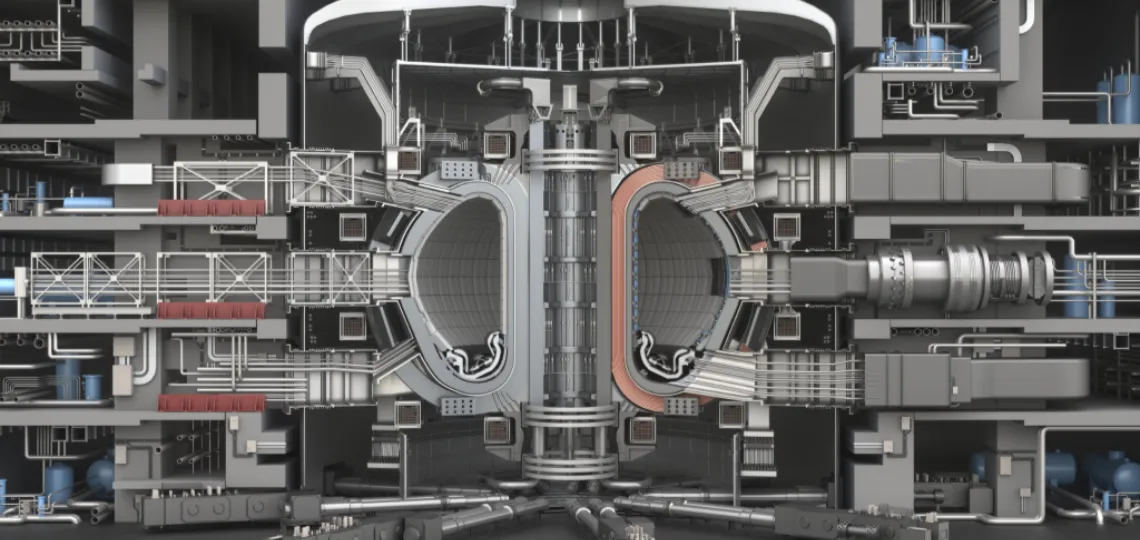
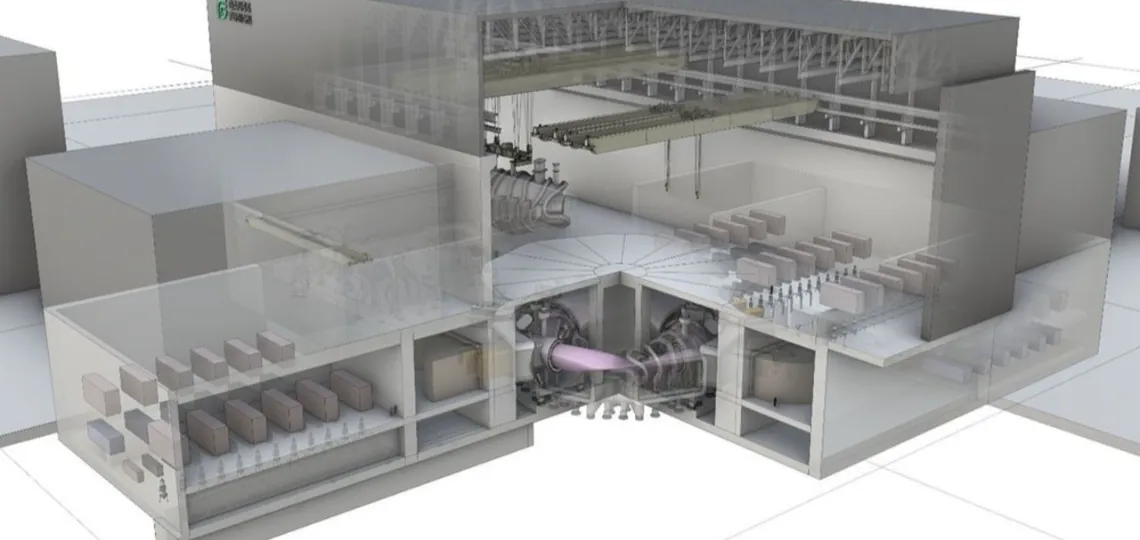
The construction site of the International Thermonuclear Experimental Reactor (ITER) has received the first of four test rigs provided by Russia. The equipment is designed to conduct vacuum, thermal, and functional testing on port plugs, which are essential components of the reactor’s diagnostic system.

The rig was manufactured in Bryansk by the GKMP Research and Production Association, acting on behalf of the ITER Project Centre, which is affiliated with Russia’s state nuclear corporation Rosatom. The facility aims to replicate tokamak operating conditions as closely as possible to ensure the reliability of instruments before they are integrated into the reactor.

A highly technical testing facility

Anatoly Krasilnikov, Director of the ITER Project Centre, stated that this device represents “one of the most complex and science-intensive systems under our responsibility within the project.” The development of the rig required the implementation of advanced technological solutions by the Russian suppliers involved.

The delivery marks a key technical step in the ITER schedule, as the project moves toward a phased operational start, beginning with deuterium-deuterium fusion trials planned for 2035. ITER Project Director Sergio Orlandi said Russia had demonstrated “high industrial capabilities, ensuring timely delivery, with the required quality and within budget.”

A global collective effort on an unprecedented scale

ITER brings together 35 nations to build the largest nuclear fusion device ever undertaken. The European Union is funding nearly half the cost, with the remaining contributions shared among China, India, Japan, South Korea, Russia, and the United States. Construction began in 2010, and after several schedule revisions, a new roadmap was defined in 2024.

ITER’s technical goal is to demonstrate the feasibility of energy production via fusion by reaching 500 MW of output with 50 MW of plasma heating input. No electricity will be fed into the grid during this experimental phase, but the data collected is expected to lay the groundwork for future industrial projects.

Next Russian test rig deliveries expected

Three additional Russian test rigs are scheduled for delivery to the site before the end of the testing programme. Each rig will be used to validate different components prior to their integration into the tokamak. The logistical and technical support provided by Rosatom and its subcontractors remains central to adhering to the project’s revised schedule.
London launches a complete regulatory overhaul of its nuclear industry to shorten authorisation timelines, expand eligible sites, and lower construction and financing costs.
Finland's Ministry of Economic Affairs extends the deadline to June 2026 for the regulator to complete its review of the operating licence for the Olkiluoto spent nuclear fuel repository.
Framatome will replace several digital control systems at the Columbia plant in the United States under a contract awarded by Energy Northwest.
The conditional green light from the nuclear regulator moves Cigéo into its final regulatory stage, while shifting the risks towards financing, territorial negotiations and industrial execution.
The drone strike confirmed by the IAEA on the Chernobyl site vault exposes Ukraine to a nuclear risk under armed conflict, forcing the EBRD to finance partial restoration while industry standards must now account for drone threats.
Deep Fission is installing a 15 MWe pressurised reactor 1.6 km underground at Great Plains Industrial Park, under the Department of Energy’s accelerated pilot programme, targeting criticality by July 4, 2026.
EDF commits to supply 33 MW of nuclear electricity to Verkor over 12 years, enabling the battery manufacturer to stabilise energy costs ahead of launching its first Gigafactory.
The full-scope simulator for the Lianjiang nuclear project has successfully passed factory acceptance testing, paving the way for its installation at the construction site in China's Guangdong province.
A coalition of Danish industry groups, unions and investors launches a platform in support of modular nuclear power, aiming to develop firm low-carbon capacity to sustain industrial competitiveness.
The United Kingdom and TAE Technologies create a joint venture in Culham to produce neutral beams, a key component of fusion, with strategic backing from Google.
Texas-based developer Natura Resources receives new federal funding to test key components of its 100-megawatt modular reactor in partnership with Oak Ridge National Laboratory.
The Niigata regional assembly is deliberating on restarting unit 6 of the world’s largest nuclear plant, thirteen years after operations ceased following the Fukushima disaster.
Reactor Doel 2 was taken offline, becoming the fifth Belgian reactor to cease operations under the country’s gradual nuclear phase-out policy.
Rolls-Royce SMR has expanded its partnership with ÚJV Řež to accelerate the deployment of small modular reactors, targeting the construction of several units in the Czech Republic and abroad.
The Indian government aims to amend legislation to allow private companies to participate in civil nuclear development, a move positioned as critical to achieving the country’s long-term energy targets.
The VVER-1200 nuclear reactor at Xudabao 4 in China has completed installation of its final passive water tank, marking the end of modular construction for the second phase of the project.
Ottawa and Edmonton commit to a nuclear production roadmap by 2050, through a memorandum of understanding also covering carbon capture and an Indigenous-led pipeline project.
Niamey asserts control over its uranium resources by authorising open market sales of Somaïr’s production, formerly operated by France’s Orano, amid ongoing legal disputes.
Equinix has signed a strategic agreement with French start-up Stellaria to reserve 500 MWe of advanced nuclear capacity to power its future European AI data centres starting in 2035.
Bishkek plans to host a RITM-200N small modular reactor supplied by Rosatom to address electricity shortages and deepen energy ties with Moscow, despite the risks posed by Western sanctions.

All the latest energy news, all the time

Annual subscription

8.25$/month*

*billed annually at 99$/year for the first year then 149,00$/year ​

Unlimited access - Archives included - Pro invoice

Monthly subscription

Unlimited access • Archives included

5.2$/month*
then 14.90$ per month thereafter

*Prices shown are exclusive of VAT, which may vary according to your location or professional status.

Since 2021: 30,000 articles - +150 analyses/week.