Floating offshore wind market projected to reach $25.40 billion by 2031
The global floating offshore wind market is projected to grow from $3.16 billion in 2026 to $25.40 billion by 2031, according to MarketsandMarkets, representing a compound annual growth rate of 51.7%.
| Sectors | Wind Energy, Floating |
|---|---|
| Themes | Markets & Finance, Sector Analysis |
| Companies | MarketsandMarkets |
| Countries | Japan |
The global floating offshore wind market is projected to grow from $3.16 billion in 2026 to $25.40 billion by 2031, according to projections published by MarketsandMarkets. This compound annual growth rate (CAGR) of 51.7% over the forecast period reflects an accelerating transition toward large-scale commercial deployments, particularly in Asia Pacific where projects such as Hai Long in Taiwan illustrate the region's growing deployment momentum. In 2025, the market was valued at $2.85 billion. Floating wind technology enables the exploitation of deep-water wind resources that remain inaccessible to conventional fixed-bottom installations.
Semi-submersible platforms hold the dominant position
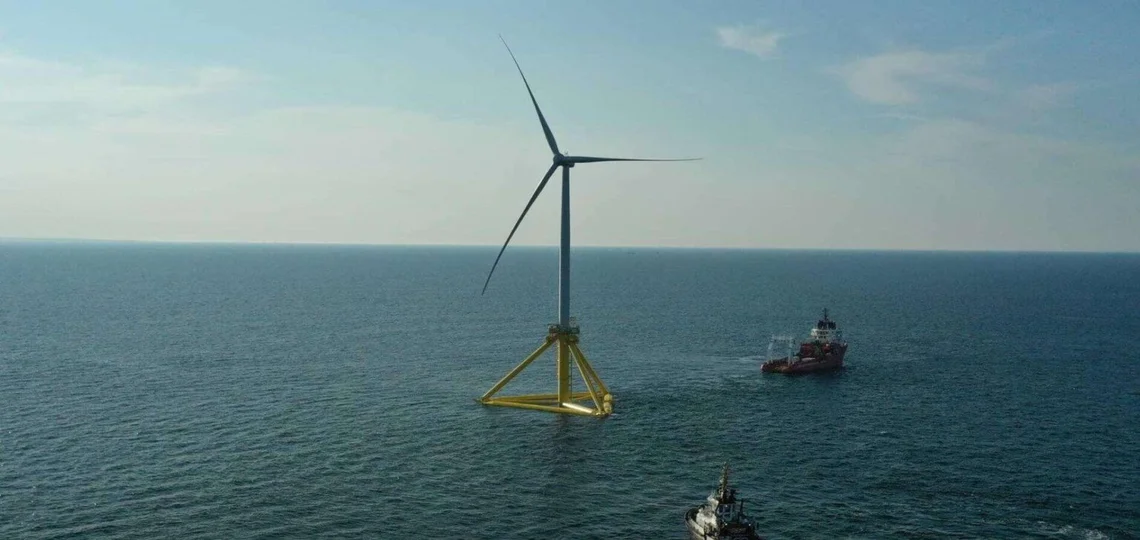
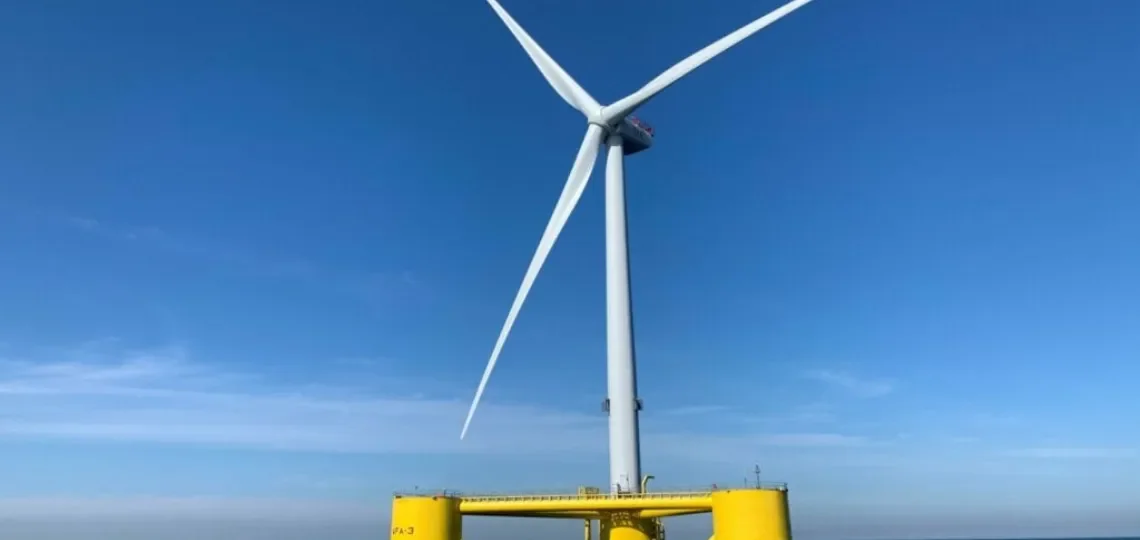
Semi-submersible platforms held the largest market share in 2025, according to the report. Their ability to be deployed in deep-water zones, beyond 60 meters, offers a decisive advantage over fixed-bottom foundations. These structures provide enhanced stability through distributed buoyancy and a lower center of gravity. They also benefit from simplified fabrication and assembly processes, enabling onshore integration and tow-out installation, which reduces offshore construction risks and costs.
Their compatibility with high-capacity turbines — 10 MW and above — improves capacity factors and contributes to lowering the levelized cost of energy (LCOE), reinforcing their economic viability. European and Asia Pacific markets account for the bulk of deployments, given their bathymetric characteristics and the presence of deep-water sites.
Asia Pacific identified as the fastest-growing region
Asia Pacific is identified as the fastest-growing region over the forecast period, according to the study. Japan and Taiwan feature coastlines with deep waters where floating wind technology is more suitable than fixed-bottom installations. Japan has implemented a Green Growth Strategy to accelerate the deployment of offshore renewable energies. High electricity demand, combined with limited land availability for onshore renewables, is pushing countries in the region to prioritize offshore solutions.
The region is also attracting growing investment from international developers and local companies, which are forming strategic partnerships to localize supply chains and reduce project costs. The strengthening of port infrastructure and improvement of installation methodologies are contributing to the scalability of large-scale commercial deployments.
Structural fundamentals supporting the sector's trajectory
Market growth is primarily driven by favorable government policies, rising investment in renewable energy infrastructure, and the need to diversify energy supplies in line with global decarbonization targets. Technological advances in turbine capacities, optimized floating platform designs, and improved installation methodologies are expected to contribute to cost reductions. The strengthening of supply chains and expansion of port infrastructure further support the sector's commercial scale-up.
Investor confidence is growing as developers and major energy groups commit capital toward floating wind projects. The sector is transitioning from pilot projects to large-scale deployments, underpinned by progress in economies of scale and stakeholder collaboration. Floating offshore wind is thus positioned as one of the fastest-growing segments within the global renewable energy landscape, the report indicates.