Stiesdal Offshore and RWE to Decommission TetraSpar Floating Wind Demonstrator
The TetraSpar floating wind demonstrator is set for decommissioning in summer 2026 after five years of operation, having generated nearly 70 million kWh with an aggregate capacity factor of 51.4%.
| Sectors | Wind Energy, Floating |
|---|---|
| Themes | Project Development, Operations & Maintenance, Innovation & Transformation, Sector Innovation |
| Countries | Norway |
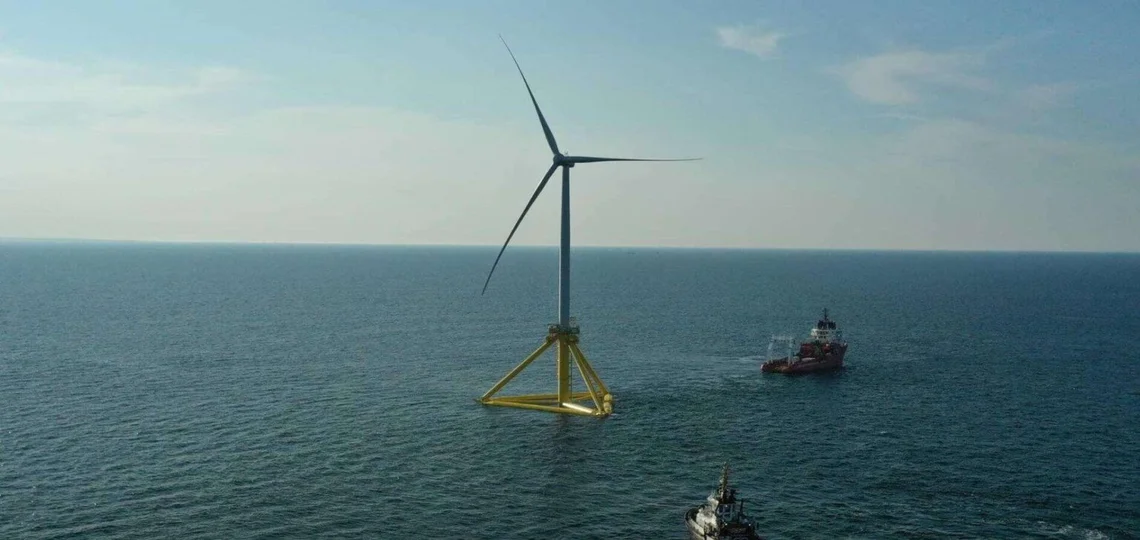
The TetraSpar Demonstrator project company, jointly owned by Stiesdal Offshore, RWE and TEPCO Renewable Power, has announced the planned decommissioning of its floating wind turbine, scheduled for summer 2026. The operation marks the conclusion of a five-year demonstration program that the partners say has met its objectives. The decommissioning contract was awarded to Global Maritime following a competitive tender process. The work will be carried out in close coordination with the METCentre test facility, as announced by RWE and Stiesdal Offshore.
Operational performance: 70 million kWh and 98% availability
Since commissioning, the 3.6 MW, 130-meter Siemens turbine has produced almost 70 million kWh, according to data provided by the project partners. The system achieved an aggregate capacity factor of 51.4% and an availability of 98%. These results validate the design and industrialisation principles underpinning the project. The floating wind sector is moving toward large-scale deployment, as illustrated by the $81 million grant awarded by the UK to the Port Talbot site for the development of a Celtic Sea floating wind hub.
The project was originally developed in partnership with Stiesdal Offshore, RWE, Shell and TEPCO Renewable Power. Shell is no longer part of the initiative. After nearly five years of uninterrupted operation under real offshore conditions, the decommissioning will allow a full inspection of the submerged structure and an in-depth analysis of its condition.
Unique insights to accelerate commercial scaling of floating wind
The inspection results will provide unprecedented data on structural integrity, material performance and long-term behaviour under real offshore conditions. This knowledge aims to reduce risk, optimise designs and accelerate the commercial scaling of the technology. Physical verification of structures after extended operation is increasingly valued as the sector moves toward large-scale deployment. Demonstration projects such as TetraSpar play an essential role in bridging the gap between innovation and industrial deployment.