Maine moves towards floating wind power

The Bureau of Ocean Enegy Management (BOEM) publishes a final environmental assessment for a floating wind energy research project off the Gulf of Maine.

Share:

Le Maine Avance vers l'Énergie Éolienne Flottante avec une Nouvelle Évaluation Environnementale.

Comprehensive energy news coverage, updated nonstop

Annual subscription

8.25$/month*

*billed annually at 99$/year for the first year then 149,00$/year ​

Unlimited access • Archives included • Professional invoice

OTHER ACCESS OPTIONS

Monthly subscription

Unlimited access • Archives included

5.2$/month*
then 14.90$ per month thereafter

FREE ACCOUNT

3 articles offered per month

FREE

*Prices are excluding VAT, which may vary depending on your location or professional status

Since 2021: 35,000 articles • 150+ analyses per week

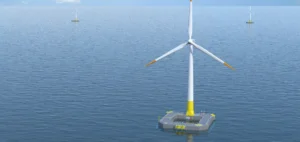
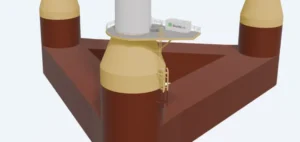
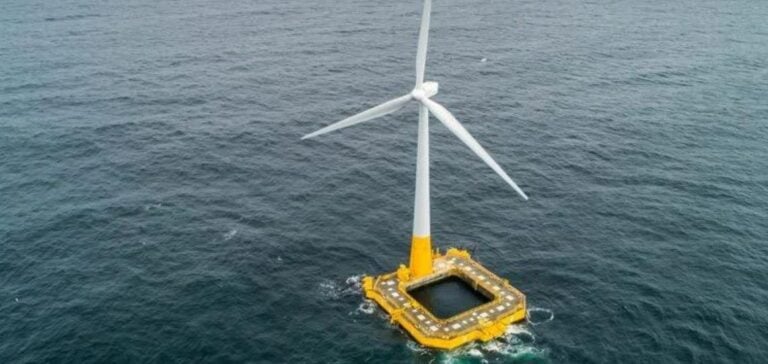
The Bureau of Ocean Enegy Management (BOEM) announces the availability of its Final Environmental Assessment (Final EA) for an offshore wind energy research lease in the Gulf of Maine. According to BOEM director Elizabeth Klein, floating wind technology could make offshore wind power a reality in this region.

An innovative research project

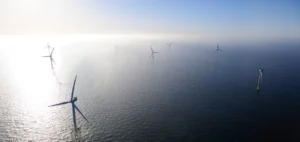
In October 2021, theState of Maine applied for a research lease to explore floating wind energy technology and deployment. The research site, located 28 nautical miles off the coast of Maine, southeast of Portland, could accommodate up to 12 floating wind turbines capable of generating up to 144 megawatts of renewable energy. BOEM will publish a notice of availability of the final environmental assessment for this energy research lease in the Federal Register.

An in-depth analysis of environmental impacts

After considering the alternatives described and analyzed in the Final Environmental Assessment, as well as comments from the public and cooperating and advisory agencies on the preliminary assessment, BOEM concluded that the issuance of a wind research lease in the proposed area off Maine and the associated site characterization and assessment activities would not have a significant impact on the environment. Therefore, under the National Environmental Policy Act, BOEM is not required to prepare an Environmental Impact Statement to issue this offshore wind research lease.

Next steps and collaborations

Once the final assessment had been completed and significant impacts ruled out, BOEM proposed the research lease to the State of Maine. The State has 30 days to accept, reject or request modifications to the lease. Since the start of the Biden-Harris administration, the Department of the Interior has approved the country’s first eight commercial-scale offshore wind projects. BOEM has organized four offshore wind lease auctions, including sales off New York, New Jersey, the Carolinas and the first sales off the Pacific and Gulf coasts.

Future prospects and developments

BOEM is currently exploring additional opportunities for offshore wind energy development in the United States, including in the Gulf of Maine and on the U.S. mid-Atlantic coast. The Department continues to take steps to evolve its approach to offshore wind to favor union-built projects and a domestic supply chain.
Swedish developer OX2 acquires three onshore wind projects totalling 235 MW in Romania, pushing its portfolio beyond 1.1 GW in a rapidly growing market.
Danish group Vestas is expanding its blade plant in Poland and creating more than 300 jobs to supply turbines to Germany, the leading onshore wind market in Europe.
The UK government has approved the development consent for the 480 MW Morecambe offshore wind farm, a project led by Copenhagen Infrastructure Partners and scheduled to enter construction in 2027.
Infinity Power has started work on its 200 MW wind project in Ras Ghareb, strengthening its position in the African market with technical support from China's POWERCHINA Huadong.
A partnership between the European Investment Bank and Crédit Agricole CIB aims to generate up to €8 billion in wind energy investments across the European Union through a bank guarantee mechanism.
With a €600mn ($652mn) contribution, the European Investment Bank becomes the main lender of the BC-Wind offshore wind project developed by Ocean Winds off the Polish coast.
Cadeler has taken delivery of its tenth wind turbine installation vessel, Wind Mover, delivered ahead of schedule and immediately deployed in Europe, strengthening its capabilities amid rising industrial demand.
Levanta Renewables partners with Triconti Windkraft Group to develop an onshore wind farm in Quezon province, scheduled to begin operations in 2028.
BW Ideol Projects Company acquires a minority stake in the Méditerranée Grand Large project, strengthening its partnership with EDF power solutions and Maple Power in the Mediterranean floating offshore wind sector.
Octopus Energy joins a global initiative to accelerate renewable energy deployment in Africa, committing $450mn through its Power Africa programme to supply electricity to more than one million people.
Australian energy provider Snowy Hydro has secured long-term agreements with Aula Energy and TagEnergy, adding 120 MW of wind power and 105 MW of battery storage to its national portfolio.
The He Dreiht offshore wind farm delivers its first MWh as the German auction model stalls, offering EnBW and its institutional investors a strategic showcase.
The Irish government has provisionally awarded development rights for the Tonn Nua offshore site to the Ørsted-ESB joint venture under a 20-year contract supporting a 900 MW project.
Nordex Group will supply six turbines to upgrade a 34.2 MW wind farm in Caparroso, financed by the European Union under the NextGenerationEU plan.
The Spanish group continues its asset rotation strategy by transferring its French onshore wind and solar portfolio to Technique Solaire, reinforcing its focus on offshore and regulated networks.
Japanese group Eurus Energy has completed the environmental assessment for its 60.2MW repowering project in Wakkanai, with commissioning targeted for April 2029.
BayWa r.e. has reached a strategic milestone with the concept certification of its BayFloat floating substructure, validated by DNV according to current floating offshore wind standards.
A full-scale testing programme will begin in January to assess a blade reinforcement technology developed by Bladena, as ageing offshore wind fleets raise durability challenges.
Africa's first wind project led by a Chinese company, the De Aar plant generates 770 million kWh annually and focuses on developing local talent.
SPIE Wind Connect has been selected by DEME Offshore to carry out all connection and high-voltage cable testing work for the 3.6 GW Dogger Bank offshore wind project off the UK coast.

All the latest energy news, all the time

Annual subscription

8.25$/month*

*billed annually at 99$/year for the first year then 149,00$/year ​

Unlimited access - Archives included - Pro invoice

Monthly subscription

Unlimited access • Archives included

5.2$/month*
then 14.90$ per month thereafter

*Prices shown are exclusive of VAT, which may vary according to your location or professional status.

Since 2021: 30,000 articles - +150 analyses/week.