US investment in critical minerals

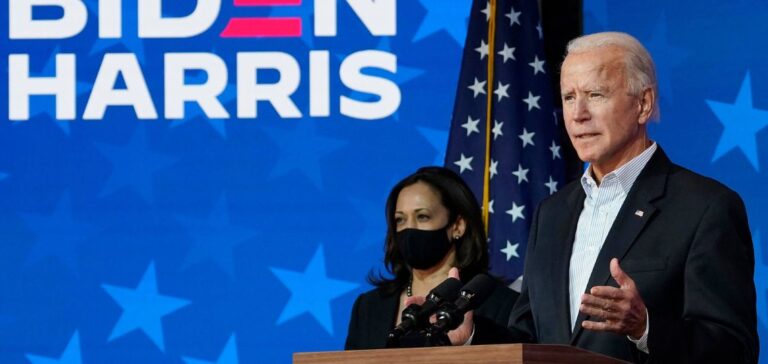
The U.S. Department of Energy is investing up to $30 million to reduce the costs of domestic production of critical minerals from coal-based resources, supporting the Biden administration's clean energy and local jobs agenda.

Share:

Comprehensive energy news coverage, updated nonstop

Annual subscription

8.25$/month*

*billed annually at 99$/year for the first year then 149,00$/year ​

Unlimited access • Archives included • Professional invoice

OTHER ACCESS OPTIONS

Monthly subscription

Unlimited access • Archives included

5.2$/month*
then 14.90$ per month thereafter

FREE ACCOUNT

3 articles offered per month

FREE

*Prices are excluding VAT, which may vary depending on your location or professional status

Since 2021: 35,000 articles • 150+ analyses per week

As part of the “Invest in America” agenda, the Department of Energy is allocating up to $30 million. This allocation is designed to reduce the production costs of critical minerals. This initiative supports domestic production from domestic coal resources.

Investment in critical minerals production :

Bipartisan Infrastructure Act funding plays a key role in local production of critical minerals, meeting growing demand in the U.S. and reducing dependence on foreign sources. This approach strengthens the economy by promoting clean energy technologies, creating quality jobs in local communities. In line with President Biden’s climate agenda, this initiative supports the manufacture of solar panels, wind turbines, electric vehicles and hydrogen fuel cells. At the same time, DOE’s Office of Fossil Energy and Carbon Management is continuing to invest. It supports projects that benefit traditional mining communities and the development of environmentally-friendly technologies. These initiatives reinforce a robust supply chain, essential to the clean energy and national defense industries. In short, this investment stimulates the local economy, enhances security of supply and supports environmental objectives.

“President Biden’s Investing in America agenda is helping to rebuild America’s manufacturing sector by strengthening our ability to produce the critical minerals needed to develop clean energy technologies,” said Jennifer M. Granholm, U.S. Secretary of Energy.

Creating jobs and revitalizing communities :

“Through these transformative investments, we’re reducing our dependence on foreign supply chains while creating high-quality jobs in the communities that have helped fuel the nation for generations.”

Extracting these minerals from coal and its by-products generates well-paid jobs in regions historically dedicated to fossil fuel production. This action is in line with the Biden-Harris administration’s commitment to revitalizing energy communities. It also aims to ensure equitable access to benefits by implementing the Justice Initiative40. The program is therefore aligned with these objectives, targeting unconventional coal resources to produce rare earths and critical minerals. These elements are essential for clean energy, national defense and various commercial products, contributing to a holistic approach.

Advances in critical minerals processing :

The funding is intended to support research into economically viable and environmentally-friendly extraction, separation and refining technologies. The program targets unconventional coal resources. It produces rare earths and critical minerals used in clean energy, defense and commercial products.

Societal considerations and impacts :

Applicants for funding must take societal considerations and impacts into account. They actively involve diverse communities, promoting diversity, equity and inclusion. This is in line with the Biden-Harris administration’s commitment to the environment and fair trade.

DOE’s ongoing commitment to critical minerals :

Since January 2021, DOE’s Office of Fossil Energy and Carbon Management has announced projects totaling around $41 million. These projects encourage exploration, identify resources, and produce and process critical minerals in traditional mining communities.
Peregrine Hydrogen and Tasmania Energy Metals have signed a letter of intent to install an innovative electrolysis technology at the future nickel processing site in Bell Bay, Tasmania.
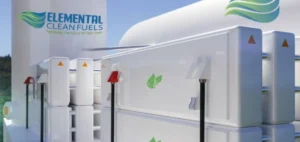
Elemental Clean Fuels will develop a 10-megawatt green hydrogen production facility in Kamloops, in partnership with Sc.wén̓wen Economic Development and Kruger Kamloops Pulp L.P., to replace part of the natural gas used at the industrial site.
Driven by green hydrogen demand and state-backed industrial plans, the global electrolyser market could reach $42.4bn by 2034, according to the latest forecast by Future Market Insights.
Driven by mobility and alkaline electrolysis, the global green hydrogen market is projected to grow at a rate of 60 % annually, reaching $74.81bn in 2032 from $2.79bn in 2025.
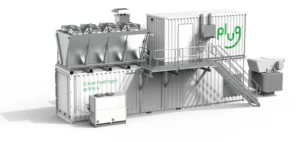
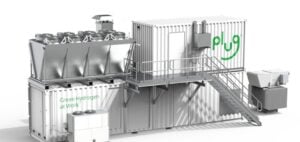
Plug Power will supply a 5MW PEM electrolyser to Hy2gen’s Sunrhyse project in Signes, marking a key step in expanding RFNBO-certified hydrogen in southern France.
The cross-border hydrogen transport network HY4Link receives recognition from the European Commission as a project of common interest, unlocking access to funding and integration into Europe’s energy infrastructure.
The withdrawal of Stellantis weakens Symbio, which is forced to drastically reduce its workforce at the Saint-Fons plant, despite significant industrial investment backed by both public and private stakeholders.
German steelmaker Thyssenkrupp plans to cut 11,000 jobs and reduce capacity by 25% as a condition to enable the sale of its steel division to India’s Jindal Steel.
Snam strengthens its position in hydrogen and CO₂ infrastructure with EU-backed SoutH2 corridor and Ravenna hub, both included in the 2025 list of strategic priorities for the European Union.
Driven by industrial demand and integration with renewable energy, the electrolyzer market is projected to grow 38.2% annually, rising from $2.08bn in 2025 to $14.48bn by 2031.
BrightHy Solutions, a subsidiary of Fusion Fuel, has signed a €1.7mn contract to supply a hydrogen refuelling station and electrolyser to a construction company operating in Southern Europe.
In Inner Mongolia, Xing’an League is deploying CNY6bn in public funds to build an integrated industrial ecosystem for hydrogen, ammonia and methanol production using local renewable resources.
Despite a drop in sales, thyssenkrupp nucera ends fiscal year 2024/2025 with operating profit, supported by stable electrolysis performance and positive cash flow.
ExxonMobil’s pause of the Baytown project highlights critical commercial gaps and reflects the impact of US federal cuts to low-carbon technologies.
State-owned Chinese group Datang commissions a project combining renewable energy and green hydrogen within a coal-to-chemicals complex in Inner Mongolia, aiming to reduce stranded asset risks while securing future industrial investments.
Möhring Energie Group commits to a green hydrogen and ammonia production project in Mauritania, targeting European markets from 2029, with an initial capacity of 1 GW.
Air Liquide deploys two hydrogen-powered heavy-duty trucks for its logistics operations in the Rotterdam area, marking a step in the integration of low-emission solutions in freight transport.
French hydrogen producer Lhyfe will deliver over 200 tonnes of RFNBO-certified hydrogen to a heavy mobility operator under a multi-year contract effective since 1 November 2025.
Plug Power was selected by Carlton Power to equip three UK-based projects totalling 55 MW, under an agreement subject to a final investment decision expected by early 2026.
Hyroad Energy expands its services to include maintenance, software, and spare parts, offering a comprehensive solution for hydrogen freight operators in the United States.

All the latest energy news, all the time

Annual subscription

8.25$/month*

*billed annually at 99$/year for the first year then 149,00$/year ​

Unlimited access - Archives included - Pro invoice

Monthly subscription

Unlimited access • Archives included

5.2$/month*
then 14.90$ per month thereafter

*Prices shown are exclusive of VAT, which may vary according to your location or professional status.

Since 2021: 30,000 articles - +150 analyses/week.