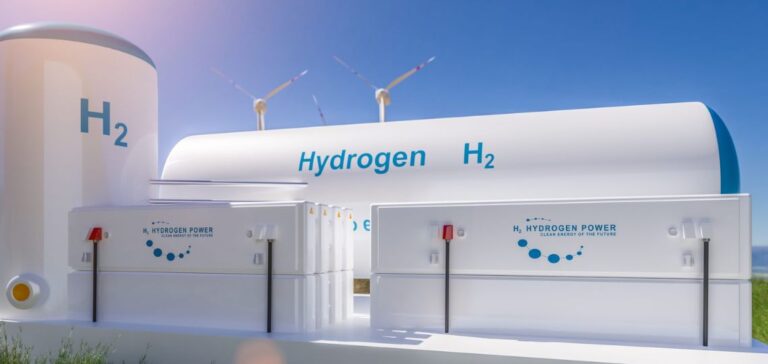
Gulf monarchies bet on green hydrogen, the “fuel of the future

The Gulf monarchies are seeking to become world leaders in green hydrogen production to diversify their energy economies and address environmental challenges, while at the same time facing the challenges of commercial viability and technological adaptation.

Share:

Comprehensive energy news coverage, updated nonstop

Annual subscription

8.25$/month*

*billed annually at 99$/year for the first year then 149,00$/year ​

Unlimited access • Archives included • Professional invoice

OTHER ACCESS OPTIONS

Monthly subscription

Unlimited access • Archives included

5.2$/month*
then 14.90$ per month thereafter

FREE ACCOUNT

3 articles offered per month

FREE

*Prices are excluding VAT, which may vary depending on your location or professional status

Since 2021: 35,000 articles • 150+ analyses per week

The Arab monarchies of the Gulf have profited from fossil fuels for decades. They are now targeting green hydrogen as a way of diversifying their economies and making their commitment to combating climate change a reality.

Economic Diversification through Green Hydrogen

Saudi Arabia, the United Arab Emirates and the Sultanate of Oman are investing heavily in green hydrogen. This fuel would solve a number of challenges: it would be low-polluting, potentially lucrative and respectful of the planet.

Faced with falling oil revenues in recent years, “the Gulf States want to take the lead in the global hydrogen market”, Karim Elgendy, a researcher at British think-tank Chatham House, told AFP. “They see green hydrogen as essential to maintaining themselves as major energy powers and keeping their influence as demand for fossil fuels declines,” he observes.

Challenges and benefits of Green Hydrogen

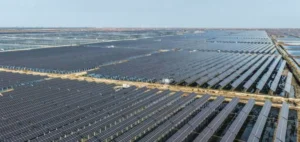
Green hydrogen accounts for less than 1% of total production. It is made from renewable electricity. However, it is not yet commercially viable. Development could take several years. Green hydrogen differs from hydrogen produced from fossil fuels. This is produced from water and renewable energies: wind, sun and hydroelectricity. While fossil fuels emit harmful greenhouse gases when burned, green hydrogen emits only water vapor. In the long term, it is recommended for use in highly polluting industries such as transport, shipping and the steel industry. As the world’s leading crude oil exporter, Saudi Arabia is building the world’s largest green hydrogen plant in Neom, the futuristic megalopolis under construction on the shores of the Red Sea. Valued at $8.4 billion, the plant will integrate solar and wind power to produce up to 600 tonnes of green hydrogen per day by the end of 2026, according to the authorities.

Leadership and Regional Ambitions

Home to the Arab world’s only nuclear power plant, the United Arab Emirates, which will host the UN COP28 climate conference in late November, approved a hydrogen strategy in July aimed at making the country one of the top ten producers by 2031.

“Hydrogen will be an essential fuel for the energy transition,” Hanan Balalaa, head of the Emirati oil giant ADNOC, told AFP. “The Emirates are well placed to benefit from this.”

But it is Oman, far behind its neighbors in terms of fossil fuels, that is set to become the world’s sixth largest exporter and the Middle East’s largest by the end of the decade, according to the International Energy Agency (IEA) in a report published in June.

The Sultanate aims to produce at least one million tonnes of green hydrogen per year by 2030, and up to 8.5 million tonnes per year by 2050, “which would be more than the total hydrogen demand in Europe today”, according to the IEA.

According to auditing firm Deloitte, Middle Eastern countries, led by the Gulf, will dominate this market in the short term. And while North Africa and Australia are expected to have the greatest potential by 2050, the Gulf States will remain the “export leaders”.

Challenges of Green Hydrogen Adoption

However, green hydrogen has not slowed down Saudi Arabia and the Emirates in their ambitions to develop their hydrocarbon industries. According to experts, it will still be years before the Gulf countries can produce green hydrogen profitably.

“Gulf countries will strive to maximize hydrocarbon sales for as long as possible,” notes Aisha Al-Sarihi of the Middle East Institute at the University of Singapore. “It will take years of trial and error for green hydrogen to become a commercial product,” this expert tells AFP, who sees it as the potential “fuel of the future” once the technology matures and costs are lower.

Former UAE Minister for Climate Change, Abdullah Al-Nuaimi, told AFP that “the existing infrastructure for hydrogen transport is inadequate and will require massive investment”. For him, overcoming the challenges posed by hydrogen will take “too long”.

Amid rising public spending, the French government has tasked two experts with reassessing the support scheme for renewable electricity and storage, with proposals expected within three months.
National operator PSE partners with armed forces to protect transformer stations as critical infrastructure faces sabotage linked to foreign interference.
The Norwegian government establishes a commission to anticipate the decline of hydrocarbons and assess economic options for the country in the coming decades.
Kazakhstan plans to allocate 3 GW of wind and solar projects by the end of 2026 through public tenders, with a first 1 GW tranche in 2025, amid efforts to modernise its power system.
Hurricanes Beryl, Helene and Milton accounted for 80% of electricity outages recorded in 2024, marking a ten-year high according to federal data.
The French Energy Regulatory Commission introduces a temporary prudential control on gas and electricity suppliers through a “guichet à blanc” opening in December, pending the transposition of European rules.
The Carney–Smith agreement launches a new pipeline to Asia, removes oil and gas emission caps, and initiates reform of the Pacific north coast tanker ban.
The gradual exit from CfD contracts is turning stable assets into infrastructures exposed to higher volatility, challenging expected returns and traditional financing models for the renewable sector.
The Canadian government introduces major legislative changes to the Energy Efficiency Act to support its national strategy and adapt to the realities of digital commerce.
Quebec becomes the only Canadian province where a carbon price still applies directly to fuels, as Ottawa eliminated the public-facing carbon tax in April 2025.
New Delhi launches a 72.8 bn INR incentive plan to build a 6,000-tonne domestic capacity for permanent magnets, amid rising Chinese export restrictions on critical components.
The rise of CfDs, PPAs and capacity mechanisms signals a structural shift: markets alone no longer cover 10–30-year financing needs, while spot prices have surged 400% in Europe since 2019.
Germany plans to finalise the €5.8bn ($6.34bn) purchase of a 25.1% stake in TenneT Germany to strengthen its control over critical national power grid infrastructure.
The Ghanaian government is implementing a reform of its energy system focused on increasing the use of local natural gas, aiming to reduce electricity production costs and limit the sector's financial imbalance.
On the 50th anniversary of its independence, Suriname announced a national roadmap including major public investment to develop its offshore oil reserves.
In its latest review, the International Energy Agency warns of structural blockages in South Korea’s electricity market, calling for urgent reforms to close the gap on renewables and reduce dependence on imported fossil fuels.
China's power generation capacity recorded strong growth in October, driven by continued expansion of solar and wind, according to official data from the National Energy Administration.
The 2026–2031 offshore programme proposes opening over one billion acres to oil exploration, triggering a regulatory clash between Washington, coastal states and legal advocacy groups.
The government of Mozambique is consolidating its gas transport and regasification assets under a public vehicle, anchoring the strategic Beira–Rompco corridor to support Rovuma projects and respond to South Africa’s gas dependency.
The British system operator NESO initiates a consultation process to define the methodology of eleven upcoming regional strategic plans aimed at coordinating energy needs across England, Scotland and Wales.

All the latest energy news, all the time

Annual subscription

8.25$/month*

*billed annually at 99$/year for the first year then 149,00$/year ​

Unlimited access - Archives included - Pro invoice

Monthly subscription

Unlimited access • Archives included

5.2$/month*
then 14.90$ per month thereafter

*Prices shown are exclusive of VAT, which may vary according to your location or professional status.

Since 2021: 30,000 articles - +150 analyses/week.