Oil company Perenco sued in Paris for “ecological damage” in the DRC

Perenco has been sued by two French NGOs, who want to see the group ordered to repair the environmental damage.

Share:

Comprehensive energy news coverage, updated nonstop

Annual subscription

8.25£/month*

*billed annually at 99£/year for the first year then 149,00£/year ​

Unlimited access • Archives included • Professional invoice

OTHER ACCESS OPTIONS

Monthly subscription

Unlimited access • Archives included

5.2£/month*
then 14.90£ per month thereafter

FREE ACCOUNT

3 articles offered per month

FREE

*Prices are excluding VAT, which may vary depending on your location or professional status

Since 2021: 35,000 articles • 150+ analyses per week

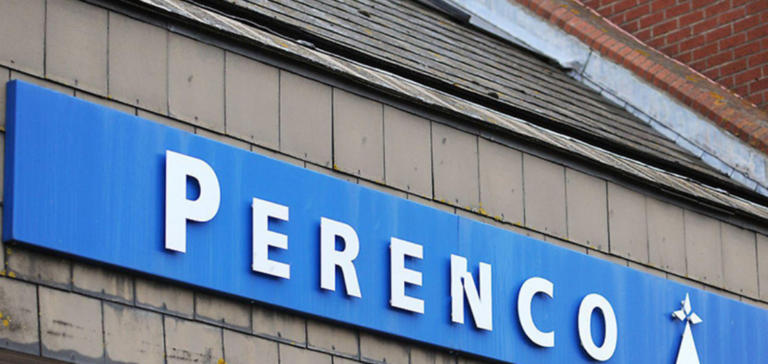
The oil company Perenco was sued on Wednesday in Paris by two French NGOs, who want to see the French group condemned to repair the environmental damage of its drilling in the Democratic Republic of Congo.

Friends of the Earth and Sherpa announced in a press release that they have summoned “the French company Perenco S.A. before the Paris judicial court, because of the ecological damage that would be caused by the group’s activities in the DRC”.

The two associations “intend to obtain recognition of the civil liability” of the company and force it “to stop and repair these damages”, under the 2016 Biodiversity Act, which established a regime for repairing ecological damage.

Founded by Breton entrepreneur Hubert Perrodo, the company, which is not listed on the stock exchange and is therefore little known, has made his family the 15th richest in France, according to the 2022 ranking of Challenges magazine.

With 6,000 employees and approximately 500,000 reported barrels per day, Perenco is a small player in the global oil industry, operating in 15 foreign countries. It is the only company operating in the DRC, where its subsidiaries operate 11 oil fields on the Muanda coast.

Perenco has been implicated “for years in numerous reports, investigations and questioning by the Congolese Senate, local associations and international NGOs for serious environmental and health problems”, write Sherpa and Friends of the Earth.

“The French company Perenco S.A., headquartered in Paris, denies any link of control over other companies in the group when asked about damages resulting from overseas activities,” the NGOs report.

“However, the multinational does not hesitate to claim French nationality for its own benefit”, the NGOs accuse, citing the example of a dispute in which Perenco used a bilateral agreement between France and Ecuador to obtain “374 million dollars” before an arbitration court.

According to these NGOs, Perenco “is organized in a myriad of shell companies, most of which are registered in tax havens such as the Virgin Islands, Bermuda and the Bahamas.

Since 2019, these NGOs have attempted to obtain documents establishing their legal ties through bailiffs. Despite a final procedural victory in 2022, they were unable to obtain them and resolved to launch their substantive assignment.

“Perenco is committed to ensuring the health and safety of its employees and communities and is developing an environmental approach to control and mitigate the impact of its activities,” said a spokesman for the group contacted by AFP, pointing to the “social, environmental and economic actions” deployed by Perenco in each country.
Facing a structural electricity surplus, the government commits to releasing a new Multiannual Energy Programme by Christmas, as aligning supply, demand and investments becomes a key industrial and budgetary issue.
A key scientific report by the United Nations Environment Programme failed to gain state approval due to deep divisions over fossil fuels and other sensitive issues.
RTE warns of France’s delay in electrifying energy uses, a key step to limiting fossil fuel imports and supporting its reindustrialisation strategy.
India’s central authority has cancelled 6.3 GW of grid connections for renewable projects since 2022, marking a tightening of regulations and a shift in responsibility back to developers.
The Brazilian government has been instructed to define within two months a plan for the gradual reduction of fossil fuels, supported by a national energy transition fund financed by oil revenues.
The German government may miss the January 2026 deadline to transpose the RED III directive, creating uncertainty over biofuel mandates and disrupting markets.
Italy allocated 82% of the proposed solar and wind capacities in the Fer-X auction, totalling 8.6GW, with competitive purchase prices and a strong concentration of projects in the southern part of the country.
Amid rising public spending, the French government has tasked two experts with reassessing the support scheme for renewable electricity and storage, with proposals expected within three months.
National operator PSE partners with armed forces to protect transformer stations as critical infrastructure faces sabotage linked to foreign interference.
The Norwegian government establishes a commission to anticipate the decline of hydrocarbons and assess economic options for the country in the coming decades.
Kazakhstan plans to allocate 3 GW of wind and solar projects by the end of 2026 through public tenders, with a first 1 GW tranche in 2025, amid efforts to modernise its power system.
Hurricanes Beryl, Helene and Milton accounted for 80% of electricity outages recorded in 2024, marking a ten-year high according to federal data.
The French Energy Regulatory Commission introduces a temporary prudential control on gas and electricity suppliers through a “guichet à blanc” opening in December, pending the transposition of European rules.
The Carney–Smith agreement launches a new pipeline to Asia, removes oil and gas emission caps, and initiates reform of the Pacific north coast tanker ban.
The gradual exit from CfD contracts is turning stable assets into infrastructures exposed to higher volatility, challenging expected returns and traditional financing models for the renewable sector.
The Canadian government introduces major legislative changes to the Energy Efficiency Act to support its national strategy and adapt to the realities of digital commerce.
Quebec becomes the only Canadian province where a carbon price still applies directly to fuels, as Ottawa eliminated the public-facing carbon tax in April 2025.
New Delhi launches a 72.8 bn INR incentive plan to build a 6,000-tonne domestic capacity for permanent magnets, amid rising Chinese export restrictions on critical components.
The rise of CfDs, PPAs and capacity mechanisms signals a structural shift: markets alone no longer cover 10–30-year financing needs, while spot prices have surged 400% in Europe since 2019.
Germany plans to finalise the €5.8bn ($6.34bn) purchase of a 25.1% stake in TenneT Germany to strengthen its control over critical national power grid infrastructure.

All the latest energy news, all the time

Annual subscription

8.25£/month*

*billed annually at 99£/year for the first year then 149,00£/year ​

Unlimited access - Archives included - Pro invoice

Monthly subscription

Unlimited access • Archives included

5.2£/month*
then 14.90£ per month thereafter

*Prices shown are exclusive of VAT, which may vary according to your location or professional status.

Since 2021: 30,000 articles - +150 analyses/week.