French power overcapacity forces strategic revision before end of December

Facing a structural electricity surplus, the government commits to releasing a new Multiannual Energy Programme by Christmas, as aligning supply, demand and investments becomes a key industrial and budgetary issue.

Share:

Comprehensive energy news coverage, updated nonstop

Annual subscription

8.25$/month*

*billed annually at 99$/year for the first year then 149,00$/year ​

Unlimited access • Archives included • Professional invoice

OTHER ACCESS OPTIONS

Monthly subscription

Unlimited access • Archives included

5.2$/month*
then 14.90$ per month thereafter

FREE ACCOUNT

3 articles offered per month

FREE

*Prices are excluding VAT, which may vary depending on your location or professional status

Since 2021: 35,000 articles • 150+ analyses per week

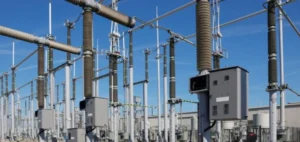
France is preparing a fast-tracked overhaul of its energy roadmap, with a decision expected before Christmas on the new Multiannual Energy Programme (PPE3). This legally binding text must articulate the simultaneous scale-up of nuclear and renewable energy sources while factoring in a declining demand. Grid operator RTE (Réseau de transport d’électricité) warns of a structural overcapacity, driven by the restart of the nuclear fleet, the growth of renewables and post-gas-crisis deindustrialisation.

Economic pressure on producers

The current situation creates unprecedented volatility on wholesale markets. In 2025, up to 90% of May days recorded zero or negative hourly prices, weakening investment signals. This pressure weighs on the profitability of Électricité de France (EDF), which must simultaneously fund the extension of its existing fleet and the EPR2 programme, estimated at around €67bn ($72.3bn). Renewable energy producers are also facing increased curtailments and declining market revenue outside peak periods.

Uncertainty for industrials and investors

Electro-intensive industries benefit from low short-term prices, but the lack of visibility on price trajectories and CO₂ taxation is delaying relocation decisions. The government is seeking to align PPE3 with its budgetary constraints and the financial capacity of its public operators. Investors are now factoring into their models a growing risk linked to overcapacity and a potential overhaul of remuneration through contracts for difference (CfD).

PPE becoming a tool for supply-demand balance

The expected content of PPE3 goes beyond capacity planning. It is likely to include electrification targets in key sectors such as mobility, data centres and hydrogen to offset a growing supply surplus. At the same time, the Ministry of Finance is pushing to smooth out investments and prioritise existing assets, while considering revenue recovery mechanisms to fund decarbonisation support schemes.

A political and European signal

With European talks scheduled for 2026, publication of PPE3 also aims to restore France’s credibility on the EU stage. Decisions on volumes, phasing and remuneration schemes will be closely watched in Brussels, especially regarding state aid and green taxonomy. France’s ability to export low-carbon electricity is seen as a strategic asset, particularly in competition with the United States and Nordic countries.

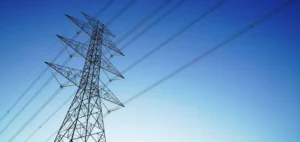
RTE warns of France’s delay in electrifying energy uses, a key step to limiting fossil fuel imports and supporting its reindustrialisation strategy.
India’s central authority has cancelled 6.3 GW of grid connections for renewable projects since 2022, marking a tightening of regulations and a shift in responsibility back to developers.
The Brazilian government has been instructed to define within two months a plan for the gradual reduction of fossil fuels, supported by a national energy transition fund financed by oil revenues.
The German government may miss the January 2026 deadline to transpose the RED III directive, creating uncertainty over biofuel mandates and disrupting markets.
Italy allocated 82% of the proposed solar and wind capacities in the Fer-X auction, totalling 8.6GW, with competitive purchase prices and a strong concentration of projects in the southern part of the country.
Amid rising public spending, the French government has tasked two experts with reassessing the support scheme for renewable electricity and storage, with proposals expected within three months.
National operator PSE partners with armed forces to protect transformer stations as critical infrastructure faces sabotage linked to foreign interference.
The Norwegian government establishes a commission to anticipate the decline of hydrocarbons and assess economic options for the country in the coming decades.
Kazakhstan plans to allocate 3 GW of wind and solar projects by the end of 2026 through public tenders, with a first 1 GW tranche in 2025, amid efforts to modernise its power system.
Hurricanes Beryl, Helene and Milton accounted for 80% of electricity outages recorded in 2024, marking a ten-year high according to federal data.
The French Energy Regulatory Commission introduces a temporary prudential control on gas and electricity suppliers through a “guichet à blanc” opening in December, pending the transposition of European rules.
The Carney–Smith agreement launches a new pipeline to Asia, removes oil and gas emission caps, and initiates reform of the Pacific north coast tanker ban.
The gradual exit from CfD contracts is turning stable assets into infrastructures exposed to higher volatility, challenging expected returns and traditional financing models for the renewable sector.
The Canadian government introduces major legislative changes to the Energy Efficiency Act to support its national strategy and adapt to the realities of digital commerce.
Quebec becomes the only Canadian province where a carbon price still applies directly to fuels, as Ottawa eliminated the public-facing carbon tax in April 2025.
New Delhi launches a 72.8 bn INR incentive plan to build a 6,000-tonne domestic capacity for permanent magnets, amid rising Chinese export restrictions on critical components.
The rise of CfDs, PPAs and capacity mechanisms signals a structural shift: markets alone no longer cover 10–30-year financing needs, while spot prices have surged 400% in Europe since 2019.
Germany plans to finalise the €5.8bn ($6.34bn) purchase of a 25.1% stake in TenneT Germany to strengthen its control over critical national power grid infrastructure.
The Ghanaian government is implementing a reform of its energy system focused on increasing the use of local natural gas, aiming to reduce electricity production costs and limit the sector's financial imbalance.
On the 50th anniversary of its independence, Suriname announced a national roadmap including major public investment to develop its offshore oil reserves.

All the latest energy news, all the time

Annual subscription

8.25$/month*

*billed annually at 99$/year for the first year then 149,00$/year ​

Unlimited access - Archives included - Pro invoice

Monthly subscription

Unlimited access • Archives included

5.2$/month*
then 14.90$ per month thereafter

*Prices shown are exclusive of VAT, which may vary according to your location or professional status.

Since 2021: 30,000 articles - +150 analyses/week.