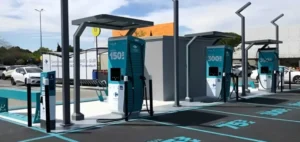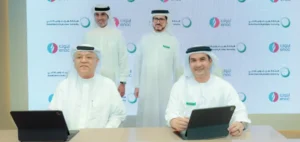

Autel Digital Power Co., Ltd, a Chinese technology company specialising in electric vehicle charging systems, has signed a strategic memorandum of understanding with Emarat EV Charging Stations Company (UAEV), the national charge point operator of the United Arab Emirates. The agreement marks a new step in the deployment of a high-performance national charging network designed to meet local climate conditions and the growing demands of electric mobility.
Joint development of next-generation technologies
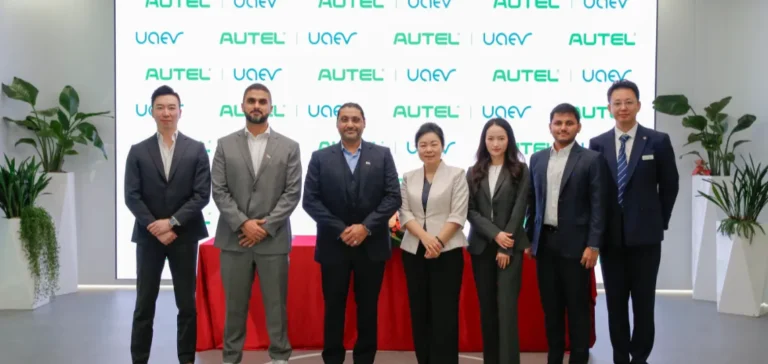
The memorandum was signed during an official visit by UAEV representatives to Autel’s global headquarters in Shenzhen. Discussions focused on the implementation of advanced charging and energy management technologies such as Vehicle-to-Grid (V2G) interaction, Battery Energy Storage Systems (BESS), and smart-charging platforms tailored to the national infrastructure.
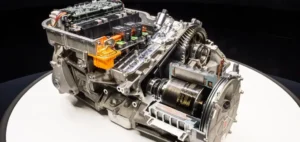
Autel will contribute its technical expertise in ultra-fast direct current (DC) charging capable of operating above 55°C, remote maintenance systems, and research in artificial intelligence applied to diagnostics and energy management. UAEV, for its part, will leverage its national mandate to ensure coordinated deployment across the territory.
Target: over 1,000 fast chargers by 2030
The collaboration also includes joint pilot programmes, collaborative research activities, and locally optimised technology adaptation. The goal is to ensure enhanced reliability, strengthened operational efficiency, and long-term scalability of the network.
According to data released by UAEV, the country plans to install over 1,000 DC fast-charging stations by 2030. This expansion forms part of the national energy strategy aiming for carbon neutrality by 2050. UAEV, an entity under Emarat’s supervision, is responsible for developing the national charging network through a strategic layout covering major cities, key roadways, and high-traffic zones.
A localised technology partnership
Autel, already active in several international markets, is consolidating its presence in the Middle East by positioning itself in what is considered a high-potential market. Its integrated solutions, including operator management software and user applications, are designed to offer a comprehensive, data-driven charging experience.
This partnership reflects a growing trend of cross-border technological cooperation in the electric mobility sector, particularly in countries seeking to strengthen their energy sovereignty while modernising transport infrastructure.