Dacia unveils €15,000 electric city car to challenge Chinese brands
Dacia presents an ultra-compact electric prototype priced under €15,000, betting on extreme simplification to compete with low-cost Chinese electric vehicles.
| Sectors | Mobility |
|---|---|
| Themes | Regulation & Governance, Public Policy |
| Companies | Stellantis, Renault, Union Européenne |
| Countries | France |
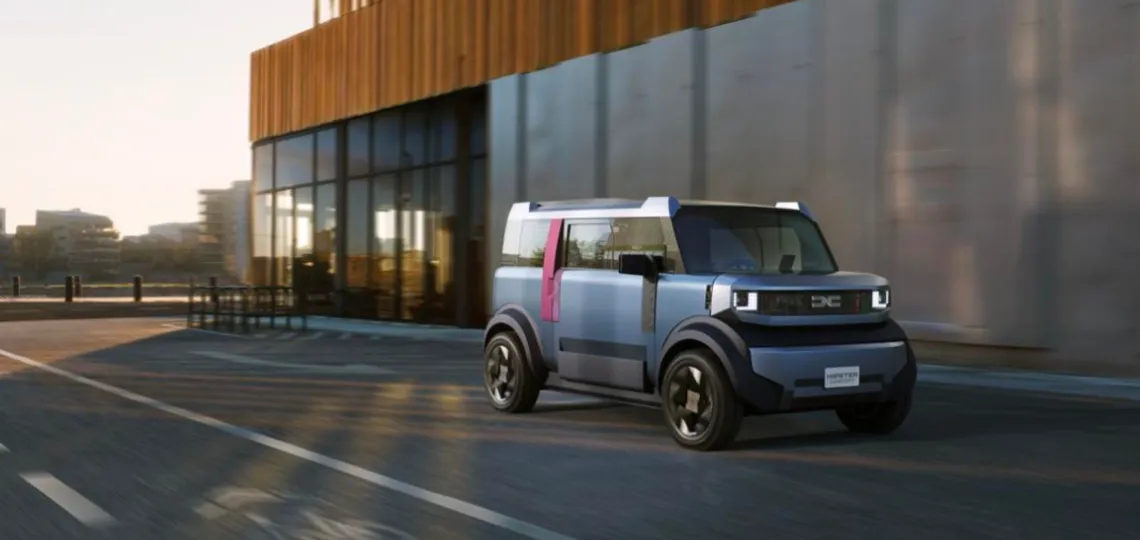
Automaker Dacia has unveiled a prototype electric mini-car that could be marketed for under €15,000 ($17,625), directly targeting the segment occupied by low-cost Chinese brands. The model, called the “Hipster Concept”, is three metres long and weighs less than 800 kilograms.
The model could go into mass production if the European Union creates a new category for urban vehicles, inspired by Japan’s “Kei cars” system. According to the brand’s management, production could begin rapidly if the regulatory framework allows it. “We are ready,” said Dacia’s Chief Executive Officer Katrin Adt.
A stripped-down model to cut costs
Designed to meet daily local mobility needs, the vehicle has a top speed of 90 km/h and a range of 150 km. Dacia cites internal data showing that the average daily driving distance in Europe is under 40 km, at an average speed of 56 km/h.
To maintain a low price, the Hipster Concept eliminates several traditional features: canvas seats, manual windows, door straps instead of handles, and a single body colour in grey-blue. Electronic features are kept to an absolute minimum.
Regulatory framework under discussion in Brussels
Renault and Stellantis are actively lobbying for the creation of a new European category that would bypass certain current regulatory obligations, particularly around safety equipment. Proponents argue that urban cars can do without many of the features required for larger vehicles while still meeting basic safety standards.
Dacia notes that the average price of a new car in Europe rose by 63% between 2001 and 2020. This inflation is excluding an increasing share of consumers from the market. The aim of this new range is to make electric mobility more affordable, particularly in urban centres.
European production and industrial model to be defined
A likely condition for this new category would be production located within European territory. “Regulations will surely require the vehicle to be manufactured in Europe,” said David Durand, Dacia’s Design Director. He also highlighted the need to develop an industrial model tailored to these specific requirements.
The realisation of the project will depend both on regulatory approval and on a coherent industrial organisation aligned with the manufacturer’s cost-reduction and local production ambitions.