India navigates between US sanctions and Russian oil dependence

Facing US secondary sanctions threats, Indian refiners slow Russian crude purchases while exploring costly alternatives, revealing complex energy security challenges.

Share:

Comprehensive energy news coverage, updated nonstop

Annual subscription

8.25$/month*

*billed annually at 99$/year for the first year then 149,00$/year ​

Unlimited access • Archives included • Professional invoice

OTHER ACCESS OPTIONS

Monthly subscription

Unlimited access • Archives included

5.2$/month*
then 14.90$ per month thereafter

FREE ACCOUNT

3 articles offered per month

FREE

*Prices are excluding VAT, which may vary depending on your location or professional status

Since 2021: 35,000 articles • 150+ analyses per week

Indian refiners are adopting a cautious approach regarding their import agreements with Russia, simultaneously intensifying efforts to further diversify their crude oil supply basket. This strategy comes as they await clearer signals regarding secondary sanctions threatened by US President Donald Trump, who has set an August 8 ultimatum for the Kremlin to agree to end the war in Ukraine.

New Delhi has given its refiners free rein to plan oil purchases with commercial viability in mind. Refiners now favor a delicate balance by increasing purchases from the United States and other non-OPEC suppliers. India has become the largest importer of Russian crude oil, with flows reaching 1.80 million barrels per day in 2024, surpassing China which imported 1.24 million barrels per day and Turkey with 0.3 million barrels per day.

Complex payment mechanisms reveal geopolitical tensions

Payment challenges constitute a crucial aspect not publicly discussed. India makes about 10% of its payments for Russian oil in Chinese yuan, with the remainder settled in Indian rupees and UAE dirhams. This complex configuration results from Russia’s exclusion from the SWIFT system, forcing both countries to explore alternatives such as the SPFS financial messaging system developed by the Russian central bank.

The issue of rupee accumulation in Indian banks poses a particular challenge. Billions of rupees remain blocked, with Moscow seeking ways to repatriate these funds, potentially by converting them to dirhams or yuan. This situation illustrates the limitations of a bilateral payment system when the trade deficit is imbalanced, with India importing massively more than it exports to Russia.

Flexible yet pressured refining infrastructure

Indian refining capacity, reaching 256.8 million metric tons per annum (MMTPA), offers remarkable technical flexibility. Indian refineries, notably Reliance Industries’ Jamnagar facility, have demonstrated their ability to process over 216 different grades of crude oil, theoretically allowing them to quickly adapt to new supply sources. This technical flexibility nevertheless remains limited by substantial economic considerations.

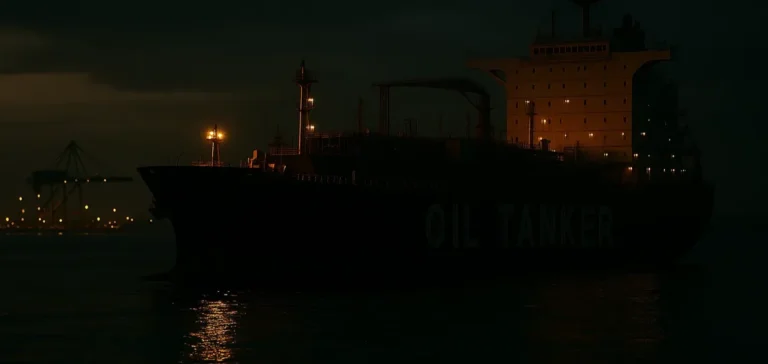
European Union sanctions on Nayara Energy and the possibility of additional sanctions from Washington have prompted Indian refiners to adopt a wait-and-see approach. Oil logistics disruptions persist at Nayara Energy’s terminal in Vadinar, with mainstream tanker operators becoming increasingly cautious about Russia-linked trades. Maritime traffic data shows relatively reduced vessel traffic at the terminal following the EU announcement.

Insufficient strategic reserves facing geopolitical risks

India’s Strategic Petroleum Reserves (SPR) reveal significant vulnerability. With a current capacity of only 5.33 million metric tons, these reserves cover just 9.5 days of national consumption, far from the 90 days recommended by the International Energy Agency. The 2025-26 budget has allocated 5,597 crore rupees for Phase II of the ISPRL project, aiming to add 6.5 MMT of additional capacity at Chandikhol and Padur.

This expansion remains insufficient given the challenge’s magnitude. Even with commercial stocks from oil companies adding 64.5 days of coverage, India would reach only 85 days of total reserves after Phase II completion. This situation considerably limits the country’s maneuvering room in the face of potential supply disruptions.

Potentially prohibitive substitution costs

The financial impact of abandoning Russian oil would be considerable. Analysts estimate that India’s annual oil import bill could increase by $9-11 billion if the country were forced to turn away from Russian crude. This increase would represent approximately 8% of the $137 billion total oil bill recorded last year.

Middle Eastern alternatives, notably Iraq and Saudi Arabia, offer little substantial price reductions. Iraq’s Basrah crude, at $76 per barrel, offers no significant savings compared to Brent, while Iraq’s limited spare capacity makes it an unreliable substitute for disrupted Russian volumes. West Asian exporters like Saudi Arabia and the UAE, once dominant players, have been marginalized by significant Russian oil discounts.

Indian refiners are cautiously exploring diversification, seeking volumes from Nigeria, Angola, and Brazil. These nations offer medium and heavy crudes suited to Indian refining configurations. Building reliable commercial ties and logistics frameworks with these suppliers takes time, a luxury India may not have if sanctions intensify rapidly. How this situation evolves will determine whether India can maintain its economic growth while navigating the geopolitical complexities of the global energy market.

European governments want to add review and safeguard mechanisms to the trade deal with Washington to prevent a potential surge of US imports from disrupting their industrial base.
The Khor Mor gas field, operated by Pearl Petroleum, was hit by an armed drone, halting production and causing power outages affecting 80% of Kurdistan’s electricity capacity.
Global South Utilities is investing $1 billion in new solar, wind and storage projects to strengthen Yemen's energy capacity and expand its regional influence.
British International Investment and FirstRand partner to finance the decarbonisation of African companies through a facility focused on supporting high-emission sectors.
Budapest moves to secure Serbian oil supply, threatened by Croatia’s suspension of crude flows following US sanctions on the Russian-controlled NIS refinery.
Moscow says it wants to increase oil and liquefied natural gas exports to Beijing, while consolidating bilateral cooperation amid US sanctions targeting Russian producers.
The European Investment Bank is mobilising €2bn in financing backed by the European Commission for energy projects in Africa, with a strategic objective rooted in the European Union’s energy diplomacy.
Russia faces a structural decline in energy revenues as strengthened sanctions against Rosneft and Lukoil disrupt trade flows and deepen the federal budget deficit.
Washington imposes new sanctions targeting vessels, shipowners and intermediaries in Asia, increasing the regulatory risk of Iranian oil trade and redefining maritime compliance in the region.
OFAC’s licence for Paks II circumvents sanctions on Rosatom in exchange for US technological involvement, reshaping the balance of interests between Moscow, Budapest and Washington.
Finland, Estonia, Hungary and Czechia are multiplying bilateral initiatives in Africa to capture strategic energy and mining projects under the European Global Gateway programme.
The Brazilian president calls for a voluntary and non-binding energy transition during COP30 in Belém, avoiding direct confrontation with oil-producing countries.
The region attracted only a small share of global capital allocated to renewables in 2024, despite high energy needs and ambitious development goals, according to a report published in November.
The United States approves South Korea’s development of civilian uranium enrichment capabilities and supports a nuclear-powered submarine project, expanding a strategic partnership already linked to a major trade agreement.
The EU member states agree to prioritise a loan mechanism backed by immobilised Russian assets to finance aid to Ukraine, reducing national budgetary impact while ensuring enhanced funding capacity.
The Canadian government commits $56 billion to a new wave of infrastructure projects aimed at expanding energy corridors, accelerating critical mineral extraction and reinforcing strategic capacity.
Berlin strengthens its cooperation with Abuja through funding aimed at supporting Nigeria’s energy diversification and consolidating its renewable infrastructure.
COP30 begins in Belém under uncertainty, as countries fail to agree on key discussion topics, highlighting deep divisions over climate finance and the global energy transition.
The United States secures a tungsten joint venture in Kazakhstan and mining protocols in Uzbekistan, with financing envisaged from the Export-Import Bank of the United States and shipment routed via the Trans-Caspian corridor.
The United States grants Hungary a one-year waiver on sanctions targeting Russian oil, in return for a commitment to purchase US liquefied natural gas worth $600mn.

All the latest energy news, all the time

Annual subscription

8.25$/month*

*billed annually at 99$/year for the first year then 149,00$/year ​

Unlimited access - Archives included - Pro invoice

Monthly subscription

Unlimited access • Archives included

5.2$/month*
then 14.90$ per month thereafter

*Prices shown are exclusive of VAT, which may vary according to your location or professional status.

Since 2021: 30,000 articles - +150 analyses/week.