UK: 3.6% reduction in emissions in 2024, coal usage at historic low

UK greenhouse gas emissions decreased by 3.6% in 2024, marking a slowdown in the pace of reduction. The end of coal usage in electricity production and the rise in electric vehicles contributed to this trend.

Share:

Comprehensive energy news coverage, updated nonstop

Annual subscription

8.25$/month*

*billed annually at 99$/year for the first year then 149,00$/year ​

Unlimited access • Archives included • Professional invoice

OTHER ACCESS OPTIONS

Monthly subscription

Unlimited access • Archives included

5.2$/month*
then 14.90$ per month thereafter

FREE ACCOUNT

3 articles offered per month

FREE

*Prices are excluding VAT, which may vary depending on your location or professional status

Since 2021: 35,000 articles • 150+ analyses per week

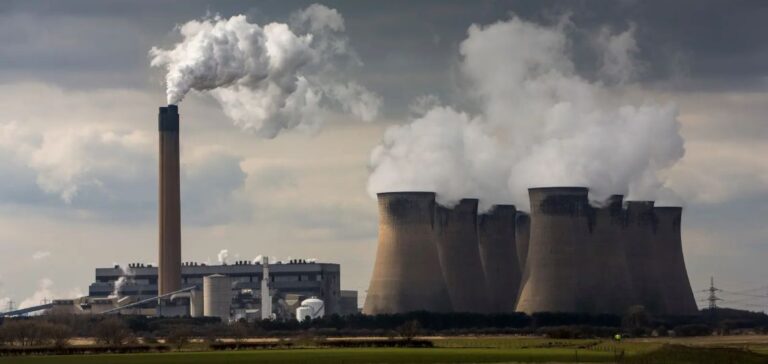
The UK recorded a 3.6% reduction in its greenhouse gas emissions in 2024, according to an analysis published by Carbon Brief. This decrease is largely attributed to the closure, in September, of the country’s last coal power plant, a first for a G7 member. In November, the government also banned the opening of new coal mines, effectively ending the exploitation of this resource within the UK.

Historic Decline in Coal Usage

Coal use in the UK has reached its lowest level since 1666, a century before the Industrial Revolution. This trend was further reinforced by the shutdown of one of the country’s last blast furnaces, located at the Port Talbot steelworks in Wales. The closure of this facility marked a significant step in reducing industrial emissions, although the steel sector remains a significant contributor to CO₂ emissions.

Slower Pace of Emissions Reduction

Despite this decrease, the pace of emissions reduction slowed compared to 2023, when emissions had dropped by 5.1%. This trend is also observed in France and Germany, where reductions in 2024 have been less pronounced than in the previous year. In contrast, China saw a slight increase in its emissions, while the United States reduced its greenhouse gas emissions by only 0.2%, according to the Rhodium Group research centre.

Transforming Transport and Energy

The UK’s emissions decline in 2024 was also influenced by a sharp increase in the number of electric vehicles on the road, up nearly 40% for the year. This rapid adoption of electric technologies, combined with a record level of decarbonised electricity generation, has helped mitigate reliance on fossil fuels. Offshore wind energy plays a key role in the country’s energy mix, although the UK still lags behind Scandinavian countries, which are predominantly powered by hydropower and wind energy.

Aspiring Reduction Targets

With a total emissions reduction of 54% compared to 1990 levels, the UK is among the countries that have reduced their carbon footprint the most in recent decades. However, to achieve its target of reducing emissions by at least 81% by 2035, the country will need to maintain a steady decarbonisation trajectory, according to Carbon Brief.

The French Energy Regulatory Commission introduces a temporary prudential control on gas and electricity suppliers through a “guichet à blanc” opening in December, pending the transposition of European rules.
The Carney–Smith agreement launches a new pipeline to Asia, removes oil and gas emission caps, and initiates reform of the Pacific north coast tanker ban.
The gradual exit from CfD contracts is turning stable assets into infrastructures exposed to higher volatility, challenging expected returns and traditional financing models for the renewable sector.
The Canadian government introduces major legislative changes to the Energy Efficiency Act to support its national strategy and adapt to the realities of digital commerce.
Quebec becomes the only Canadian province where a carbon price still applies directly to fuels, as Ottawa eliminated the public-facing carbon tax in April 2025.
New Delhi launches a 72.8 bn INR incentive plan to build a 6,000-tonne domestic capacity for permanent magnets, amid rising Chinese export restrictions on critical components.
The rise of CfDs, PPAs and capacity mechanisms signals a structural shift: markets alone no longer cover 10–30-year financing needs, while spot prices have surged 400% in Europe since 2019.
Germany plans to finalise the €5.8bn ($6.34bn) purchase of a 25.1% stake in TenneT Germany to strengthen its control over critical national power grid infrastructure.
The Ghanaian government is implementing a reform of its energy system focused on increasing the use of local natural gas, aiming to reduce electricity production costs and limit the sector's financial imbalance.
On the 50th anniversary of its independence, Suriname announced a national roadmap including major public investment to develop its offshore oil reserves.
In its latest review, the International Energy Agency warns of structural blockages in South Korea’s electricity market, calling for urgent reforms to close the gap on renewables and reduce dependence on imported fossil fuels.
China's power generation capacity recorded strong growth in October, driven by continued expansion of solar and wind, according to official data from the National Energy Administration.
The 2026–2031 offshore programme proposes opening over one billion acres to oil exploration, triggering a regulatory clash between Washington, coastal states and legal advocacy groups.
The government of Mozambique is consolidating its gas transport and regasification assets under a public vehicle, anchoring the strategic Beira–Rompco corridor to support Rovuma projects and respond to South Africa’s gas dependency.
The British system operator NESO initiates a consultation process to define the methodology of eleven upcoming regional strategic plans aimed at coordinating energy needs across England, Scotland and Wales.
The Belém summit ends with a technical compromise prioritising forest investment and adaptation, while avoiding fossil fuel discussions and opening a climate–trade dialogue likely to trigger new regulatory disputes.
The Asian Development Bank and the Kyrgyz Republic have signed a financing agreement to strengthen energy infrastructure, climate resilience and regional connectivity, with over $700mn committed through 2027.
A study from the Oxford Institute for Energy Studies finds that energy-from-waste with carbon capture delivers nearly twice the climate benefit of converting waste into aviation fuel.
Signed for 25 years, the new concession contract between Sipperec, EDF and Enedis covers 87 municipalities in the Île-de-France region and commits the parties to managing and developing the public electricity distribution network until 2051.
The French Energy Regulatory Commission publishes its 2023–2024 report, detailing the crisis impact on gas and electricity markets and the measures deployed to support competition and rebuild consumer trust.

All the latest energy news, all the time

Annual subscription

8.25$/month*

*billed annually at 99$/year for the first year then 149,00$/year ​

Unlimited access - Archives included - Pro invoice

Monthly subscription

Unlimited access • Archives included

5.2$/month*
then 14.90$ per month thereafter

*Prices shown are exclusive of VAT, which may vary according to your location or professional status.

Since 2021: 30,000 articles - +150 analyses/week.