A global warming record with 1.55°C in 2024, the UN calls for urgent measures

In 2024, the global average temperature exceeded 1.55°C above pre-industrial levels, a historical record. Natural disasters are intensifying, and the UN urges immediate action to counter their growing impacts.

Share:

Comprehensive energy news coverage, updated nonstop

Annual subscription

8.25€/month*

*billed annually at 99€/year for the first year then 149,00€/year ​

Unlimited access • Archives included • Professional invoice

OTHER ACCESS OPTIONS

Monthly subscription

Unlimited access • Archives included

5.2€/month*
then 14.90€ per month thereafter

FREE ACCOUNT

3 articles offered per month

FREE

*Prices are excluding VAT, which may vary depending on your location or professional status

Since 2021: 35,000 articles • 150+ analyses per week

Global temperatures have reached an unprecedented milestone in modern history. In 2024, the planet’s average temperature rose to 1.55°C above pre-industrial levels, surpassing the critical 1.5°C threshold established by the Paris Agreement. This estimate, published by the World Meteorological Organization (WMO), is based on the analysis of six international databases.

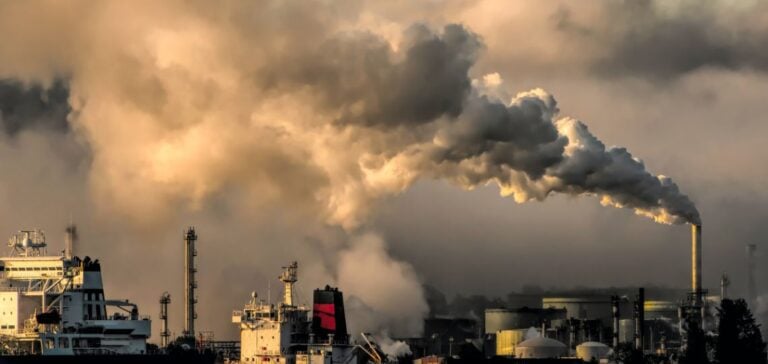
This crossing marks an alarming step in a decade characterized by heat records, fueled by the continued use of fossil fuels. The UN has called for immediate and innovative measures to mitigate the impacts of this warming, described by its Secretary-General António Guterres as an unprecedented global challenge.

Disasters on a global scale

Behind these figures lie devastating climate impacts across the globe. In California, fires labeled the “most destructive in history” caused considerable damage, while West Africa suffered record floods, putting millions in hardship.

In Saudi Arabia, extreme heat waves led to more than 1,300 deaths during the Hajj pilgrimage. The Caribbean and the United States were struck by hurricanes of unprecedented intensity, such as Helene, which caused massive destruction. These extreme events generated global economic losses estimated at $320 billion in 2024, according to reinsurer Munich Re.

A critical but temporary threshold

Despite this record warming, WMO experts highlight that a single year exceeding the 1.5°C threshold does not signify the complete failure of the Paris Agreement’s objectives, which aim for long-term stabilization of temperatures. However, this peak reflects a concerning trend.

The natural El Niño phenomenon, which promotes global warming, contributed to this record. However, scientists emphasize that the bulk of the temperature increase is due to human activity, particularly the continued use of coal, oil, and gas.

In 2025, the opposite phenomenon, La Niña, may result in a slight temporary cooling, but according to forecasts from the WMO and NASA, this will not suffice to reverse the current warming trajectory.

Oceans on the front line

Oceans, which absorb 90% of excess heat, continue to break alarming records. In 2024, their average surface temperature reached 20.87°C, exceeding the previous record set in 2023. This warming directly threatens marine ecosystems, such as coral reefs and fish stocks, while amplifying extreme weather events like hurricanes and storms.

Beyond immediate impacts on biodiversity, this oceanic warming affects marine and atmospheric currents, contributing to global climate disruptions. The scientific community stresses the urgency of reducing greenhouse gas emissions to mitigate these effects.

Insufficient commitments

The COP29, held in November in Baku, revealed limited progress. Although financial targets for climate were established, discussions on phasing out fossil fuels and reducing greenhouse gas emissions did not result in significant commitments.

Experts from the Intergovernmental Panel on Climate Change (IPCC) emphasize that limiting warming to 1.5°C rather than 2°C could significantly reduce the most catastrophic impacts of climate change. However, global efforts remain insufficient to achieve these goals.

RTE warns of France’s delay in electrifying energy uses, a key step to limiting fossil fuel imports and supporting its reindustrialisation strategy.
India’s central authority has cancelled 6.3 GW of grid connections for renewable projects since 2022, marking a tightening of regulations and a shift in responsibility back to developers.
The Brazilian government has been instructed to define within two months a plan for the gradual reduction of fossil fuels, supported by a national energy transition fund financed by oil revenues.
The German government may miss the January 2026 deadline to transpose the RED III directive, creating uncertainty over biofuel mandates and disrupting markets.
Italy allocated 82% of the proposed solar and wind capacities in the Fer-X auction, totalling 8.6GW, with competitive purchase prices and a strong concentration of projects in the southern part of the country.
Amid rising public spending, the French government has tasked two experts with reassessing the support scheme for renewable electricity and storage, with proposals expected within three months.
National operator PSE partners with armed forces to protect transformer stations as critical infrastructure faces sabotage linked to foreign interference.
The Norwegian government establishes a commission to anticipate the decline of hydrocarbons and assess economic options for the country in the coming decades.
Kazakhstan plans to allocate 3 GW of wind and solar projects by the end of 2026 through public tenders, with a first 1 GW tranche in 2025, amid efforts to modernise its power system.
Hurricanes Beryl, Helene and Milton accounted for 80% of electricity outages recorded in 2024, marking a ten-year high according to federal data.
The French Energy Regulatory Commission introduces a temporary prudential control on gas and electricity suppliers through a “guichet à blanc” opening in December, pending the transposition of European rules.
The Carney–Smith agreement launches a new pipeline to Asia, removes oil and gas emission caps, and initiates reform of the Pacific north coast tanker ban.
The gradual exit from CfD contracts is turning stable assets into infrastructures exposed to higher volatility, challenging expected returns and traditional financing models for the renewable sector.
The Canadian government introduces major legislative changes to the Energy Efficiency Act to support its national strategy and adapt to the realities of digital commerce.
Quebec becomes the only Canadian province where a carbon price still applies directly to fuels, as Ottawa eliminated the public-facing carbon tax in April 2025.
New Delhi launches a 72.8 bn INR incentive plan to build a 6,000-tonne domestic capacity for permanent magnets, amid rising Chinese export restrictions on critical components.
The rise of CfDs, PPAs and capacity mechanisms signals a structural shift: markets alone no longer cover 10–30-year financing needs, while spot prices have surged 400% in Europe since 2019.
Germany plans to finalise the €5.8bn ($6.34bn) purchase of a 25.1% stake in TenneT Germany to strengthen its control over critical national power grid infrastructure.
The Ghanaian government is implementing a reform of its energy system focused on increasing the use of local natural gas, aiming to reduce electricity production costs and limit the sector's financial imbalance.
On the 50th anniversary of its independence, Suriname announced a national roadmap including major public investment to develop its offshore oil reserves.

All the latest energy news, all the time

Annual subscription

8.25€/month*

*billed annually at 99€/year for the first year then 149,00€/year ​

Unlimited access - Archives included - Pro invoice

Monthly subscription

Unlimited access • Archives included

5.2€/month*
then 14.90€ per month thereafter

*Prices shown are exclusive of VAT, which may vary according to your location or professional status.

Since 2021: 30,000 articles - +150 analyses/week.