High-Sulfur Petcoke Price Decline Reshapes the Asian Market

High-sulfur petcoke prices are plummeting due to China's withdrawal from this segment, pushing producers to seek new markets in India and Turkey.

Share:

Comprehensive energy news coverage, updated nonstop

Annual subscription

8.25$/month*

*billed annually at 99$/year for the first year then 149,00$/year ​

Unlimited access • Archives included • Professional invoice

OTHER ACCESS OPTIONS

Monthly subscription

Unlimited access • Archives included

5.2$/month*
then 14.90$ per month thereafter

FREE ACCOUNT

3 articles offered per month

FREE

*Prices are excluding VAT, which may vary depending on your location or professional status

Since 2021: 35,000 articles • 150+ analyses per week

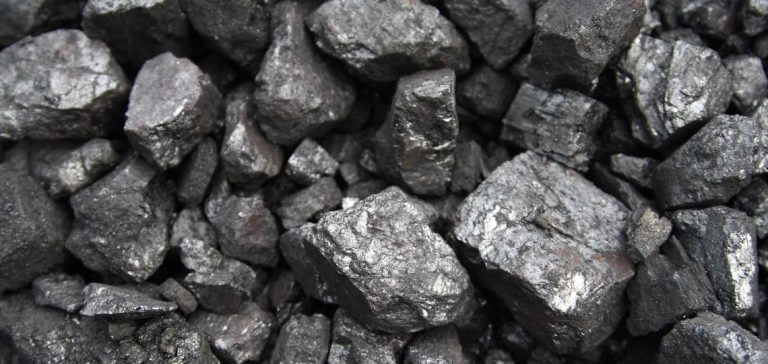
The global petcoke market, a by-product of petroleum refining, is currently experiencing a widespread price drop. This decline is primarily driven by China’s reduced imports of high-sulfur petcoke following new, albeit unofficial, environmental restrictions. As a result, American, Saudi, and Russian petcoke is now in surplus on the market.

Indian and Turkish buyers have taken advantage of this opportunity to negotiate lower prices. Turkey’s imports doubled, reaching 800,000 tons between August and September 2024. Meanwhile, India has reduced its purchases compared to the same period last year, but has accumulated enough stock for the rest of the year. According to S&P Global Commodity Insights, U.S. petcoke with 6.5% sulfur content delivered to India fell below $100 per ton, marking its lowest level since 2020.

Supply Surplus Puts Pressure on Prices

The reallocation of supply to India and Turkey does not fully compensate for the absence of demand from China, a major consumer. U.S. and Saudi refineries, which primarily produce high-sulfur petcoke, face increased pressure to offload their volumes. Saudi petcoke, in particular, which contains up to 9.5% sulfur, struggles to find buyers outside of India, where some regions restrict the use of products with over 7% sulfur content.

Producers are thus forced to adjust their prices, especially given rising transportation costs. In Turkey, the situation is somewhat more favorable as increased demand slightly stabilizes local prices. However, volatility remains high, as buyers are aware of their strong bargaining power in an oversupplied market.

Impact on the Cement Industry

The cement industry, a major consumer of petcoke, is closely monitoring this situation. In India, cement manufacturers, who use this product as a fuel for their kilns, delayed purchases during the election period and the monsoon, further reducing demand. This decision, coupled with stock accumulation, exacerbates the difficulties faced by petcoke producers. In Turkey, cement producers have taken advantage of the price drop to build up low-cost inventories, anticipating a potential price increase linked to the resumption of construction activity after the summer.

However, stockpiling could become problematic if demand does not recover quickly. The intense competition among cement producers, aiming to reduce costs, is driving an increased use of alternative fuels, such as thermal coal. This exerts additional pressure on petcoke prices, which may remain below $90 per ton for delivered cargoes in Turkey.

Market Outlook and Strategic Adjustments

In the short term, the petcoke market is characterized by persistent uncertainty. U.S. and Saudi refineries, struggling to adapt their production chains, may need to consider strategic adjustments. Several refineries have already reduced their production of high-sulfur petcoke or are looking to diversify into less sulfur-restricted industrial segments.

The absence of China, even temporarily, creates a void that India and Turkey alone cannot fully fill. While demand in these countries remains robust, it is insufficient to absorb the excess supply. Consequently, a prolonged supply-demand imbalance could force some players to rethink their production and sales strategies.


President Donald Trump confirmed direct contact with Nicolas Maduro as tensions escalate, with Caracas denouncing a planned US operation targeting its oil resources.
Zenith Energy claims Tunisian authorities carried out the unauthorised sale of stored crude oil, escalating a longstanding commercial dispute over its Robbana and El Bibane concessions.
TotalEnergies restructures its stake in offshore licences PPL 2000 and PPL 2001 by bringing in Chevron at 40%, while retaining operatorship, as part of a broader refocus of its deepwater portfolio in Nigeria.
Aker Solutions has signed a six-year frame agreement with ConocoPhillips for maintenance and modification services on the Eldfisk and Ekofisk offshore fields, with an option to extend for another six years.
Iranian authorities intercepted a vessel carrying 350,000 litres of fuel in the Persian Gulf, tightening control over strategic maritime routes in the Strait of Hormuz.
North Atlantic France finalizes the acquisition of Esso S.A.F. at the agreed per-share price and formalizes the new name, North Atlantic Energies, marking a key step in the reorganization of its operations in France.
Greek shipowner Imperial Petroleum has secured $60mn via a private placement with institutional investors to strengthen liquidity for general corporate purposes.
Ecopetrol plans between $5.57bn and $6.84bn in investments for 2026, aiming to maintain production, optimise infrastructure and ensure profitability despite a moderate crude oil market.
Faced with oversupply risks and Russian sanctions, OPEC+ stabilises volumes while preparing a structural redistribution of quotas by 2027, intensifying tensions between producers with unequal capacities.
The United Kingdom is replacing its exceptional tax with a permanent price mechanism, maintaining one of the world’s highest fiscal pressures and reshaping the North Sea’s investment attractiveness for oil and gas operators.
Pakistan confirms its exit from domestic fuel oil with over 1.4 Mt exported in 2025, transforming its refineries into export platforms as Asia faces a structural surplus of high- and low-sulphur fuel oil.
Turkish company Aksa Enerji has signed a 20-year contract with Sonabel for the commissioning of a thermal power plant in Ouagadougou, aiming to strengthen Burkina Faso’s energy supply by the end of 2026.
The Caspian Pipeline Consortium resumed loadings in Novorossiisk after a Ukrainian attack, but geopolitical tensions persist over Kazakh oil flows through this strategic Black Sea corridor.
Hungary increases oil product exports to Serbia to offset the imminent shutdown of the NIS refinery, threatened by US sanctions over its Russian majority ownership.
Faced with falling oil production, Pemex is expanding local refining through Olmeca, aiming to reduce fuel imports and optimise its industrial capacity under fiscal pressure.
Brazil’s state oil company will reduce its capital spending by 2%, hit by falling crude prices, marking a strategic shift under Lula’s presidency.
TotalEnergies has finalised the sale of its 12.5% stake in Nigeria’s offshore Bonga oilfield for $510mn, boosting Shell and Eni’s positions in the strategic deepwater production site.
Serbia is preparing a budget law amendment to enable the takeover of NIS, a refinery under US sanctions and owned by Russian groups, to avoid an imminent energy shutdown.
Nigeria’s Dangote refinery selects US-based Honeywell to supply technology that will double its crude processing capacity and expand its petrochemical output.
Iraq secures production by bypassing US sanctions through local payments, energy-for-energy swaps, and targeted suspension of financial flows to Lukoil to protect West Qurna-2 exports.

All the latest energy news, all the time

Annual subscription

8.25$/month*

*billed annually at 99$/year for the first year then 149,00$/year ​

Unlimited access - Archives included - Pro invoice

Monthly subscription

Unlimited access • Archives included

5.2$/month*
then 14.90$ per month thereafter

*Prices shown are exclusive of VAT, which may vary according to your location or professional status.

Since 2021: 30,000 articles - +150 analyses/week.