US tariffs on Chinese products: a turning point for world trade

Recent U.S. tariff increases on Chinese imports, affecting a variety of sectors, are raising concerns about their economic impact. This article explores the implications of these decisions on trade relations and the global economy.

Share:

Comprehensive energy news coverage, updated nonstop

Annual subscription

8.25$/month*

*billed annually at 99$/year for the first year then 149,00$/year ​

Unlimited access • Archives included • Professional invoice

OTHER ACCESS OPTIONS

Monthly subscription

Unlimited access • Archives included

5.2$/month*
then 14.90$ per month thereafter

FREE ACCOUNT

3 articles offered per month

FREE

*Prices are excluding VAT, which may vary depending on your location or professional status

Since 2021: 35,000 articles • 150+ analyses per week

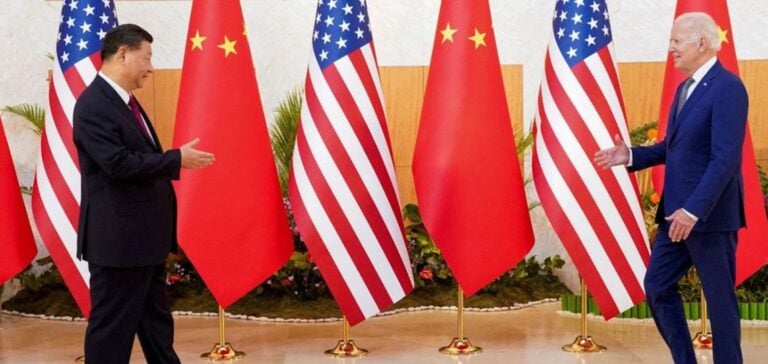
Recent U.S. tariff decisions on Chinese imports mark a significant turning point in trade relations between the two countries. The measures, which include tariff increases of up to 100% on electric vehicles, 50% on semiconductors, and 25% on batteries and steel, are designed to protect US industry while raising concerns about their economic impact.
The tariffs, which take effect on September 27, 2024, are part of a broader review of US trade policies, including Section 301 of the Trade Act of 1974.
The impact of these new tariff measures is already palpable.
Chinese electric vehicles, for example, could see their price double on the US market, making them less competitive with local alternatives.
Similarly, higher tariffs on semiconductors could affect American electronics manufacturers, who rely heavily on these components for the production of various devices.
The automotive and renewable energy industries, meanwhile, could face increased costs due to tariff hikes on batteries and steel.

Economic repercussions and Chinese reactions

A study by the Peterson Institute for International Economics (PIIE) points out that tariffs imposed by previous administrations have already cost the US economy around $165 billion.
The new increases could exacerbate this situation, raising costs for consumers and businesses, particularly in the green technology and automotive sectors.
The Chinese Ministry of Commerce reacted by calling the measures “protectionism and unilateralism”, claiming that they would harm not only US businesses, but also the international trade order.
China also pointed out that exports of targeted products to the US amounted to tens of billions of dollars each year.
This highlights the importance of trade between the two countries and the potential consequences of the new restrictions.
The Ministry has indicated that it may take “necessary measures” to defend the interests of its companies and maintain the stability of the supply chain.

International reactions and global consequences

Reaction to these new measures is not limited to the USA and China.
Other countries, such as Canada, are considering introducing similar surtaxes on Chinese products, particularly in the battery and semiconductor sectors.
In Europe, officials have expressed concern about the impact these tariffs could have on global trade.
Political leaders such as German Chancellor Olaf Scholz and Swedish Prime Minister Ulf Kristersson have pointed out that many electric vehicles imported from China come from European manufacturers operating in China, further complicating the economic and diplomatic situation.
The implications of these tariff measures go beyond bilateral relations.
According to the Cato Institute, these decisions are perceived to be driven by domestic political considerations, especially in the run-up to the 2024 US elections. However, these measures risk heightening trade tensions and reducing prospects for cooperation on crucial issues, such as the energy transition, where international collaboration is essential.

Future prospects and reflections

New tariff restrictions on Chinese products could have significant consequences not only for the USA and China, but also for international trade and global energy transition efforts.
Experts are concerned about the long-term effects on supply chains and consumer prices, which could rise as a result of these new taxes.
The current situation underlines the importance of constructive dialogue between nations to resolve trade frictions and avoid escalating tensions.
In this context, the Chinese Ministry of Commerce has expressed its wish to intensify dialogue with the USA and other trading partners to resolve these frictions through diplomatic means.
China is also preparing to actively defend its economic and commercial interests if necessary, which could lead to a new dynamic in international trade relations.
The next steps will be crucial in determining the impact of these measures on the global economy and on international cooperation efforts.


Three Russian tankers targeted off the Turkish coast have reignited Ankara’s concerns about oil and gas supply security in the Black Sea and the vulnerability of its subsea infrastructure.
Bucharest authorises an exceptional takeover of Lukoil’s local assets to avoid a supply shock while complying with international sanctions. Three buyers are already in advanced talks.
European governments want to add review and safeguard mechanisms to the trade deal with Washington to prevent a potential surge of US imports from disrupting their industrial base.
The Khor Mor gas field, operated by Pearl Petroleum, was hit by an armed drone, halting production and causing power outages affecting 80% of Kurdistan’s electricity capacity.
Global South Utilities is investing $1 billion in new solar, wind and storage projects to strengthen Yemen's energy capacity and expand its regional influence.
British International Investment and FirstRand partner to finance the decarbonisation of African companies through a facility focused on supporting high-emission sectors.
Budapest moves to secure Serbian oil supply, threatened by Croatia’s suspension of crude flows following US sanctions on the Russian-controlled NIS refinery.
Moscow says it wants to increase oil and liquefied natural gas exports to Beijing, while consolidating bilateral cooperation amid US sanctions targeting Russian producers.
The European Investment Bank is mobilising €2bn in financing backed by the European Commission for energy projects in Africa, with a strategic objective rooted in the European Union’s energy diplomacy.
Russia faces a structural decline in energy revenues as strengthened sanctions against Rosneft and Lukoil disrupt trade flows and deepen the federal budget deficit.
Washington imposes new sanctions targeting vessels, shipowners and intermediaries in Asia, increasing the regulatory risk of Iranian oil trade and redefining maritime compliance in the region.
OFAC’s licence for Paks II circumvents sanctions on Rosatom in exchange for US technological involvement, reshaping the balance of interests between Moscow, Budapest and Washington.
Finland, Estonia, Hungary and Czechia are multiplying bilateral initiatives in Africa to capture strategic energy and mining projects under the European Global Gateway programme.
The Brazilian president calls for a voluntary and non-binding energy transition during COP30 in Belém, avoiding direct confrontation with oil-producing countries.
The region attracted only a small share of global capital allocated to renewables in 2024, despite high energy needs and ambitious development goals, according to a report published in November.
The United States approves South Korea’s development of civilian uranium enrichment capabilities and supports a nuclear-powered submarine project, expanding a strategic partnership already linked to a major trade agreement.
The EU member states agree to prioritise a loan mechanism backed by immobilised Russian assets to finance aid to Ukraine, reducing national budgetary impact while ensuring enhanced funding capacity.
The Canadian government commits $56 billion to a new wave of infrastructure projects aimed at expanding energy corridors, accelerating critical mineral extraction and reinforcing strategic capacity.
Berlin strengthens its cooperation with Abuja through funding aimed at supporting Nigeria’s energy diversification and consolidating its renewable infrastructure.
COP30 begins in Belém under uncertainty, as countries fail to agree on key discussion topics, highlighting deep divisions over climate finance and the global energy transition.

All the latest energy news, all the time

Annual subscription

8.25$/month*

*billed annually at 99$/year for the first year then 149,00$/year ​

Unlimited access - Archives included - Pro invoice

Monthly subscription

Unlimited access • Archives included

5.2$/month*
then 14.90$ per month thereafter

*Prices shown are exclusive of VAT, which may vary according to your location or professional status.

Since 2021: 30,000 articles - +150 analyses/week.