ADNOC: No Transition without Oil and Gas

Share:

Comprehensive energy news coverage, updated nonstop

Annual subscription

8.25$/month*

*billed annually at 99$/year for the first year then 149,00$/year ​

Unlimited access • Archives included • Professional invoice

OTHER ACCESS OPTIONS

Monthly subscription

Unlimited access • Archives included

5.2$/month*
then 14.90$ per month thereafter

FREE ACCOUNT

3 articles offered per month

FREE

*Prices are excluding VAT, which may vary depending on your location or professional status

Since 2021: 35,000 articles • 150+ analyses per week

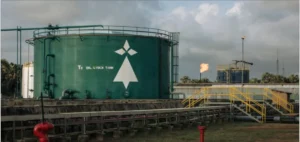
ADNOC declares that global efforts to combat climate change must include oil and gas.

ADNOC takes a stand for oil and gas

“This is a great lesson learned. We have to change gears, we have to go back to the drawing board,” said Sultan al-Jaber, who is also UAE Minister of Industry and Advanced Technology, at the first annual Saudi Green Initiative conference in Riyadh.

An aggressive and ambitious energy transition must include oil and gas, he adds.
According to him, basic hydrocarbons are the “spinal cord” of our ability to meet energy needs.
The United Arab Emirates (UAE) has its own clean energy objectives.
Even as they increase their crude oil production capacity.
They recently announced their intention to become carbon neutral by 2050.
According to BP ‘s latest World Energy Statistics report, the country holds the eighth largest oil reserves in the world.
The vast majority is in Abu Dhabi.

In the run-up to COP26

Mr. Jaber’s comments were made ahead of the United Nations (UN) climate change conference due to start on October 31 in Glasgow, Scotland.
Abu Dhabi officials have outlined plans to produce half of the emirate’s energy from clean, renewable sources, includingnuclear power, by 2050.
This would enable the UAE to meet its climate targets under the UN’s Paris Agreement, while freeing up more crude oil for profitable exports and diversifying its economy.
To this end, ADNOC and Mubadala have signed agreements with international oil companies such as Eni and TotalEnergies to explore joint projects in hydrogen, CCUS and renewable energies.
The Emirati company has also signed several agreements to sell blue ammonia, derived from hydrogen, to Japanese companies.
Oil prices climbed, driven by Ukrainian strikes on Russian infrastructure and the lack of diplomatic progress between Moscow and Washington over the Ukraine conflict.
The growth of US liquefied natural gas exports could slow if rising domestic costs continue to squeeze margins, as new volumes hit an already saturated global market.
Chevron has announced a capital expenditure range of $18 to $19 billion for 2026, focusing on upstream operations in the United States and high-potential international offshore projects.
ExxonMobil is shutting down its oldest ethylene steam cracker in Singapore, reducing local capacity to invest in its integrated Huizhou complex in China, amid regional overcapacity and rising operational costs.
Brazil, Guyana, Suriname and Argentina are expected to provide a growing share of non-OPEC+ oil supply, backed by massive offshore investments and continued exploration momentum.
Amid rising public spending, the French government has tasked two experts with reassessing the support scheme for renewable electricity and storage, with proposals expected within three months.
Bourbon has signed an agreement with ExxonMobil for the charter of next-generation Crewboats on Angola’s Block 15, strengthening a strategic cooperation that began over 15 years ago.
Turkmenistan is leveraging the Global Gas Centre to build commercial links in Europe and South Asia, as it responds to its current dependence on China and a shifting post-Russian gas market.
Reconnaissance Energy Africa completed drilling at the Kavango West 1X onshore well in Namibia, where 64 metres of net hydrocarbon pay were detected in the Otavi carbonate section.
National operator PSE partners with armed forces to protect transformer stations as critical infrastructure faces sabotage linked to foreign interference.
The Marmara Ereğlisi liquefied natural gas (LNG) terminal operated by BOTAŞ is increasing its regasification capacity, consolidating Türkiye’s role as a regional player in gas redistribution toward the Balkans and Southeast Europe.
Budapest contests the European agreement to ban Russian natural gas imports by 2027, claiming the measure is incompatible with its economic interests and the European Union's founding treaties.
CNOOC Limited has started production at the Weizhou 11-4 oilfield adjustment project and its satellite fields, targeting 16,900 barrels per day by 2026.
The Adura joint venture merges Shell and Equinor’s UK offshore assets, becoming the leading independent oil and gas producer in the mature North Sea basin.
A Delaware court approved the sale of PDV Holding shares to Elliott’s Amber Energy for $5.9bn, a deal still awaiting a U.S. Treasury licence through OFAC.
A new $100mn fund has been launched to support Nigerian oil and gas service companies, as part of a national target to reach 70% local content by 2027.
Western measures targeting Rosneft and Lukoil deeply reorganise oil trade, triggering a discreet yet massive shift of Russian export routes to Asia without causing global supply disruption.
The European Union has enshrined in law a complete ban on Russian gas by 2027, forcing utilities, operators, traders and states to restructure contracts, physical flows and supply strategies under strict regulatory pressure.
The partial exploitation of associated gas from the Badila field by Perenco supplies electricity to Moundou, highlighting the logistical and financial challenges of gas development in Chad.
The Nigerian Upstream Petroleum Regulatory Commission opens bidding for 50 exploration blocks across strategic zones to revitalise upstream investment.

All the latest energy news, all the time

Annual subscription

8.25$/month*

*billed annually at 99$/year for the first year then 149,00$/year ​

Unlimited access - Archives included - Pro invoice

Monthly subscription

Unlimited access • Archives included

5.2$/month*
then 14.90$ per month thereafter

*Prices shown are exclusive of VAT, which may vary according to your location or professional status.

Since 2021: 30,000 articles - +150 analyses/week.