He Dreiht comes online as German offshore wind model faces deadlock

The He Dreiht offshore wind farm delivers its first MWh as the German auction model stalls, offering EnBW and its institutional investors a strategic showcase.
Share:

Comprehensive energy news coverage, updated nonstop

Annual subscription

8.25$/month*

*billed annually at 99$/year for the first year then 149,00$/year ​

Unlimited access • Archives included • Professional invoice

OTHER ACCESS OPTIONS

Monthly subscription

Unlimited access • Archives included

5.2$/month*
then 14.90$ per month thereafter

FREE ACCOUNT

3 articles offered per month

FREE

*Prices are excluding VAT, which may vary depending on your location or professional status

Since 2021: 35,000 articles • 150+ analyses per week

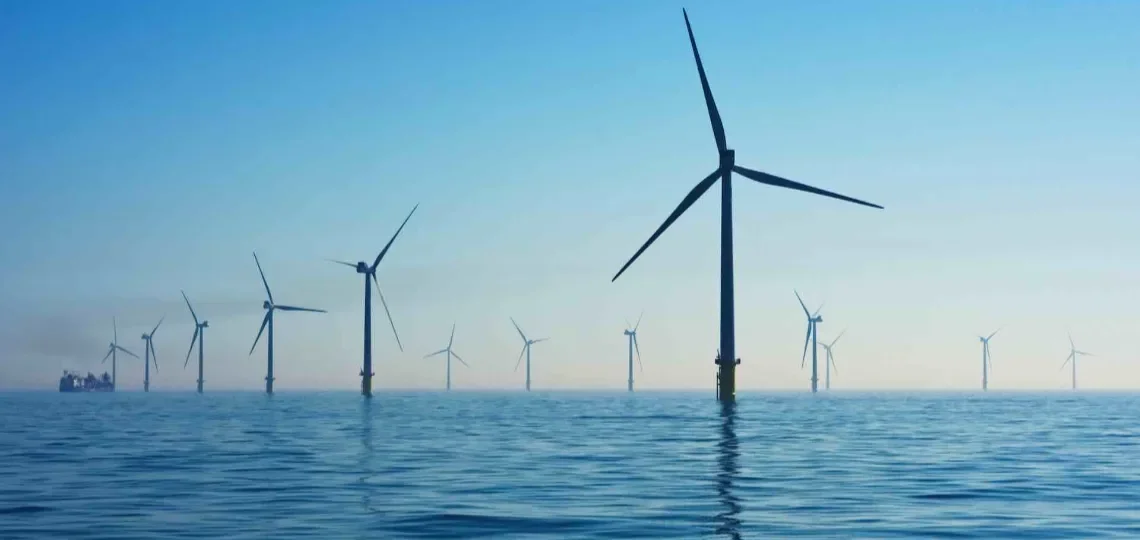
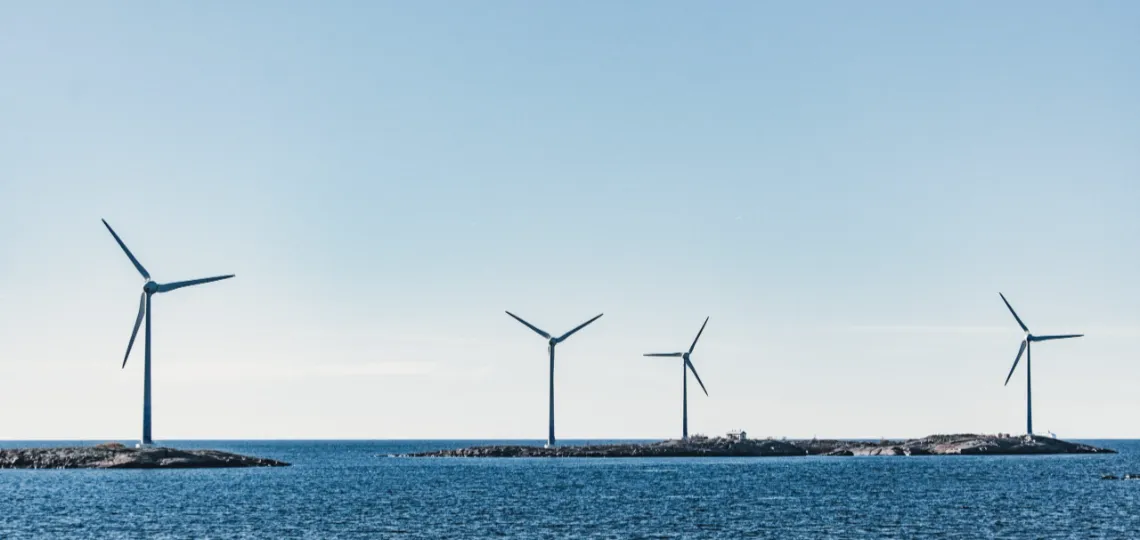
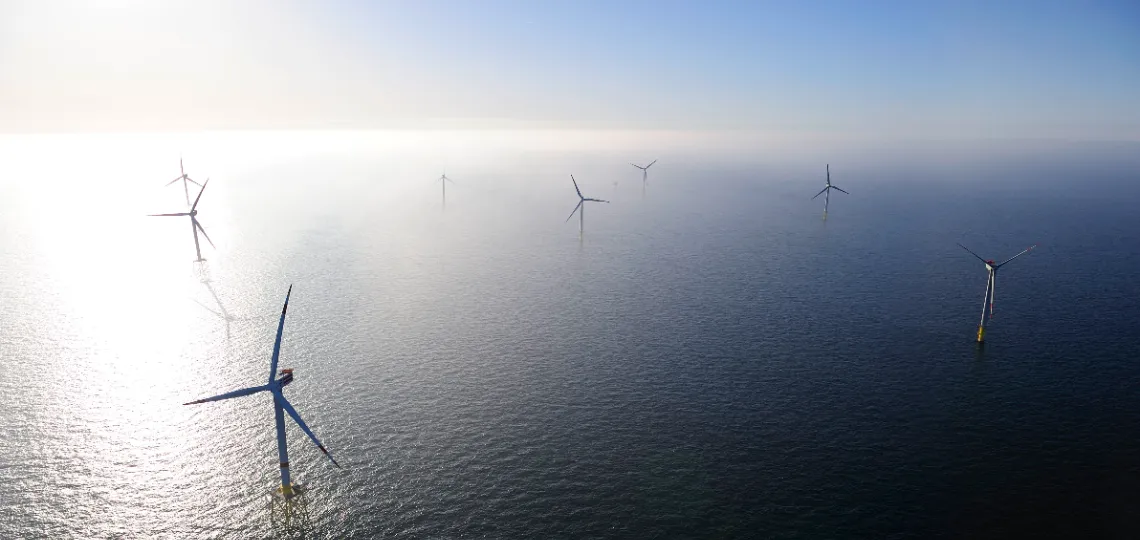
He Dreiht, a 960 MW offshore wind project developed by Energie Baden-Württemberg AG (EnBW), has begun feeding electricity into the grid, marking a key milestone for a project realised without direct public subsidies. Originating from a “zero-cent” auction awarded in 2017, it is one of the few projects from that cycle to reach operational status on schedule. Full completion is expected during the second quarter of 2026, with a progressive ramp-up already under way.
A hybrid financial structure combining PPAs and merchant exposure

The project’s economic model is based on power purchase agreements (PPAs) with Fraport, Bosch, Evonik and Salzgitter, covering around 335 MW of capacity. The remaining output will be traded on the spot market. This hybrid structure mitigates price volatility risks, with average offshore capture prices in Germany reaching approximately €84/MWh in 2025. The European Investment Bank provided €600mn in financing, alongside equity from a consortium composed of Allianz Capital Partners, AIP Management and Norges Bank Investment Management.

European industrial and institutional partners

The project uses 15 MW turbines supplied by Vestas, among the most powerful on the market, installed on gravity-based foundations about 110 km west of Heligoland. Grid connection is handled by German-Dutch transmission system operator TenneT, within an expanding HVDC architecture across the North Sea. The fully European value chain stands out in a market increasingly exposed to Chinese suppliers, which have raised regulatory concerns in Brussels.

Recent auction failure and upcoming regulatory shift

While He Dreiht enters service, the latest German offshore wind tender failed to attract any bids for 2.5 GW, exposing the limitations of the “negative bidding” model in which developers pay fees for construction rights. The Federal Ministry for Economic Affairs and Climate Action is preparing to switch to contracts for difference (CfD) starting in 2026 to restore the bankability of large-scale projects.

He Dreiht as geopolitical lever and industrial showcase

Germany remains behind its 30 GW by 2030 offshore target, with only 9.2 GW installed by mid-2025. He Dreiht and associated projects are expected to raise that figure to around 11 GW by the end of 2026. The commissioning of this project strengthens Germany’s industrial base and sends a signal to markets and European partners about the country’s ability to deliver complex projects amid a shifting regulatory environment.

Impact on the North Sea supply chain

The construction process involves critical industrial resources in a high-density project zone, where several GW of capacity are under development. He Dreiht shares some infrastructure with neighbouring EnBW projects Hohe See and Albatros, creating an operational and maintenance cluster based in Emden. This clustering may partially mitigate cost pressures and workforce constraints.

Legal framework and absence of Chinese suppliers

The project operates under Germany’s WindSeeG framework, with regulatory oversight from the Bundesnetzagentur. None of the suppliers involved are currently under investigation under the European Union’s Foreign Subsidies Regulation. This independence from Chinese supply chains may become a strategic asset in future tenders, particularly if EU trade defence instruments are reinforced.

EDF power solutions announces commercial operation of the San Kraal wind farm, the first unit of the 420MW Koruson 1 project, with full commissioning expected in early 2026.
Q ENERGY has announced the entry of three local and citizen-based partners into the capital of the Ventajou wind farm, marking its first strategic equity opening to institutional and community investors.
The Norwegian government has allocated two areas of the Utsira Nord project to the Equinor–Vårgrønn and EDF–Deep Wind Offshore consortia, launching a preparatory phase before a competitive state aid auction.
German group RWE has replaced 27 old turbines with three new high-performance units at its Muel wind farm, doubling energy output and earning ZeroWaste certification.
Synera Renewable Energy Group has signed a long-term power purchase agreement with Taiwan Smart Electricity & Energy, securing a portion of generation from the Formosa 4 wind farm.
Italian group Agsm Aim has completed the acquisition of four wind farms in Apulia totalling 52.6 MW, marking a new step in its national growth strategy in the renewable energy production sector.
Twenty-five years after the opening of the first offshore wind farm at Blyth, offshore wind now provides nearly a fifth of the United Kingdom’s electricity and supports a domestic industry employing 40,000 people.
Edison plans to launch over 500 MW of new wind and solar construction sites in Italy in 2026, backed by a €600mn ($647mn) investment, as part of its strategic growth plan in renewable energy.
GE Vernova will equip the Gurbanesti wind farm with 42 onshore 6.1 MW turbines in a second deal with Greenvolt in Romania, consolidating a combined capacity of around 500 MW.
RWE has secured contracts for four renewable energy projects totalling 68 MW in Italy, with construction set to begin in 2026, reinforcing its expansion strategy in the market.
RWE and TotalEnergies will install 66 Reef cubes® around the foundations of 11 turbines at the OranjeWind wind farm, marking one of the largest applications of artificial reefs in the North Sea.
Swedish energy group Vattenfall introduces "Rewind", an interactive platform designed to commercially repurpose technical parts from dismantled wind turbines.
The rapid growth of onshore wind in Southeast Asia is at risk due to inflexible public policies and inadequate power transmission infrastructure.
Enefit Green has sold its only wind farm in Finland to Canadian fund TD Greystone Infrastructure Fund, refocusing operations on the Baltic states and Poland in a regional concentration strategy.
McDonald’s UK commits to purchasing all electricity from the Douglas West Extension Wind Farm, a 66 MW project developed by Capital Dynamics in Scotland, under a long-term agreement managed by ENGIE.
Swedish developer OX2 acquires three onshore wind projects totalling 235 MW in Romania, pushing its portfolio beyond 1.1 GW in a rapidly growing market.
Danish group Vestas is expanding its blade plant in Poland and creating more than 300 jobs to supply turbines to Germany, the leading onshore wind market in Europe.
The UK government has approved the development consent for the 480 MW Morecambe offshore wind farm, a project led by Copenhagen Infrastructure Partners and scheduled to enter construction in 2027.
Infinity Power has started work on its 200 MW wind project in Ras Ghareb, strengthening its position in the African market with technical support from China's POWERCHINA Huadong.
A partnership between the European Investment Bank and Crédit Agricole CIB aims to generate up to €8 billion in wind energy investments across the European Union through a bank guarantee mechanism.

All the latest energy news, all the time

Annual subscription

8.25$/month*

*billed annually at 99$/year for the first year then 149,00$/year ​

Unlimited access - Archives included - Pro invoice

Monthly subscription

Unlimited access • Archives included

5.2$/month*
then 14.90$ per month thereafter

*Prices shown are exclusive of VAT, which may vary according to your location or professional status.

Since 2021: 30,000 articles - +150 analyses/week.