Global renewable energy investment growth slows to 7.3% in 2024

Despite reaching a record $807bn in 2024, renewable energy investment growth slowed sharply, with funding heavily concentrated in advanced economies and China.
Share:

Comprehensive energy news coverage, updated nonstop

Annual subscription

8.25$/month*

*billed annually at 99$/year for the first year then 149,00$/year ​

Unlimited access • Archives included • Professional invoice

OTHER ACCESS OPTIONS

Monthly subscription

Unlimited access • Archives included

5.2$/month*
then 14.90$ per month thereafter

FREE ACCOUNT

3 articles offered per month

FREE

*Prices are excluding VAT, which may vary depending on your location or professional status

Since 2021: 35,000 articles • 150+ analyses per week

Global investment in the energy transition reached $2.4tn in 2024, a 20% increase compared to the 2022–2023 annual average. Of this amount, $807bn was allocated to renewable energy technologies, setting an all-time high. However, this level of investment did not prevent a sharp slowdown in annual growth, which dropped from 32% in 2023 to 7.3% in 2024.

Photovoltaics lead despite overall deceleration

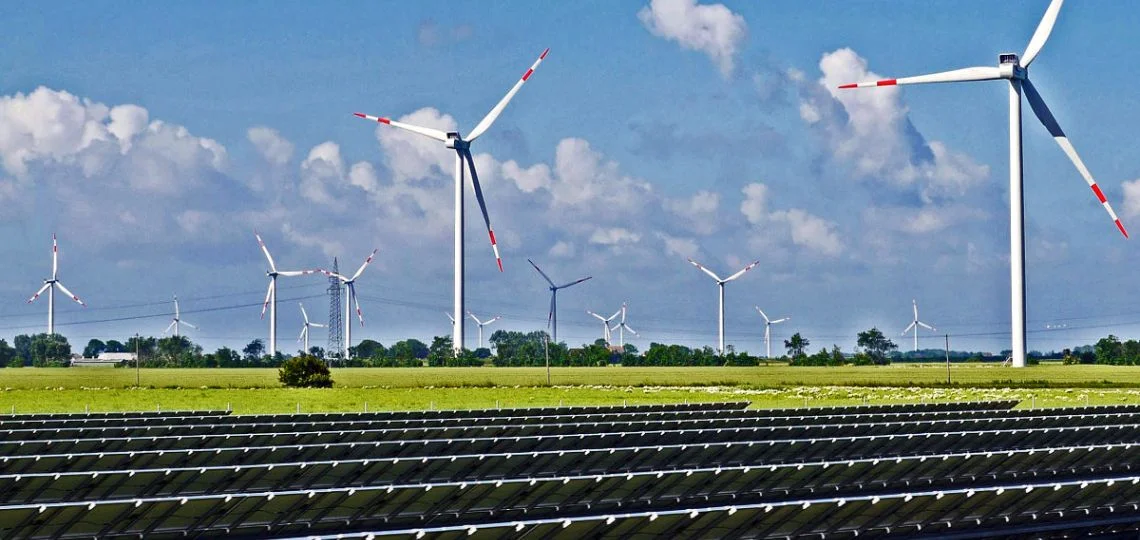
Electricity remains the primary recipient of financial flows in the renewable energy sector, accounting for 96% of total investment. Solar photovoltaic energy leads the segment, with $554bn invested, representing a 49% year-on-year increase. By contrast, other renewable segments, such as wind and hydropower, showed less dynamic performance.

The combined investment in renewables, power grids and battery storage exceeded fossil fuel investment for the first time. However, spending on fossil energy is rising again, showing ongoing competition between energy sectors.

Geographic concentration and financing imbalance

Around 90% of global renewable energy financing remains concentrated in advanced economies and China. Emerging and developing countries continue to face structural barriers, including underdeveloped financial markets, high capital costs and macroeconomic vulnerabilities. These challenges significantly limit their ability to attract large-scale capital for energy transition initiatives.

Nearly half of global investment in 2024 was financed through debt, mostly at market rates. Subsidies and concessional debt—critical for supporting less profitable yet strategic projects—accounted for less than 1% of total funding. This lack of impact capital increases the risk of public debt distress in the most vulnerable economies.

Gradual relocation of manufacturing chains

Between 2018 and 2024, China accounted for 80% of global investment in factories producing solar, wind, battery and hydrogen technologies. However, this dominance is beginning to shift as new manufacturing facilities emerge in other regions, including some developing economies, often through joint ventures and technology transfers.

Total investment in such factories fell by 21% in 2024 to $102bn, largely due to a sharp decline in solar-related spending. In contrast, battery plant investment nearly doubled to $74bn, reflecting rising demand for grid storage, electric vehicles and data centre infrastructure.

Role of partnerships and targeted public policies

The development of industrial capacity in emerging economies will largely depend on attracting foreign partnerships and implementing effective policy frameworks. Diversifying the energy value chain appears strategic to enhance energy security and generate local economic benefits.

Multilateral and bilateral cooperation could play a crucial role in addressing financing gaps and transferring technical know-how. Redirecting public capital towards risk-sharing instruments remains a priority to enable access to private funding in low-income regions.
SEG Solar launches a strategic industrial project in Indonesia with 3GW capacity to support the supply chain of its photovoltaic modules for the US market.
Vietnam's Boviet Solar has launched two industrial sites in North Carolina to produce solar cells and modules, with over 1,300 jobs created and a total investment of $400mn.
Acciona Energía sells 49% of its U.S. solar portfolio and all of two Mexican wind farms in a $1bn deal, reinforcing its asset rotation strategy.
Maxeon Solar Technologies has launched a new legal action against Aiko Solar and its European distributors over alleged infringement of a key back contact photovoltaic technology patent.
Vena Group has finalised a landmark foreign currency financing for its Opus solar project in the Philippines, marking a major milestone for cross-border investments in energy.
Voltalia strengthens its presence in Italy with four solar projects awarded under the FERX tender, securing stable revenues over two decades for a total capacity of 68 megawatts.
French developer Akuo has completed three crowdfunding campaigns to support its solar power plants in Côte-d’Or, raising a total of €5.15mn ($5.57mn) exclusively from local stakeholders.
Zimbabwe plans to launch the construction of a 600 MW floating solar power plant on Lake Kariba in 2026, aiming to reduce its reliance on drought-affected hydropower.
The company has secured a 108 MW solar project in Sicily, its largest in Italy, following the second national FER X auction, strengthening its portfolio of energy investments in the country.
Independent power producer GreenGo strengthens its portfolio to 193 MW under public schemes, after winning a new 48 MW solar project through the FER X NZIA programme.
Italy awarded over 1.1 gigawatts to 88 solar projects using no Chinese equipment, in a European first, at an average tariff of €66.38/MWh, 17% above previous auctions.
French firm Newheat forms a joint venture with Sunmark Chile to develop large-scale solar thermal heat projects for the mining sector, targeting decarbonisation of copper extraction processes in Chile.
Scatec has begun commercial operation of the second phase of its 120 MW solar project in Mmadinare, marking a strategic step in Botswana’s energy sector.
Origis Energy finalised a $290mn financing with Natixis CIB and Santander for the Swift Air Solar II and III projects, totalling 313 MWdc of installed capacity in Ector County, Texas.
ACWA Power and Bapco Energies signed a joint development agreement for a solar power plant integrated with storage technology in eastern Saudi Arabia, to supply electricity to Bahrain.
The Tilley Solar project, led by Indigenous and private partners, has reached full commissioning, adding 23.6 MW to Alberta's power grid and marking an economic milestone for Alexander First Nation.
Waaree Solar Americas will supply next-generation bifacial modules to Sabancı Renewables for two utility-scale solar plants in Texas, strengthening its presence in the North American market.
A court in Illinois has dismissed a lawsuit filed against ECA Solar, removing legal barriers to the construction of a planned solar facility outside the city limits of Morris.
EDF power solutions acquires a 20% stake in Obelisk, a 1.1GW hybrid solar and storage project in Egypt led by Scatec and Norfund, marking a new milestone in its regional strategy.
Mitsubishi HC Capital Energy and Ecokaku will develop 10 MW of non-subsidised solar power plants annually in Japan, targeting direct contracts with industrial buyers through long-term power purchase agreements.

All the latest energy news, all the time

Annual subscription

8.25$/month*

*billed annually at 99$/year for the first year then 149,00$/year ​

Unlimited access - Archives included - Pro invoice

Monthly subscription

Unlimited access • Archives included

5.2$/month*
then 14.90$ per month thereafter

*Prices shown are exclusive of VAT, which may vary according to your location or professional status.

Since 2021: 30,000 articles - +150 analyses/week.