Ember: Emerging markets reshape the global race for electric vehicles

Driven by Southeast Asia, the global share of electric vehicles exceeds 25% of new car sales in 2025, with emerging countries now leading global markets, according to Ember and other sector sources.
Share:

Comprehensive energy news coverage, updated nonstop

Annual subscription

8.25$/month*

*billed annually at 99$/year for the first year then 149,00$/year ​

Unlimited access • Archives included • Professional invoice

OTHER ACCESS OPTIONS

Monthly subscription

Unlimited access • Archives included

5.2$/month*
then 14.90$ per month thereafter

FREE ACCOUNT

3 articles offered per month

FREE

*Prices are excluding VAT, which may vary depending on your location or professional status

Since 2021: 35,000 articles • 150+ analyses per week

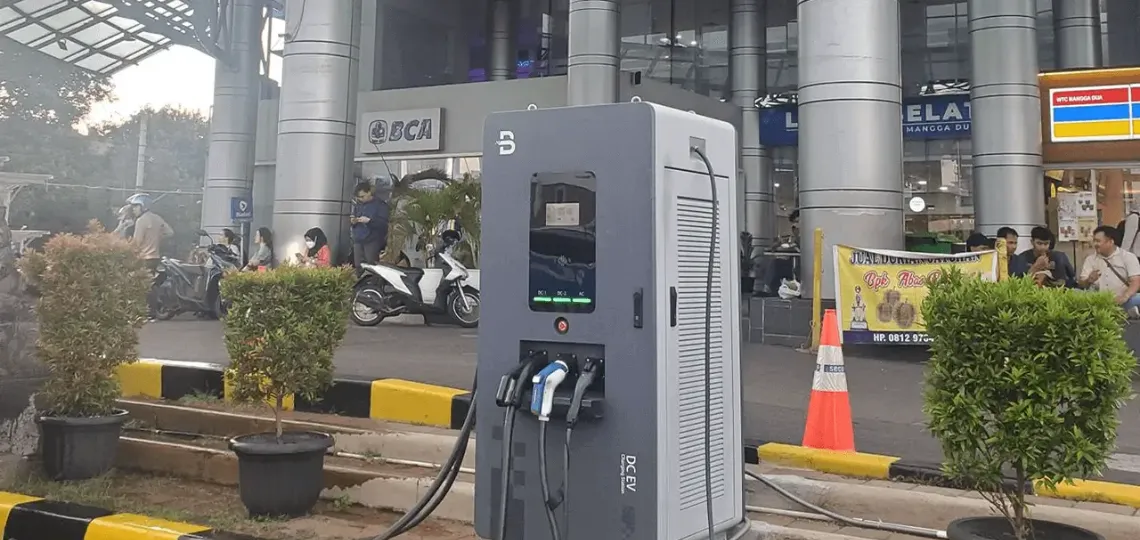
Electric vehicle (EV) sales surpassed 25% of global new car registrations in 2025. According to energy think tank Ember, this growth is largely supported by emerging economies, particularly in Southeast Asia, where momentum now exceeds that of several long-established EV markets.
Singapore and Viet Nam overtake European markets

The Association of Southeast Asian Nations (ASEAN) region is recording some of the fastest growth worldwide. Singapore and Viet Nam each reach a 40% EV market share in new car sales, surpassing levels seen in the United Kingdom and the European Union. Thailand has reached 21%, and Indonesia, at 15%, has overtaken the United States for the first time.

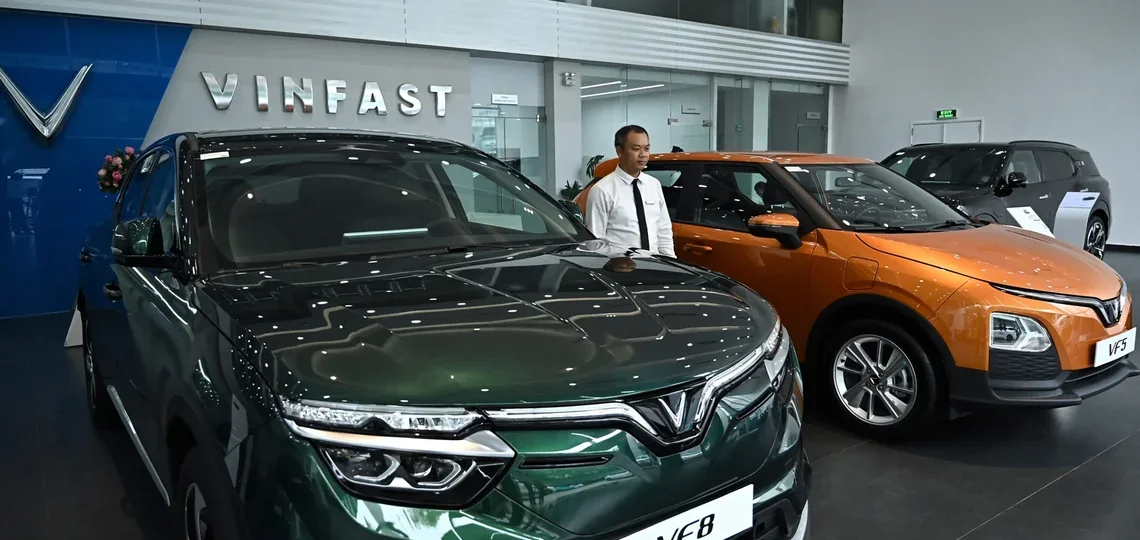
In Viet Nam, domestic manufacturer VinFast dominates the market, with its VF 3 model becoming the country’s best-selling car. In Indonesia, the surge is supported by government policies promoting local production, including tariff exemptions for manufacturers establishing industrial operations domestically.

A market shaped by Chinese exports

Regional growth is partly driven by the influx of low-cost EVs from China. In 2025, Indonesia recorded the second-largest increase in Chinese EV imports globally. Since mid-2023, the majority of Chinese EV exports have been directed to non-Organisation for Economic Co-operation and Development (OECD) markets, including Brazil, Mexico, the United Arab Emirates and Indonesia.

Governments are reinforcing their industrial strategies. Viet Nam has introduced low-emission zones and strengthened incentives for clean transport, while Indonesia is offering targeted tax incentives to attract investment in the EV supply chain.

A rapid transformation of the global automotive landscape

Southeast Asia is emerging as a strategic zone in the reorganisation of the global automotive market. In 2021, Viet Nam reported less than 0.05% EV share in new car sales. The current progress reflects structural changes in public and industrial policy frameworks.

Sector analysts believe the continuation of this momentum will depend on the expansion of charging infrastructure and the consistency of government measures. At the global level, emerging markets are reshaping the industry’s trajectory, influencing investments, logistics and manufacturing across new growth centres.

Impact on fossil fuel consumption

The effects on energy demand are already visible. Electric vehicles, which are three times more efficient than internal combustion engine vehicles, are reducing fuel consumption even in countries where electricity generation remains heavily reliant on fossil fuels.

In Brazil, where electricity is mostly renewable, EVs reduce demand for oil products by nearly 90%. In Indonesia, the reduction is close to 50%. This shift highlights the repositioning of emerging markets in both the energy and mobility sectors.

Chinese group Autel has signed a memorandum of understanding with UAEV to develop smart-charging infrastructure and energy solutions tailored to the extreme climate of the United Arab Emirates.
Ahead of Thanksgiving, average gasoline prices in the US remain close to 2024 levels, supported by falling crude prices, despite a significant increase in expected road traffic.
Beev was selected by Carrefour Énergies to develop and operate an EV charging station installation service for private and professional customers in France.
Rio Tinto commissions eight electric haul trucks with swappable batteries at the Oyu Tolgoi copper mine in partnership with Chinese company SPIC Qiyuan.
The US road safety agency is reviewing nearly 2.9 million Tesla vehicles equipped with the FSD system, following dozens of reported incidents involving traffic violations and several accidents.
The European Investment Bank unlocks an unprecedented $250mn loan to support the construction of Costa Rica’s first electric rail system, in partnership with two regional financial institutions.
Ferrari unveiled the chassis of its first electric vehicle, the Elettrica, while announcing a revision of its electrification targets, favouring thermal and hybrid powertrains for the coming decade.
The main European automotive lobby is calling for looser 2030 and 2035 emission targets, promoting hybrids and carbon-neutral fuels.
Dubai's electricity authority strengthens its electric vehicle charging network through three major contracts with ENOC, Dubai Taxi and Parkin under its EV Green Charger programme.
TotalEnergies and Banque des Territoires create a joint venture to accelerate the rollout of public electric charging infrastructure in French municipalities, with a focus on urban and suburban areas.
Tesla has announced an event scheduled for October 7, hinting at the arrival of a more affordable vehicle amid a limited product refresh and growing competition in the electric vehicle segment.
Dacia presents an ultra-compact electric prototype priced under €15,000, betting on extreme simplification to compete with low-cost Chinese electric vehicles.
Berlin questions the ban on sales of combustion cars from 2035, as German automakers warn of economic and industrial risks for the country.
Stellantis CEO Antonio Filosa calls for adjustments to the 2035 deadline to safeguard industrial activity and accelerate decarbonisation through flexibility mechanisms.
Faced with falling margins and overcapacity, Beijing is restructuring its electric vehicle industry by focusing on quality, standards, and technological upgrading.
An American-built electric aircraft completed a test flight between Stavanger and Bergen, marking a key step in integrating zero-emission air cargo operations into Norwegian airspace.
The visit marks a new step in the cooperation between the United Arab Emirates and Tellus Power, aiming to establish an EV charging station production unit in the Gulf.
Toyota launches production of its first electric vehicle in Europe at its Kolin plant in the Czech Republic, supported by a €680mn investment, including €64mn in public funding.
The Canadian government invests CAD22.7mn ($16.7mn) in eight projects to strengthen the electric vehicle charging network in British Columbia.
Ireland presents an SAF roadmap structured around four pillars, projecting 88,000 tons in 2030 and 318,000 tons in 2035, aligned with ReFuelEU and European support, while Aer Lingus and Ryanair set usage targets.

All the latest energy news, all the time

Annual subscription

8.25$/month*

*billed annually at 99$/year for the first year then 149,00$/year ​

Unlimited access - Archives included - Pro invoice

Monthly subscription

Unlimited access • Archives included

5.2$/month*
then 14.90$ per month thereafter

*Prices shown are exclusive of VAT, which may vary according to your location or professional status.

Since 2021: 30,000 articles - +150 analyses/week.