Russian gas to Uzbekistan: a new collaboration

Vladimir Putin is redefining global energy routes with a bold trilateral project, offering energy security to Uzbekistan and new prospects for Russia, against a backdrop of sanctions and strategic reorientation.

Share:

Le gaz russe vers ouzbekistan

Comprehensive energy news coverage, updated nonstop

Annual subscription

8.25£/month*

*billed annually at 99£/year for the first year then 149,00£/year ​

Unlimited access • Archives included • Professional invoice

OTHER ACCESS OPTIONS

Monthly subscription

Unlimited access • Archives included

5.2£/month*
then 14.90£ per month thereafter

FREE ACCOUNT

3 articles offered per month

FREE

*Prices are excluding VAT, which may vary depending on your location or professional status

Since 2021: 35,000 articles • 150+ analyses per week

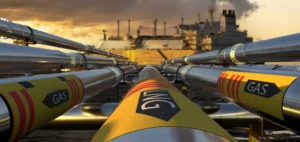
Russian Gas to Uzbekistan is proving to be a major trilateral energy project. When politics and economics meet, bold decisions are made, and that’s exactly what Vladimir Putin, the Russian president, did recently. Against a backdrop of Western sanctions hitting the Russian gas sector hard because of the offensive in Ukraine, Putin has kicked off a major energy project with Uzbekistan, via Kazakhstan.

An unprecedented Trilateral Agreement

Last Saturday, in a solemn ceremony organized by vision-conference from his residence near Moscow, Vladimir Putin announced the start of Russian gas deliveries to Uzbekistan in the presence of his Uzbek and Kazakh counterparts, Shavkat Mirzioev and Kassym-Jomart Tokayev. He described the project as “important and significant” in the energy sector.

The aim of this initiative is twofold: on the one hand, it will enable hydrocarbon-rich Uzbekistan to diversify its energy sources, thereby strengthening its energy security. Secondly, it will provide Kazakhstan with a solution for gasification in its northern and eastern regions, meeting an essential development need.

Russia, Reliable Gas Supplier

Vladimir Putin emphasized that this project will showcase Russia as a reliable supplier of natural gas. At a time when the Russian gas sector has been hard hit by European and American sanctions in response to Russia’s military intervention in Ukraine in 2022, this new route to Central Asia offers a strategic opportunity.

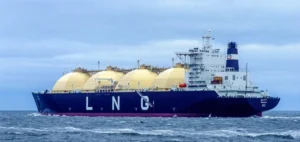
Faced with a drastic reduction in gas exports to the European Union, Russian gas giant Gazprom has begun redirecting its exports to Asia, where demand for energy is growing rapidly. This trilateral energy project is part of this new strategy, demonstrating Russia’s agility in a complex economic context.

Future prospects

Finally, it’s important to emphasize that this cooperation between Russia, Uzbekistan and Kazakhstan is not limited to gas deliveries alone. It opens the door to future possibilities far beyond the energy sector. Discussions between the three executives will no doubt focus on these prospects, which could bring significant economic opportunities.

Final Analysis

This trilateral energy project between Russia, Uzbekistan and Kazakhstan is much more than a simple gas delivery. It embodies Russia’s resilience in the face of international economic and political challenges, and underlines its commitment as a key energy partner in Eurasia. As international markets rapidly evolve, Russia has found new ways to secure its role in energy supply. This bold initiative reminds us that economics, geopolitics and energy are inextricably linked, and that innovative solutions are needed to meet the challenges of the 21st century.

The Iraqi government and Kurdish authorities have launched an investigation into the drone attack targeting the Khor Mor gas field, which halted production and caused widespread electricity outages.
PetroChina internalises three major gas storage sites through two joint ventures with PipeChina, representing 11 Gm³ of capacity, in a CNY40.02bn ($5.43bn) deal consolidating control over its domestic gas network.
The European Union is facilitating the use of force majeure to exit Russian gas contracts by 2028, a risky strategy for companies still bound by strict legal clauses.
Amid an expected LNG surplus from 2026, investors are reallocating positions toward the EU carbon market, betting on tighter supply and a bullish price trajectory.
Axiom Oil and Gas is suing Tidewater Midstream for $110mn over a gas handling dispute tied to a property for sale in the Brazeau region, with bids due this week.
Tokyo Gas has signed a 20-year agreement with US-based Venture Global to purchase one million tonnes per year of liquefied natural gas starting in 2030, reinforcing energy flows between Japan and the United States.
Venture Global accuses Shell of deliberately harming its operations over three years amid a conflict over spot market liquefied natural gas sales outside long-term contracts.
TotalEnergies ends operations of its Le Havre floating LNG terminal, installed after the 2022 energy crisis, due to its complete inactivity since August 2024.
Golar LNG has completed a $1.2bn refinancing for its floating LNG unit Gimi, securing extended financing terms and releasing net liquidity to strengthen its position in the liquefied natural gas market.
Woodside Energy and East Timor have reached an agreement to assess the commercial viability of a 5 million-tonne liquefied natural gas project from the Greater Sunrise field, with first exports targeted between 2032 and 2035.
In California, electricity production from natural gas is falling as solar continues to rise, especially between noon and 5 p.m., according to 2025 data from local grid authorities.
NextDecade has launched the pre-filing procedure to expand Rio Grande LNG with a sixth train, leveraging a political and commercial context favourable to US liquefied natural gas exports.
Condor Energies has completed drilling its first horizontal well in Uzbekistan, supported by two recompletions that increased daily production to 11,844 barrels of oil equivalent.
WhiteWater expands the Eiger Express pipeline in Texas, boosting its transport capacity to 3.7 billion cubic feet per day following new long-term contractual commitments.
The challenge to permits granted for the NESE project revives tensions between gas supply imperatives and regulatory consistency, as legal risks mount for regulators and developers.
Brasilia is preparing a regulatory overhaul of the LPG sector to break down entry barriers in a market dominated by Petrobras and four major distributors, as the Gás do Povo social programme intensifies pressure on prices.
The lifting of force majeure on the Rovuma LNG project puts Mozambique back on the global liquefied natural gas map, with a targeted capacity of 18 Mt/year and a narrowing strategic window to secure financing.
BW Energy has identified liquid hydrocarbons at the Kudu gas field in Namibia, altering the nature of the project initially designed for electricity production from dry gas.
Rising oil production in 2024 boosted associated natural gas to 18.5 billion cubic feet per day, driven by increased activity in the Permian region.
Sonatrach has concluded a new partnership with TotalEnergies, including a liquefied natural gas supply contract through 2025, amid a strategic shift in energy flows towards Europe.

All the latest energy news, all the time

Annual subscription

8.25£/month*

*billed annually at 99£/year for the first year then 149,00£/year ​

Unlimited access - Archives included - Pro invoice

Monthly subscription

Unlimited access • Archives included

5.2£/month*
then 14.90£ per month thereafter

*Prices shown are exclusive of VAT, which may vary according to your location or professional status.

Since 2021: 30,000 articles - +150 analyses/week.