Brazil reforms the LPG market and reignites battle between Petrobras and the Big 4
Brasilia is preparing a regulatory overhaul of the LPG sector to break down entry barriers in a market dominated by Petrobras and four major distributors, as the Gás do Povo social programme intensifies pressure on prices.
| Sectors | Gas |
|---|---|
| Themes | Regulation & Governance, Regulation |
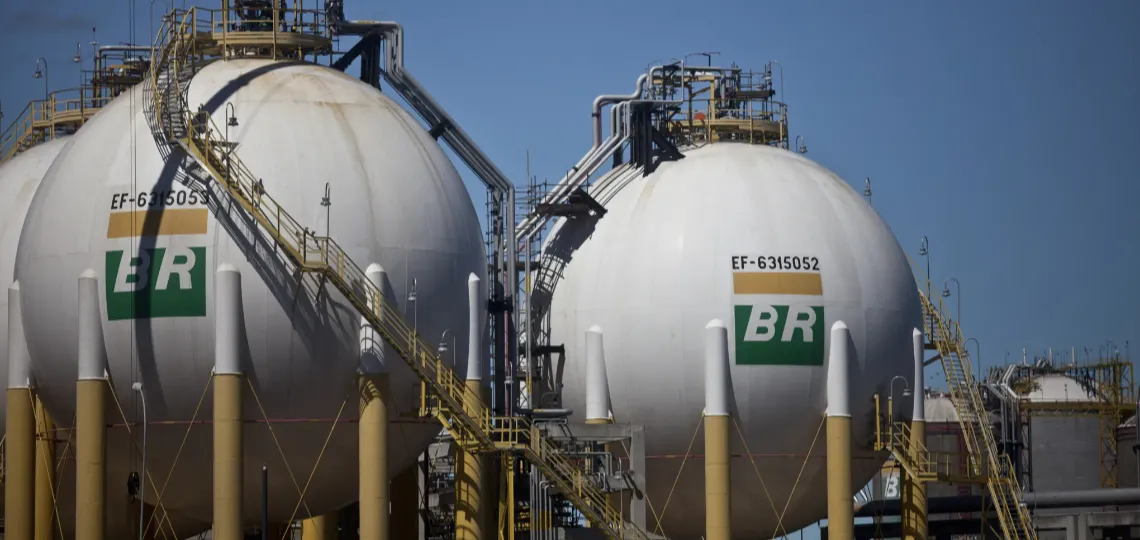
The liquefied petroleum gas (LPG) reform led by the Agência Nacional do Petróleo, Gás Natural e Biocombustíveis (ANP) targets one of the most concentrated segments of Brazil’s energy sector. Petrobras accounts for around 89% of LPG volumes marketed in the country, with a growing share of imports. This dominance is reinforced by a distribution oligopoly held by Copa Energia, Nacional Gás, Supergasbras and Ultragaz.
A market dominated by Petrobras and locked in by bottle ownership
The central mechanism of control lies in the ownership of P13 bottles, used by more than 90% of households. The exclusive right to refill prevents consumers from switching distributors without replacing the bottle, creating a barrier to competition. The reform under consideration by the ANP challenges this setup by allowing multi-brand refilling under traceability conditions, raising legal and safety concerns among distributors.
The companies argue acquired rights over a fleet of more than 130 million bottles, which require significant investments in inspection and maintenance. Opening up refilling could be interpreted as a form of regulatory expropriation, with distributors likely to challenge it in administrative and constitutional courts.
Growing social and budgetary pressure
The Gás do Povo programme, launched to subsidise LPG purchases for low-income households, adds political weight to the reform. Funded by the federal budget, it aims to replace wood use, still prevalent in rural areas, with LPG. The viability of this programme depends heavily on the unit price of the botijão, which remains high despite falling international propane prices.
Distributors’ margins in regions like the Northeast—where the distribution network faces little competition—are at the core of public criticism. The ANP seeks to introduce greater cost transparency and facilitate new market entrants by easing regulatory constraints.
Traceability, geopolitics and import diversification
In a global context marked by sanctions on Russian and Venezuelan fuels, Brazil is implementing a tracking system for imported LPG cargoes. Most additional volumes originate from the United States, followed by Argentina. The Suape and Pecém import terminals, led by distributors, are intended to reduce Petrobras’ dominance but may lose independence if the state-owned firm reasserts control through lease agreements.
The expansion of the Boaventura complex, integrated with the Reduc refinery, enables Petrobras to increase domestic LPG output. This surplus is earmarked for decentralised industrial applications such as boilers and generators in regions not connected to the gas grid.
Uncertain investments and regulatory trade-offs
Distributors’ return on investment outlooks are clouded by regulatory uncertainty. Logistics projects initiated in recent years could shift to rental-based models with lower returns if Petrobras’ market power strengthens.
Companies involved will need to reposition their business models, focusing on safety, service quality, and bundled offerings for industrial clients rather than pure product margins. In the short term, investment in bottle fleet upgrades and warehouse modernisation will be deferred until the final regulatory text is published.