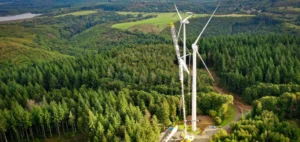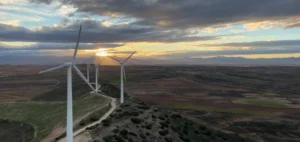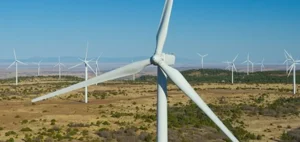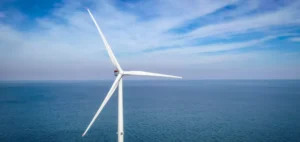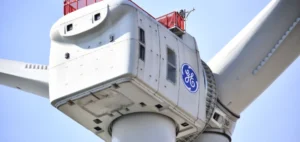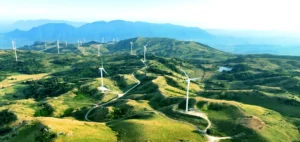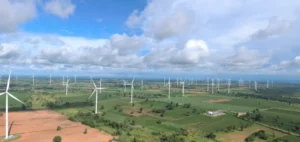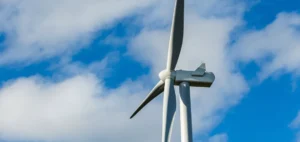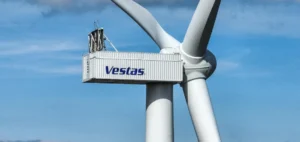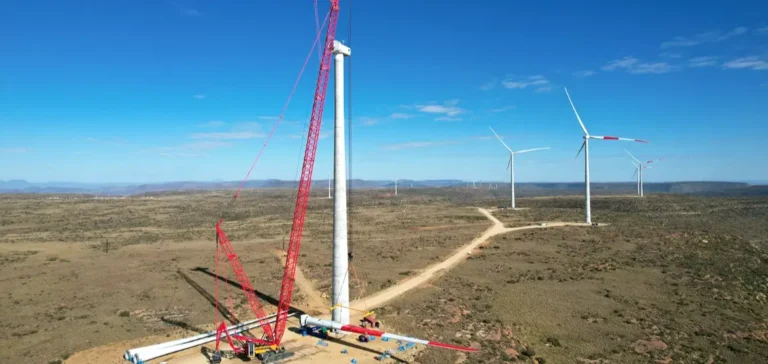

EDF power solutions has confirmed the commercial operation of the 140MW San Kraal wind farm. This site marks the first operational component of the Koruson 1 project, located on the border of South Africa’s Eastern and Northern Cape provinces. The full project consists of three wind farms totalling 420MW in capacity.
First milestone of the Koruson 1 project
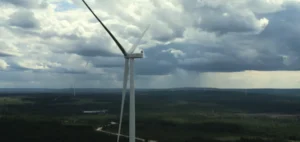
The remaining two sites, Phezukomoya and Coleskop, are in the final stages of construction. Full commercial operation of the Koruson 1 cluster is expected in early 2026. Each site, including San Kraal, has an installed capacity of 140MW. The San Kraal wind farm is equipped with 26 synchronous wind turbines of 5.4MW each, using technology that synchronises directly with grid frequency, enhancing production reliability and network stability.
EDF power solutions leads the project through a consortium including South African partners H1 Holdings, Gibb-Crede, and a regional community trust. The development was awarded under the fifth bidding round of South Africa’s Renewable Energy Independent Power Producer Procurement Programme (REIPPPP). A 20-year Power Purchase Agreement (PPA) has been signed with the designated offtaker.
Unprecedented grid connection infrastructure
The Koruson 1 project also includes the construction of South Africa’s largest Main Transmission Substation (MTS) ever developed by an Independent Power Producer (IPP). Completed and energised on 5 April 2025, the facility connects 1.5GW of renewable energy from both Koruson 1 and Koruson 2 projects to the national grid.
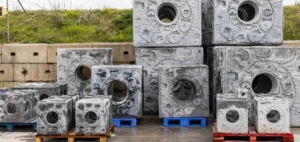
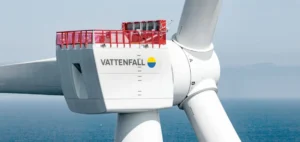
Concrete towers were manufactured locally near Middelburg, employing 400 workers during the construction period. Chinese manufacturer Goldwind supplied and installed the turbines, while the Concor and OptiPower consortium, a subsidiary of Murray & Roberts Ltd, handled the balance of plant works.
Industrial outlook and consortium commitments
EDF power solutions is currently constructing 1.5GW of low-carbon energy projects across twelve sites in South Africa. The San Kraal wind farm alone is expected to generate 616GWh annually, equivalent to the consumption of 193,000 households.
According to the consortium, one of the main objectives of Koruson 1 is to support regional economic development by incorporating significant local content. Partners have emphasised the economic benefits delivered to local businesses and communities through job creation and industrial investment.