Venezuelan crude exports to Europe drop by 75% in 2025

The revocation of US licences limits European companies’ operations in Venezuela, triggering a collapse in crude oil imports and a reconfiguration of bilateral energy flows.

Share:

Comprehensive energy news coverage, updated nonstop

Annual subscription

8.25€/month*

*billed annually at 99€/year for the first year then 149,00€/year ​

Unlimited access • Archives included • Professional invoice

OTHER ACCESS OPTIONS

Monthly subscription

Unlimited access • Archives included

5.2€/month*
then 14.90€ per month thereafter

FREE ACCOUNT

3 articles offered per month

FREE

*Prices are excluding VAT, which may vary depending on your location or professional status

Since 2021: 35,000 articles • 150+ analyses per week

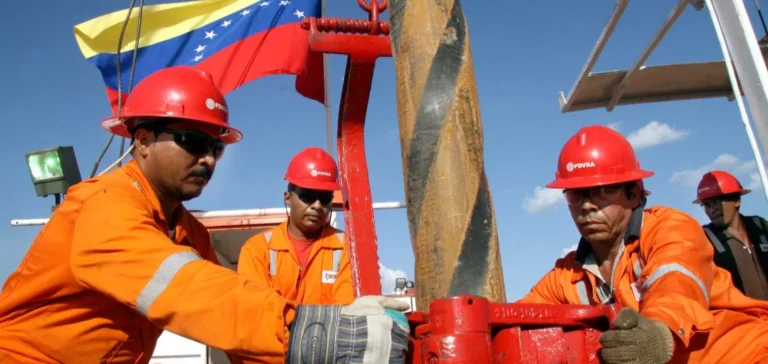
Venezuela’s crude oil exports to the European Union will record their sharpest decline in two years in 2025, falling 75% in value, according to the European Union’s trade representative in Venezuela. The drop follows the United States’ decision to revoke special licences granted to European companies operating in the country, despite the embargo in place since 2019.

European crude oil purchases from Venezuela will fall from €1.535bn ($1.65bn) in 2024 to just €383mn ($412mn) in 2025. This development marks a turning point in the energy trade relationship between Europe and Caracas, which had slightly recovered after sanctions were eased in 2023. The suspension of these derogations has brought operations by several companies to a halt, with none confirming the acquisition of new authorisations.

Reduction in derivative imports and impact on European exports

Venezuela, facing limited refining capacity, also imports naphtha from Europe to produce fuel. These imports amounted to €72mn ($77mn) in 2025, a decrease of €76mn ($81mn) compared to the previous year. The European representative nevertheless expects a 35% rebound in naphtha sales in 2026, while crude oil imports are forecast to fall a further 78.8%.

The possibility of one-off shipments to the European market remains dependent on fresh authorisations from US authorities. “There could be sporadic cargoes to Europe, but this will depend on the authorisation scenarios (from the United States),” said Jaime Luis Socas during a forum in Caracas.

Economic consequences and trade uncertainty

This reshaping of oil flows also affects other trade sectors. Venezuela’s declining purchasing power, a direct result of falling foreign currency revenues, is leading to a contraction in European exports to the country, particularly in pharmaceuticals, machinery and agri-food products. Imports of machinery, electrical equipment and vegetable preparations are in decline, according to the European Union’s trade representative.

US company Chevron, the only entity allowed to maintain certain operations in the country since July, remains subject to specific restrictions, while European actors have yet to obtain similar status. The geopolitical context, marked by increased US pressure on the Venezuelan government, continues to directly influence access conditions to the national energy sector.

Faced with tighter legal frameworks and reinforced sanctions, grey fleet operators are turning to 15-year-old VLCCs and scrapping older vessels to secure oil routes to Asia.
Reconnaissance Energy Africa completed drilling at the Kavango West 1X onshore well in Namibia, where 64 metres of net hydrocarbon pay were detected in the Otavi carbonate section.
A Delaware court approved the sale of PDV Holding shares to Elliott’s Amber Energy for $5.9bn, a deal still awaiting a U.S. Treasury licence through OFAC.
A new $100mn fund has been launched to support Nigerian oil and gas service companies, as part of a national target to reach 70% local content by 2027.
Western measures targeting Rosneft and Lukoil deeply reorganise oil trade, triggering a discreet yet massive shift of Russian export routes to Asia without causing global supply disruption.
The Nigerian Upstream Petroleum Regulatory Commission opens bidding for 50 exploration blocks across strategic zones to revitalise upstream investment.
La Nigerian Upstream Petroleum Regulatory Commission ouvre la compétition pour 50 blocs d’exploration, répartis sur plusieurs zones stratégiques, afin de relancer les investissements dans l’amont pétrolier.
Serbia's only refinery, operated by NIS, has suspended production due to a shortage of crude oil, a direct consequence of US sanctions imposed on its majority Russian shareholder.
Crude prices increased, driven by rising tensions between the United States and Venezuela and drone attacks targeting Russian oil infrastructure in the Black Sea.
Amid persistent financial losses, Tullow Oil restructures its governance and accelerates efforts to reduce over $1.8 billion in debt while refocusing operations on Ghana.
The Iraqi government is inviting US oil companies to bid for control of the giant West Qurna 2 field, previously operated by Russian group Lukoil, now under US sanctions.
Two tankers under the Gambian flag were attacked in the Black Sea near Turkish shores, prompting a firm response from President Recep Tayyip Erdogan on growing risks to regional energy transport.
The British producer continues to downsize its North Sea operations, citing an uncompetitive tax regime and a strategic shift towards jurisdictions offering greater regulatory stability.
Dangote Refinery says it can fully meet Nigeria’s petrol demand from December, while requesting regulatory, fiscal and logistical support to ensure delivery.
BP reactivated the Olympic pipeline, critical to fuel supply in the U.S. Northwest, after a leak that led to a complete shutdown and emergency declarations in Oregon and Washington state.
President Donald Trump confirmed direct contact with Nicolas Maduro as tensions escalate, with Caracas denouncing a planned US operation targeting its oil resources.
Zenith Energy claims Tunisian authorities carried out the unauthorised sale of stored crude oil, escalating a longstanding commercial dispute over its Robbana and El Bibane concessions.
TotalEnergies restructures its stake in offshore licences PPL 2000 and PPL 2001 by bringing in Chevron at 40%, while retaining operatorship, as part of a broader refocus of its deepwater portfolio in Nigeria.
Aker Solutions has signed a six-year frame agreement with ConocoPhillips for maintenance and modification services on the Eldfisk and Ekofisk offshore fields, with an option to extend for another six years.
Iranian authorities intercepted a vessel carrying 350,000 litres of fuel in the Persian Gulf, tightening control over strategic maritime routes in the Strait of Hormuz.

All the latest energy news, all the time

Annual subscription

8.25€/month*

*billed annually at 99€/year for the first year then 149,00€/year ​

Unlimited access - Archives included - Pro invoice

Monthly subscription

Unlimited access • Archives included

5.2€/month*
then 14.90€ per month thereafter

*Prices shown are exclusive of VAT, which may vary according to your location or professional status.

Since 2021: 30,000 articles - +150 analyses/week.