Sanctions against Rosneft and Lukoil redirect oil flows toward Asia

Western measures targeting Rosneft and Lukoil deeply reorganise oil trade, triggering a discreet yet massive shift of Russian export routes to Asia without causing global supply disruption.

Share:

Comprehensive energy news coverage, updated nonstop

Annual subscription

8.25$/month*

*billed annually at 99$/year for the first year then 149,00$/year ​

Unlimited access • Archives included • Professional invoice

OTHER ACCESS OPTIONS

Monthly subscription

Unlimited access • Archives included

5.2$/month*
then 14.90$ per month thereafter

FREE ACCOUNT

3 articles offered per month

FREE

*Prices are excluding VAT, which may vary depending on your location or professional status

Since 2021: 35,000 articles • 150+ analyses per week

The sanctions imposed in October against Rosneft and Lukoil by the United States and the European Union represent a tightening of the economic pressure on Russia’s energy sector. By placing both companies on the SDN (Specially Designated Nationals) list, freezing their assets and banning transactions with Western entities, Washington significantly expanded the scope of restrictions. Brussels, for its part, banned all dealings with these firms and extended controls to third-party intermediaries.

Targeted tightening avoids physical disruption

Despite their severity, the measures preserve part of the commercial channels. A temporary general licence issued by the US allows for a wind-down period until 21 November, confirming the intent to avoid a supply shock. The framework follows the G7’s price cap strategy, aiming to curtail Kremlin revenues without disrupting global crude markets.

The International Energy Agency (IEA) forecasts a structural supply surplus for 2026, estimated between 2 and 4 million barrels per day. In this context, the sanctions raise operational costs for Russian producers without significantly reducing global volumes. The result is a gradual re-routing of flows toward Asia, particularly China and India, relying increasingly on secondary actors and non-Western trade networks.

India: majors exit, fragmented purchases rise

Reliance Industries’ decision to halt Russian crude imports for its Jamnagar refinery illustrates the direct impact on players exposed to European markets. State-run refiners such as Hindustan Petroleum and Mangalore Refinery are turning to unsanctioned suppliers operating in jurisdictions less vulnerable to US extraterritorial regulations. This strategy aims to maintain access to Russian discounts while avoiding secondary sanctions.

Import patterns are becoming more complex, involving unlisted traders often operating under neutral flags. Fiscal incentives and origin-based tariffs reinforce this optimisation logic, allowing refiners to benefit from price differentials while limiting compliance exposure.

China: strategic continuity and stockpiling

Beijing maintains stable import levels from Russia, without substantial changes in volume. While diversifying sources (Africa, Americas, Middle East), China continues to absorb significant Russian volumes, particularly via Arctic and eastern routes. This consistency aligns with a broader strategy of supply security and enhanced strategic reserve utilisation.

China’s strategic reserve is estimated to be about 60% full, providing a substantial buffer in the event of future sanctions escalation. By combining opportunistic purchases with quality/price arbitrage, Chinese refiners strengthen their negotiating position in the regional market.

A parallel oil network emerges

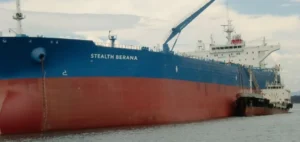
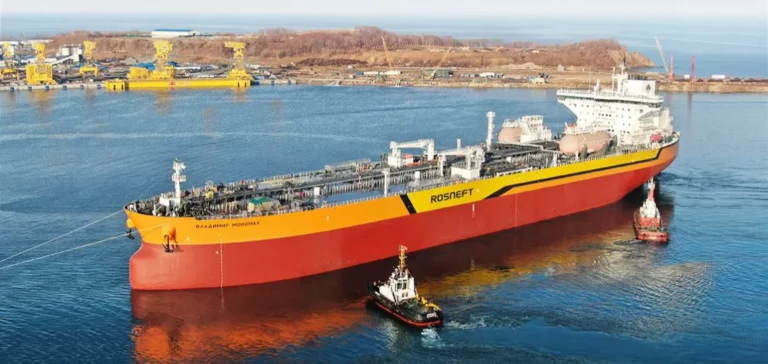
Faced with restrictions, Russia has activated an ecosystem of shell companies, obscure traders and a “shadow fleet” to maintain its exports. These flows transit through blending hubs such as the CPC terminal or Arctic ports, under non-Western flags and non-P&I (Protection and Indemnity) insurance. This model increases compliance risk, especially for banks, insurers and charterers operating near these opaque circuits.

Simultaneously, the United States is redirecting West Texas Intermediate (WTI) barrels toward Asia, with rising sales to Vietnam, Indonesia and South Korea. Jakarta is accelerating a modular refinery programme designed to process this crude under a bilateral energy agreement, reinforcing the US–Southeast Asia energy corridor.

Global surplus moderates price impact

The global oil surplus forecast for 2026 limits Russia’s ability to influence prices, even under temporary disruptions. Analyst projections place Brent prices between $57 and $62/b, factoring in excess supply and moderate OPEC+ discipline. This backdrop contains the inflationary potential of sanctions while reinforcing the logic of economically sustainable pressure.

Asian refiners with multi-crude capacity, able to process WTI, Murban, Basrah, CPC or Urals, are emerging as key beneficiaries of this market fragmentation. Their logistical and contractual flexibility enables them to capture higher margins while staying compliant with increasingly stringent regulations.

Rising legal risk for intermediaries

Companies directly or indirectly linked to Rosneft and Lukoil now face exposure to US sanctions, even through subsidiaries owned below the 50% threshold. Trading firms based in “neutral” jurisdictions are accumulating increasing levels of risk. Their banking, logistics and insurance relationships are becoming harder to maintain.

Financial institutions, maritime insurers and shippers must tighten their due diligence frameworks. Screening beneficial owners, verifying transshipment documentation and tracking voyage routes are now core governance requirements. Any traceability gap may trigger exclusion from Western financial systems.
Crude prices increased, driven by rising tensions between the United States and Venezuela and drone attacks targeting Russian oil infrastructure in the Black Sea.
Amid persistent financial losses, Tullow Oil restructures its governance and accelerates efforts to reduce over $1.8 billion in debt while refocusing operations on Ghana.
The Iraqi government is inviting US oil companies to bid for control of the giant West Qurna 2 field, previously operated by Russian group Lukoil, now under US sanctions.
Two tankers under the Gambian flag were attacked in the Black Sea near Turkish shores, prompting a firm response from President Recep Tayyip Erdogan on growing risks to regional energy transport.
The British producer continues to downsize its North Sea operations, citing an uncompetitive tax regime and a strategic shift towards jurisdictions offering greater regulatory stability.
Dangote Refinery says it can fully meet Nigeria’s petrol demand from December, while requesting regulatory, fiscal and logistical support to ensure delivery.
BP reactivated the Olympic pipeline, critical to fuel supply in the U.S. Northwest, after a leak that led to a complete shutdown and emergency declarations in Oregon and Washington state.
President Donald Trump confirmed direct contact with Nicolas Maduro as tensions escalate, with Caracas denouncing a planned US operation targeting its oil resources.
Zenith Energy claims Tunisian authorities carried out the unauthorised sale of stored crude oil, escalating a longstanding commercial dispute over its Robbana and El Bibane concessions.
TotalEnergies restructures its stake in offshore licences PPL 2000 and PPL 2001 by bringing in Chevron at 40%, while retaining operatorship, as part of a broader refocus of its deepwater portfolio in Nigeria.
Aker Solutions has signed a six-year frame agreement with ConocoPhillips for maintenance and modification services on the Eldfisk and Ekofisk offshore fields, with an option to extend for another six years.
Iranian authorities intercepted a vessel carrying 350,000 litres of fuel in the Persian Gulf, tightening control over strategic maritime routes in the Strait of Hormuz.
North Atlantic France finalizes the acquisition of Esso S.A.F. at the agreed per-share price and formalizes the new name, North Atlantic Energies, marking a key step in the reorganization of its operations in France.
Greek shipowner Imperial Petroleum has secured $60mn via a private placement with institutional investors to strengthen liquidity for general corporate purposes.
Ecopetrol plans between $5.57bn and $6.84bn in investments for 2026, aiming to maintain production, optimise infrastructure and ensure profitability despite a moderate crude oil market.
Faced with oversupply risks and Russian sanctions, OPEC+ stabilises volumes while preparing a structural redistribution of quotas by 2027, intensifying tensions between producers with unequal capacities.
The United Kingdom is replacing its exceptional tax with a permanent price mechanism, maintaining one of the world’s highest fiscal pressures and reshaping the North Sea’s investment attractiveness for oil and gas operators.
Pakistan confirms its exit from domestic fuel oil with over 1.4 Mt exported in 2025, transforming its refineries into export platforms as Asia faces a structural surplus of high- and low-sulphur fuel oil.
Turkish company Aksa Enerji has signed a 20-year contract with Sonabel for the commissioning of a thermal power plant in Ouagadougou, aiming to strengthen Burkina Faso’s energy supply by the end of 2026.
The Caspian Pipeline Consortium resumed loadings in Novorossiisk after a Ukrainian attack, but geopolitical tensions persist over Kazakh oil flows through this strategic Black Sea corridor.

All the latest energy news, all the time

Annual subscription

8.25$/month*

*billed annually at 99$/year for the first year then 149,00$/year ​

Unlimited access - Archives included - Pro invoice

Monthly subscription

Unlimited access • Archives included

5.2$/month*
then 14.90$ per month thereafter

*Prices shown are exclusive of VAT, which may vary according to your location or professional status.

Since 2021: 30,000 articles - +150 analyses/week.