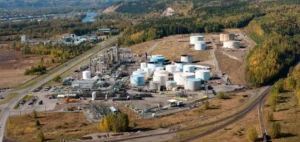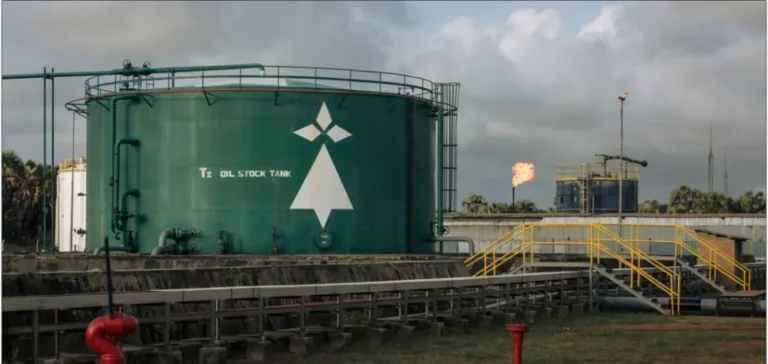

Franco-British oil company Perenco has begun valorising a portion of the associated gas from the Badila oil fields, located in the Doba Basin in southern Chad. This gas now supplies the city of Moundou, the country’s second-largest urban centre, where it is used for electricity generation. This development comes in a context where most of Chad’s natural gas continues to be flared due to the lack of adequate infrastructure.
Chad is among the top 15 countries with the highest volume of flared gas globally, according to data from the Global Gas Flaring Tracker. In 2023, approximately 0.9 billion cubic metres of gas were flared in the country, up from 0.5 billion cubic metres in 2022. This increase highlights the absence of technical and industrial capacity to capture, process and distribute natural gas, particularly the type produced as a by-product during crude oil extraction.
An isolated local model of gas utilisation
The Badila project represents a stand-alone initiative in a country without a national gas gathering network or large-scale treatment infrastructure. The electricity produced from this resource remains limited to the southern region, while the capital N’Djamena continues to rely largely on other energy sources.
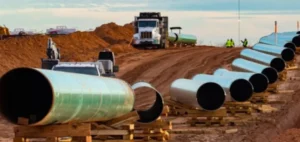
According to estimates from the World Bank and the International Energy Agency, building a gas pipeline can cost between $1mn and $3mn per kilometre. An associated gas treatment facility typically requires between $150mn and $250mn in investment, in addition to the cost of constructing a gas-fired power plant, which adds several tens of millions of dollars more.
Energy needs face infrastructure inertia
In this context, Moundou’s gas-based power supply from Badila demonstrates both the country’s energy potential and the structural limitations of its sector. Chad, with significant hydrocarbon reserves, continues to face limited electricity access, particularly outside major urban areas. The current situation hampers prospects for industrialisation and energy diversification.
The increased use of associated gas in the Doba Basin is a recurring subject in energy assessments commissioned by the World Bank. However, without a national integrated gas development plan, initiatives such as Perenco’s remain exceptions. The issue of foundational investment, especially in gathering networks, remains central to any sustainable valorisation strategy.