Nigeria has launched its 2025 oil licensing round, offering fifty blocks for exploration and development. The announcement was made by the Nigerian Upstream Petroleum Regulatory Commission (NUPRC), responsible for upstream regulation, as part of a strategy to attract new investments in a key sector of the national economy.
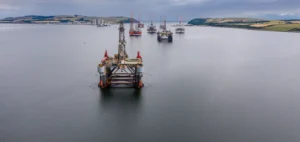
According to details provided by the commission, the proposed blocks span various geographical zones: 15 are located onshore, 19 in shallow waters, 15 in so-called frontier basins—still largely unexplored—and one block in deepwater. The NUPRC stated that this distribution is designed to attract a diverse range of operators, both domestic and international, with adequate technical and financial capacity.
A process backed by the Petroleum Industry Act
The licensing round is being conducted under the framework of the Petroleum Industry Act (PIA), in force since 2021, which aims to enhance transparency and reform the governance of Nigeria’s oil sector. The petroleum industry remains the country’s main source of foreign exchange revenue. According to the National Bureau of Statistics (NBS), it accounted for 88% of total export value in 2024.
Authorities assert that the auctioned blocks hold significant potential reserves. The Nigerian Upstream Petroleum Regulatory Commission estimates they could support the country’s oil production over the next decade. Data from the Organization of the Petroleum Exporting Countries (OPEC) shows that Nigeria produced an average of 1.4 million barrels per day in 2024.
International operators already expressing interest
The launch of the 2025 round has attracted attention from international players. Representatives of the commission indicated in the local press that groups such as TotalEnergies have shown interest in this new phase of allocation. The process includes a consultation phase, followed by submission of bids, technical evaluation, and final award of the blocks.
As of now, no detailed timeline has been released for the next steps. However, the NUPRC confirmed that the full schedule will be made public in upcoming phases of the process.