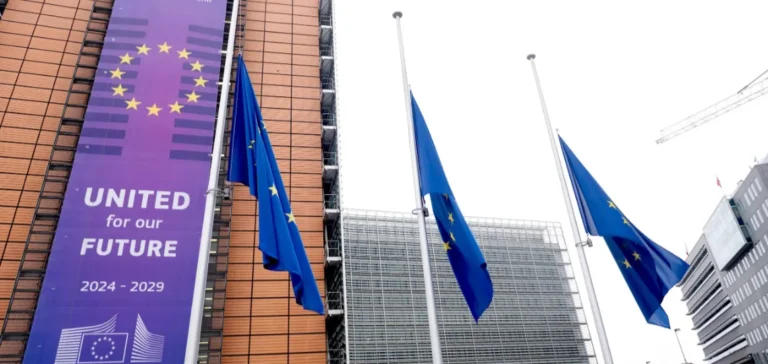

The European Commission is finalising a legislative proposal titled Industrial Decarbonisation Accelerator Act aimed at supporting European low-carbon steelmaking by establishing captive demand. The text notably plans to impose a quota of low-carbon steel produced within the European Union in public tenders related to infrastructure and construction, as well as in subsidised vehicles.
Trade reform and end of safeguards
In parallel, Brussels plans to replace the current safeguard regime with an annual tariff-rate quota (TRQ) system totalling 18.3 Mt, with a 50% tariff on volumes exceeding the quota, up from the current 25%. This new mechanism would be based on import flows recorded between 2022 and 2024 and applied quarterly. The reform is being prepared ahead of the scheduled expiry of transitional measures in June 2026.
An energy pillar complements the package, with the electricity market reform entering into force in early 2025 and support from the European Investment Bank (EIB) to facilitate Power Purchase Agreements (PPAs), helping electro-intensive steelmakers secure stable power costs when using electric arc furnaces or hydrogen-based Direct Reduced Iron (DRI) technologies.
Legal compatibility and international framework
The initiative raises legal concerns under the World Trade Organization (WTO) Government Procurement Agreement (GPA) due to the preference given to EU-origin products. To reduce the risk of dispute, Brussels could adopt performance-based criteria such as emissions thresholds or the Low Emission Steel Standard (LESS), rather than requiring explicit geographic origin.
State aid constraints also apply. Temporary electricity discounts for electro-intensive producers are considered but subject to strict conditions on green investment and capping. Additionally, the measure must align with the Carbon Border Adjustment Mechanism (CBAM), whose definitive phase starts on January 1, 2026, requiring steel importers to purchase certificates proportional to their carbon footprint.
Impact on pricing, contracts and investment
Low-carbon steel prices are expected to incorporate a sustained green premium due to the induced public demand. Current reference prices for Hot Rolled Coil (HRC) in Europe are around €610/t in the Ruhr region, while DRI and electric arc furnace-based products already carry a premium due to their lower emissions. Industrial players investing in decarbonisation may secure long-term supply contracts of up to 15 years, notably through carbon contracts for difference.
The conversion of production sites — electrification, installation of EAF furnaces, DRI with hydrogen and CO₂ capture — requires high utilisation rates. Public “green” procurement becomes a key lever to stabilise demand and avoid stranded assets.
Geopolitical and trade consequences
The introduction of quotas and additional tariffs may provoke tensions with major trading partners such as China, Turkey, India and the United Kingdom, whose access to the European market would be limited. Russia remains excluded from EU markets due to the ongoing steel import ban under economic sanctions.
Internally, the absence of a harmonised standard across the European Union exposes the system to regulatory fragmentation, with each Member State potentially applying different eligibility criteria. A single EU-wide norm is required to prevent imbalanced competition within the bloc.