Armed men set fire to Chinese Rucalhue hydropower construction site in Chile

An armed group set fire to 45 trucks and several pieces of equipment at a Chinese hydropower construction site in southern Chile, triggering diplomatic tensions with Beijing.

Share:

Comprehensive energy news coverage, updated nonstop

Annual subscription

8.25€/month*

*billed annually at 99€/year for the first year then 149,00€/year ​

Unlimited access • Archives included • Professional invoice

OTHER ACCESS OPTIONS

Monthly subscription

Unlimited access • Archives included

5.2€/month*
then 14.90€ per month thereafter

FREE ACCOUNT

3 articles offered per month

FREE

*Prices are excluding VAT, which may vary depending on your location or professional status

Since 2021: 35,000 articles • 150+ analyses per week

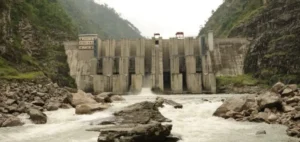
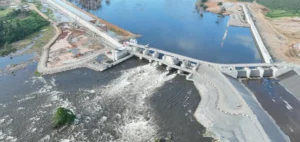
An armed group attacked the construction site of the Rucalhue hydropower plant on Sunday, located approximately 550 kilometres south of Santiago, Chile, setting fire to dozens of vehicles and industrial equipment. The site is being developed by Rucalhue Energia Spa, a subsidiary of China International Water and Electric Corporation (CWE), at an estimated cost of $350mn.

According to Chilean police chief Renzo Miccono, the assailants forced security personnel to evacuate under threat before setting fire to 45 trucks and five earthmoving machines. Two guards were injured during the attack. The site, located along the Biobio River, has faced local opposition, particularly from indigenous communities concerned about environmental impacts.

Official condemnation and request for protection

The Ministry of Foreign Affairs of the People’s Republic of China strongly condemned the attack and requested security assurances from the Chilean government. Spokesperson Guo Jiakun stated at a press conference that China wished to cooperate closely with Chilean authorities to ensure the safety of infrastructure projects and personnel in the country.

On the Chilean side, Security Minister Luis Cordero described the incident as a terrorist act, though no details were provided regarding the identity or motives of the attackers. He committed to increasing security presence in high-risk zones and to prosecuting those responsible for the attack.

Rising tensions around foreign energy projects

The Rucalhue hydropower plant is part of a series of foreign-backed energy initiatives in Chile aimed at diversifying the country’s electricity supply. However, the growing number of sabotage incidents and community resistance has raised concerns about the security of foreign investments in critical infrastructure.

Opposition to these projects, often driven by local concerns, may affect delivery timelines and increase operational costs. Authorities have yet to announce a suspension of the works, but the incident may prompt a reassessment of security protocols across foreign energy projects active in the region.
Liberia secures additional funding from the African Development Fund to finalise a delayed hydroelectric project and associated infrastructure.
The 50 MW Morozuka hydroelectric plant will be converted into a pumped-storage facility, reflecting Kyushu Electric Power's strategic repositioning in response to increasing pressure on Japan’s energy flexibility capabilities.
Indian Prime Minister Narendra Modi inaugurated the Punatsangchhu-II plant in Bhutan, strengthening India’s energy presence in the Himalayas and reinforcing a strategic partnership built around electricity exports.
Mass Megawatts unveils a new low-cost hydroelectric system with a payback period of under two years at optimal sites, relying on modular structures and standardised components.
Japan’s infrastructure ministry has appointed a TEPCO Renewable Power-led consortium to build a 2.3MW power plant at Yunishigawa Dam, the first public-private partnership under the government’s new hybrid model.
Cameroon’s Ministry of Finance is negotiating a bank credit to guarantee payments owed to NHPC, as Éneo’s financial situation jeopardises the Nachtigal hydropower plant.
The Cameroonian government plans to build ten low-capacity hydropower plants over the next five years as part of a national programme to strengthen energy infrastructure across the country.
Energyminer begins installation of 124 floating generators on the Rhine in St. Goar, marking the first official permit for a large-scale hydrokinetic park in Germany.
Swedish ocean energy developer Minesto joined a high-level trade mission to South Korea to explore new cooperation opportunities in marine energy.
The Tokyo Bureau of Transportation is seeking a new electricity retailer for the output of its three hydropower plants, with a portion resold to power the city’s transport infrastructure.
Qatar’s sovereign wealth fund has raised its stake to approximately 15% in ISAGEN, one of Colombia’s leading power producers, through a $535mn investment alongside Brookfield.
New Delhi plans to allocate INR6.4tn ($77bn) to develop transmission infrastructure for 76 GW of electricity from the Brahmaputra Basin by 2047, amid growing cross-border pressures.
Moscow strengthens industrial joint ventures with Tajikistan by leveraging hydropower, agriculture, and mining in a strategy based on mutual interest and economic complementarity.
Gabon has signed a memorandum of understanding with Italy’s Todini to develop two hydropower plants in Booué and Tsengué-Lélédi, with an estimated value of $1.78 billion to address electricity shortages.
Le groupe Axian renforce son portefeuille énergétique avec le projet de barrage de Volobe à Madagascar, une initiative estimée à $670mn visant à étendre l’accès à l’électricité dans un pays en proie à de fortes tensions sociales.
Nagano Prefecture has commissioned a new 1.5MW hydropower plant to supply Seiko Epson’s Ina facility under a sleeved power purchase agreement managed by Chubu Electric Power Miraiz.
The Senate's economic affairs committee recommends including the reform of the legal framework for dams in the upcoming energy bill to avoid competitive tendering, following a principle agreement between Paris and Brussels.
The Canadian government is investing nearly CAD17mn ($12.4mn) to support two hydroelectric initiatives led by Indigenous communities in Quebec, aiming to reduce diesel dependency in remote regions.
Federal funding targets FORCE’s PICO platform and an Acadia study on fish–turbine collision risks, aiming to reduce regulatory uncertainty and accelerate industrial adoption in the Bay of Fundy.
The Norwegian operator plans to install a third turbine to capture part of today’s bypassed floodwater without changing the flow on the salmon stretch; commissioning would be at the earliest in 2030. —

All the latest energy news, all the time

Annual subscription

8.25€/month*

*billed annually at 99€/year for the first year then 149,00€/year ​

Unlimited access - Archives included - Pro invoice

Monthly subscription

Unlimited access • Archives included

5.2€/month*
then 14.90€ per month thereafter

*Prices shown are exclusive of VAT, which may vary according to your location or professional status.

Since 2021: 30,000 articles - +150 analyses/week.