Lee Zeldin’s Appointment to the EPA: A Decision Approved by the US Senate

The US Senate has approved the nomination of Lee Zeldin to lead the EPA. The choice made by Donald Trump has been praised by fossil fuel industry players but criticized by environmental NGOs.

Share:

Comprehensive energy news coverage, updated nonstop

Annual subscription

8.25$/month*

*billed annually at 99$/year for the first year then 149,00$/year ​

Unlimited access • Archives included • Professional invoice

OTHER ACCESS OPTIONS

Monthly subscription

Unlimited access • Archives included

5.2$/month*
then 14.90$ per month thereafter

FREE ACCOUNT

3 articles offered per month

FREE

*Prices are excluding VAT, which may vary depending on your location or professional status

Since 2021: 35,000 articles • 150+ analyses per week

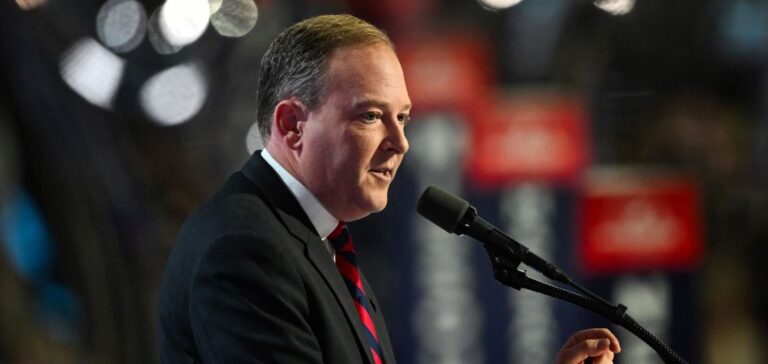
The nomination of Lee Zeldin, chosen by former US President Donald Trump to lead the Environmental Protection Agency (EPA), has been validated by the Senate with a result of 56 votes in favor and 42 against. A former Republican congressman, Zeldin takes over from the previous administration in a context where political choices regarding the environment and energy are at the center of national debate.

The Support of Fossil Fuel Industry Players

Zeldin’s appointment has been welcomed by the fossil fuel industry. Mike Sommers, Director of the American Petroleum Institute (API), praised the decision, highlighting Zeldin’s experience in finding solutions to the country’s energy challenges. The oil and gas industry, under pressure from environmental regulations, sees him as a defender of reducing restrictions on natural resource exploitation, particularly hydrocarbons.

The Opposition from Environmental Groups

However, NGOs and environmental protection groups have strongly reacted to this appointment. Lena Moffitt of Evergreen Action criticized the growing influence of Trump’s supporters on environmental policy. According to her, Zeldin represents a continuation of the approach that favors the interests of the fossil fuel industry over public health and environmental preservation.

An Energy Policy Focused on Hydrocarbons

During his hearing, Lee Zeldin emphasized his dual goal: protecting the environment while supporting the economy. This position aligns with Donald Trump’s stance, who views restrictions on oil resources as an obstacle to economic growth. This choice, made at a time when the United States is already the world’s largest oil producer, reflects the administration’s desire to boost domestic hydrocarbon production.

A Step Back in the Fight Against Climate Change

Zeldin’s appointment also comes at a time when US energy policy seems to take a step back from international environmental commitments. The announced withdrawal of the United States from the Paris Climate Agreement and the desire to ramp up fossil fuel production mark a shift in US climate policy. The impact of these decisions is already being felt on global energy markets.


RESourceEU introduces direct European Union intervention on critical raw materials via stockpiling, joint purchasing and export restrictions to reduce external dependency and secure strategic industrial chains.
The third National Low-Carbon Strategy enters its final consultation phase before its 2026 adoption, defining France’s emissions reduction trajectory through 2050 with sector-specific and industrial targets.
Germany will allow a minimum 1.4% increase in grid operator revenues from 2029, while tightening efficiency requirements in a compromise designed to unlock investment without significantly increasing consumer tariffs.
Facing a structural electricity surplus, the government commits to releasing a new Multiannual Energy Programme by Christmas, as aligning supply, demand and investments becomes a key industrial and budgetary issue.
A key scientific report by the United Nations Environment Programme failed to gain state approval due to deep divisions over fossil fuels and other sensitive issues.
RTE warns of France’s delay in electrifying energy uses, a key step to limiting fossil fuel imports and supporting its reindustrialisation strategy.
India’s central authority has cancelled 6.3 GW of grid connections for renewable projects since 2022, marking a tightening of regulations and a shift in responsibility back to developers.
The Brazilian government has been instructed to define within two months a plan for the gradual reduction of fossil fuels, supported by a national energy transition fund financed by oil revenues.
The German government may miss the January 2026 deadline to transpose the RED III directive, creating uncertainty over biofuel mandates and disrupting markets.
Italy allocated 82% of the proposed solar and wind capacities in the Fer-X auction, totalling 8.6GW, with competitive purchase prices and a strong concentration of projects in the southern part of the country.
Amid rising public spending, the French government has tasked two experts with reassessing the support scheme for renewable electricity and storage, with proposals expected within three months.
National operator PSE partners with armed forces to protect transformer stations as critical infrastructure faces sabotage linked to foreign interference.
The Norwegian government establishes a commission to anticipate the decline of hydrocarbons and assess economic options for the country in the coming decades.
Kazakhstan plans to allocate 3 GW of wind and solar projects by the end of 2026 through public tenders, with a first 1 GW tranche in 2025, amid efforts to modernise its power system.
Hurricanes Beryl, Helene and Milton accounted for 80% of electricity outages recorded in 2024, marking a ten-year high according to federal data.
The French Energy Regulatory Commission introduces a temporary prudential control on gas and electricity suppliers through a “guichet à blanc” opening in December, pending the transposition of European rules.
The Carney–Smith agreement launches a new pipeline to Asia, removes oil and gas emission caps, and initiates reform of the Pacific north coast tanker ban.
The gradual exit from CfD contracts is turning stable assets into infrastructures exposed to higher volatility, challenging expected returns and traditional financing models for the renewable sector.
The Canadian government introduces major legislative changes to the Energy Efficiency Act to support its national strategy and adapt to the realities of digital commerce.
Quebec becomes the only Canadian province where a carbon price still applies directly to fuels, as Ottawa eliminated the public-facing carbon tax in April 2025.

All the latest energy news, all the time

Annual subscription

8.25$/month*

*billed annually at 99$/year for the first year then 149,00$/year ​

Unlimited access - Archives included - Pro invoice

Monthly subscription

Unlimited access • Archives included

5.2$/month*
then 14.90$ per month thereafter

*Prices shown are exclusive of VAT, which may vary according to your location or professional status.

Since 2021: 30,000 articles - +150 analyses/week.