Amsterdam: Solar panels on monuments spark debate between sustainability and heritage

Amsterdam: Solar panels on monuments spark debate between sustainability and heritage

Share:

Comprehensive energy news coverage, updated nonstop

Annual subscription

8.25€/month*

*billed annually at 99€/year for the first year then 149,00€/year ​

Unlimited access • Archives included • Professional invoice

OTHER ACCESS OPTIONS

Monthly subscription

Unlimited access • Archives included

5.2€/month*
then 14.90€ per month thereafter

FREE ACCOUNT

3 articles offered per month

FREE

*Prices are excluding VAT, which may vary depending on your location or professional status

Since 2021: 35,000 articles • 150+ analyses per week

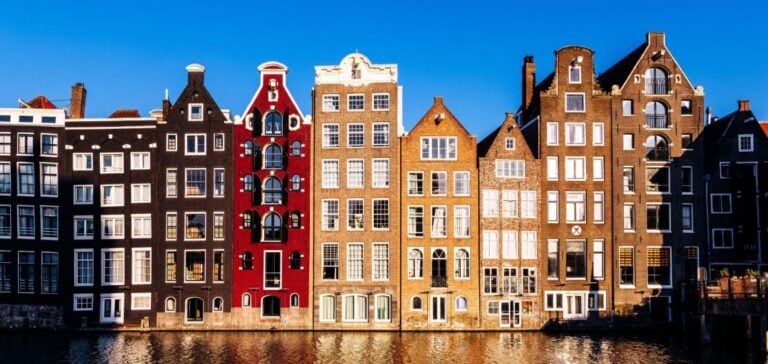
Amsterdam’s iconic canal houses, masterpieces of the 16th, 17th, and 18th centuries, could soon feature visible solar panels—a shift that disrupts the city’s traditional landscape. By 2025, the municipality plans to relax installation rules, a decision stirring controversy among heritage advocates.

Currently, solar panels are permitted on protected monuments only if they are not visible from the street. However, facing climate and energy challenges, Amsterdam’s green-led administration intends to expand this authorization. According to Alexander Scholtes, deputy mayor, this measure is essential to reconcile cultural preservation and sustainability. The city, home to about 10,000 monuments, must contribute to reducing CO2 emissions in a country struggling to meet its climate goals.

A debate over aesthetics and environment

In the historic Grachtengordel neighborhood, a UNESCO World Heritage Site, the idea of integrating solar panels into the urban landscape faces criticism. “These panels would disfigure the original 18th-century gables,” says Karel Loeff, president of the Erfgoedvereniging Heemschut association, which advocates for heritage protection. While he acknowledges the importance of sustainability, he proposes alternatives such as investing in solar farms outside the city center.

Supporters of the project, however, emphasize that strict rules on panel color and alignment will ensure harmonious integration. According to Alexander Scholtes, it is possible to achieve “responsible sustainability” without compromising heritage.

A nationwide challenge

Amsterdam’s initiative reflects a broader trend in the Netherlands, where other cities like Rotterdam and Utrecht are also loosening their energy policies. The country has around 120,000 monuments, many of which consume significant amounts of energy. Jan Rotmans, a climate change scientist, believes that making these buildings more sustainable could significantly reduce national CO2 emissions while preserving cultural value.

Authorities warn that inaction on climate change poses a threat to heritage itself. To achieve a 55% reduction in emissions by 2030, innovative solutions are necessary, even for such iconic structures.

Balancing tradition and modernity

This debate highlights the tension between energy modernization and tradition preservation. While the installation of solar panels on historic roofs seems inevitable, it remains divisive. Heritage associations fear aesthetic “chaos,” while climate advocates stress the urgency of action.

For residents and tourists alike, the coexistence of these two perspectives could redefine Amsterdam’s unique charm. Nevertheless, the challenge remains to harmonize historic beauty with the ecological imperatives of the 21st century.
Le Koweït a publié une demande de propositions pour la construction d'une centrale solaire de 500 MW, dont l’électricité sera injectée dans le réseau national sur la base d’un contrat de rachat de 30 ans.
Mori Building has completed three solar-plus-storage plants in Japan to supply its real estate assets through an intra-group partnership structured by TEPCO Energy Partner.
Japanese grid operator OCCTO allocated 75.4MWAC in its third solar auction for FY2025, with an average feed-in-premium price of 7.13 yen per kWh, marking a session that fell short of initial subscription targets.
Octillion has fully converted its electric vehicle battery production facility in Pune to solar power, initiating the rollout of an energy strategy aimed at achieving energy autonomy for all its India-based operations by 2027.
Westbridge Renewable Energy has secured final regulatory approval in Alberta for its Dolcy Solar project, marking the last step before construction can begin.
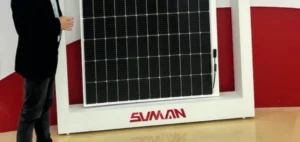
Chinese firm Sunman will build Australia’s largest solar module plant in the Hunter Valley, backed by AUD171 mn ($111.92 mn) in public funding.
Botswana has concluded a series of energy agreements with Omani public investors, including the development of a 500 MW solar power plant and projects in fuel storage and petroleum trading.
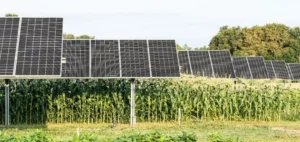
With 16.8 MWp of capacity, the Triticum plant in Bavaria marks a strategic investment for MaxSolar, strengthening the agrivoltaic model in the German energy landscape.
Greencells has signed a partnership with Belgian company 3E to transfer over 3 GW of solar and storage capacity to SynaptiQ, a central monitoring and analytics platform.
Spanish group Grenergy has signed an agreement to sell seven solar projects with a total capacity of 88 MW to Ecopetrol, as part of its asset rotation strategy.
Zenith Energy has launched a tender for the construction of three solar plants totalling 7 MWp in Italy, with expected bank financing covering up to 90% of costs.
JA Solar unveils a pioneering white paper on photovoltaic systems in arid regions, with a module designed to withstand extreme desert conditions and improve long-term energy yield.
Shikoku Electric Power lowers its acquisition threshold for solar projects to 500kWAC and calls for proposals to develop floating plants on reservoirs of at least 15,000m².
Canadian Solar has started delivering non-fossil certificates from a new 20 MWAC solar plant in Okayama under a 25-year virtual power purchase agreement with a Japanese company.
Ecopetrol has reached a conditional agreement to acquire seven companies holding photovoltaic projects across four Colombian departments, for a total potential of 88.2 MWp.
Three photovoltaic plants will receive financing structured by the European Bank for Reconstruction and Development to strengthen Romania's electricity capacity and attract private capital to the sector.
Loiret Energie and Terres d’Energie Développement will invest €15mn in a 31.5-hectare agrivoltaic farm in La Ferté Saint-Aubin, combining electricity production and organic cattle farming.
Canadian Solar Infrastructure Fund makes its first acquisition outside the FIT scheme with a 1.1 MW solar plant in Tsukuba, valued at ¥253.5mn ($1.7mn), under a corporate PPA agreement.
The agreement will enable Bisleri to meet 48% of the electricity needs at its Sahibabad site through solar power supplied by Sunsure, cutting annual CO₂ emissions by nearly 2,700 tons.
Vikram Solar has commissioned a new 5 GW automated plant in Vallam, Tamil Nadu, raising its total capacity to 9.5 GW and marking a key milestone in its industrial expansion strategy in India.

All the latest energy news, all the time

Annual subscription

8.25€/month*

*billed annually at 99€/year for the first year then 149,00€/year ​

Unlimited access - Archives included - Pro invoice

Monthly subscription

Unlimited access • Archives included

5.2€/month*
then 14.90€ per month thereafter

*Prices shown are exclusive of VAT, which may vary according to your location or professional status.

Since 2021: 30,000 articles - +150 analyses/week.