Citicore signs a 2 GW solar module supply agreement with Trinasolar in the Philippines

Citicore Renewable Energy Corporation (CREC) has signed a 2 GW agreement with Trinasolar to supply its solar projects, aiming to support the Philippines' renewable energy ambitions.

Share:

Comprehensive energy news coverage, updated nonstop

Annual subscription

8.25$/month*

*billed annually at 99$/year for the first year then 149,00$/year ​

Unlimited access • Archives included • Professional invoice

OTHER ACCESS OPTIONS

Monthly subscription

Unlimited access • Archives included

5.2$/month*
then 14.90$ per month thereafter

FREE ACCOUNT

3 articles offered per month

FREE

*Prices are excluding VAT, which may vary depending on your location or professional status

Since 2021: 35,000 articles • 150+ analyses per week

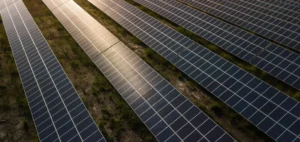
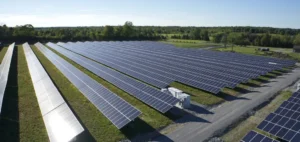
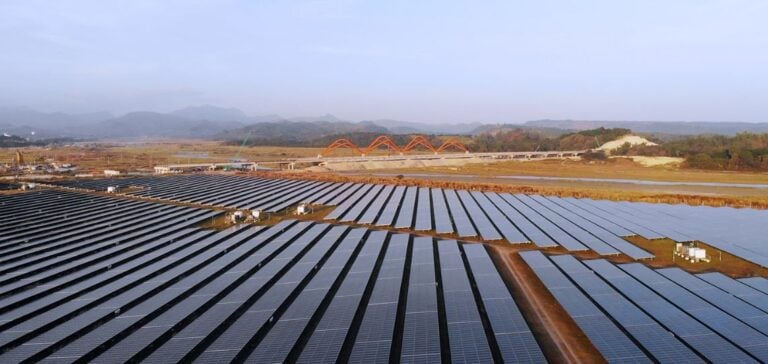
Citicore Renewable Energy Corporation (CREC), a leading renewable energy developer in the Philippines, recently entered into a significant agreement with Trinasolar, a global leader in smart photovoltaic solutions and energy storage. This agreement, signed at a ceremony in Manila on November 11, 2024, aims to supply solar modules with a total capacity of 2 gigawatts (GW), marking the largest contract between the two companies.

The partnership includes the delivery of Trinasolar’s Vertex N 720W (NEG21C.20) series, an advanced technology in energy efficiency. These modules will be used in CREC’s future solar projects in the Philippines, which aim to add 2 GW to its renewable energy production portfolio. This initiative aligns with the Philippine government’s priority programs for renewable energy, particularly through the Green Energy Auction program.

A 5 GW commitment over five years

The agreement with Trinasolar is part of CREC’s ambitious target to reach a capacity of 5 GW within five years. According to Oliver Tan, President and CEO of CREC, the first gigawatt is already underway, and this new 2 GW agreement represents a key step toward this goal. The strengthened partnership with Trinasolar now totals 3 GW in capacity, reflecting a strategic collaboration to promote energy transition.

This partnership also symbolizes CREC’s dedication to advancing a “Green First World” concept, supported by the aim to accelerate the Philippines’ energy transition towards sustainable, emission-free production. CREC thus positions itself as a leading player in the country’s renewable energy sector.

Trinasolar and Citicore: A shared vision for a sustainable future

For Trinasolar, this agreement represents the largest contract in the Philippines. Helena Li, Trinasolar’s Executive President, emphasized the deep trust between the two companies and their shared vision of a sustainable future for the country. Trinasolar is committed to providing cutting-edge solutions capable of meeting the Philippines’ growing energy demands while reducing the carbon footprint.

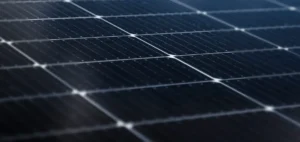
The Vertex N 720W series panels are designed based on the advanced i-TOPCon cell technology, featuring n-type cells that are more efficient than their p-type counterparts. These modules ensure better energy efficiency and optimized Levelized Cost of Energy (LCOE), a crucial parameter for large solar energy projects.

A strategic partnership for renewable energy in the Philippines

The signing of this agreement was also witnessed by influential figures from both companies, including Alreetz Santander, President of Citicore Construction, and Todd Li, President of Trinasolar Asia Pacific. Their presence highlights the importance of this agreement, not only for the stakeholders but also for the energy sector of the country.

This agreement is only one step in Citicore’s development of renewable capacities and the integration of cutting-edge technologies to achieve the national goal of energy sustainability. CREC and Trinasolar not only aim to meet the country’s growing energy needs but also set new standards for sustainable development in the region.

French public funding will support the construction of ten solar power plants with storage in Mauritania, as the country works to expand its grid to reach universal electricity access by 2030.
Recurrent Energy has received authorisation to develop Tillbridge, a hybrid 1.3 GW solar and battery project in England, strengthening its expansion strategy in the UK market.
Le Koweït a publié une demande de propositions pour la construction d'une centrale solaire de 500 MW, dont l’électricité sera injectée dans le réseau national sur la base d’un contrat de rachat de 30 ans.
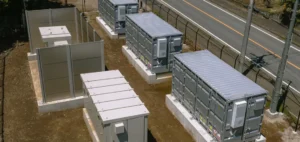
Mori Building has completed three solar-plus-storage plants in Japan to supply its real estate assets through an intra-group partnership structured by TEPCO Energy Partner.
Japanese grid operator OCCTO allocated 75.4MWAC in its third solar auction for FY2025, with an average feed-in-premium price of 7.13 yen per kWh, marking a session that fell short of initial subscription targets.
Octillion has fully converted its electric vehicle battery production facility in Pune to solar power, initiating the rollout of an energy strategy aimed at achieving energy autonomy for all its India-based operations by 2027.
Westbridge Renewable Energy has secured final regulatory approval in Alberta for its Dolcy Solar project, marking the last step before construction can begin.
Chinese firm Sunman will build Australia’s largest solar module plant in the Hunter Valley, backed by AUD171 mn ($111.92 mn) in public funding.
Botswana has concluded a series of energy agreements with Omani public investors, including the development of a 500 MW solar power plant and projects in fuel storage and petroleum trading.
With 16.8 MWp of capacity, the Triticum plant in Bavaria marks a strategic investment for MaxSolar, strengthening the agrivoltaic model in the German energy landscape.
Greencells has signed a partnership with Belgian company 3E to transfer over 3 GW of solar and storage capacity to SynaptiQ, a central monitoring and analytics platform.
Spanish group Grenergy has signed an agreement to sell seven solar projects with a total capacity of 88 MW to Ecopetrol, as part of its asset rotation strategy.
Zenith Energy has launched a tender for the construction of three solar plants totalling 7 MWp in Italy, with expected bank financing covering up to 90% of costs.
JA Solar unveils a pioneering white paper on photovoltaic systems in arid regions, with a module designed to withstand extreme desert conditions and improve long-term energy yield.
Shikoku Electric Power lowers its acquisition threshold for solar projects to 500kWAC and calls for proposals to develop floating plants on reservoirs of at least 15,000m².
Canadian Solar has started delivering non-fossil certificates from a new 20 MWAC solar plant in Okayama under a 25-year virtual power purchase agreement with a Japanese company.
Ecopetrol has reached a conditional agreement to acquire seven companies holding photovoltaic projects across four Colombian departments, for a total potential of 88.2 MWp.
Three photovoltaic plants will receive financing structured by the European Bank for Reconstruction and Development to strengthen Romania's electricity capacity and attract private capital to the sector.
Loiret Energie and Terres d’Energie Développement will invest €15mn in a 31.5-hectare agrivoltaic farm in La Ferté Saint-Aubin, combining electricity production and organic cattle farming.
Canadian Solar Infrastructure Fund makes its first acquisition outside the FIT scheme with a 1.1 MW solar plant in Tsukuba, valued at ¥253.5mn ($1.7mn), under a corporate PPA agreement.

All the latest energy news, all the time

Annual subscription

8.25$/month*

*billed annually at 99$/year for the first year then 149,00$/year ​

Unlimited access - Archives included - Pro invoice

Monthly subscription

Unlimited access • Archives included

5.2$/month*
then 14.90$ per month thereafter

*Prices shown are exclusive of VAT, which may vary according to your location or professional status.

Since 2021: 30,000 articles - +150 analyses/week.