The United States Opens First Offshore Wind Lease Sale in the Gulf of Maine

The Biden-Harris administration has completed a historic offshore wind lease sale in the Gulf of Maine, aiming to generate enough clean energy to power 2.3 million homes. This milestone is part of the ambitious American energy transition.

Share:

Comprehensive energy news coverage, updated nonstop

Annual subscription

8.25$/month*

*billed annually at 99$/year for the first year then 149,00$/year ​

Unlimited access • Archives included • Professional invoice

OTHER ACCESS OPTIONS

Monthly subscription

Unlimited access • Archives included

5.2$/month*
then 14.90$ per month thereafter

FREE ACCOUNT

3 articles offered per month

FREE

*Prices are excluding VAT, which may vary depending on your location or professional status

Since 2021: 35,000 articles • 150+ analyses per week

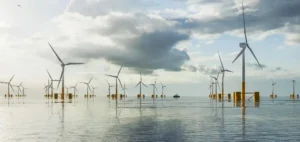
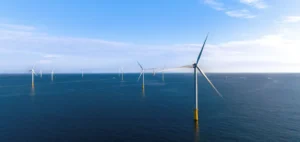
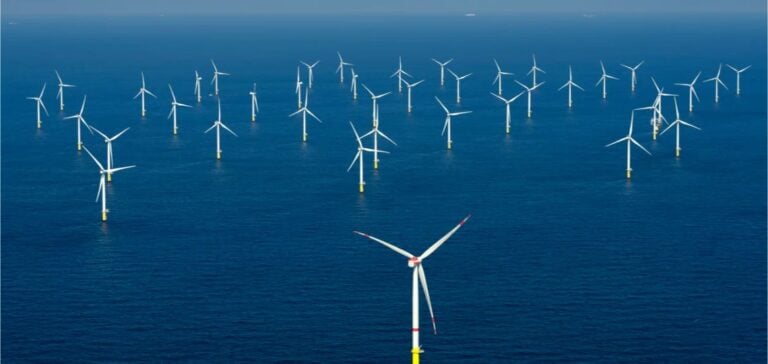
The first lease sale for offshore wind projects in the Gulf of Maine, organized by the Biden-Harris administration, marks an important advancement toward the United States’ ambitious energy goals. This sale, conducted under the supervision of the Bureau of Ocean Energy Management (BOEM), grants rights to develop floating wind energy on the Atlantic coast, with projects capable of producing enough electricity to power more than 2.3 million homes.

The results of this sale, the sixth since President Biden took office, reveal two provisional winners among the participating companies: Avangrid Renewables, LLC and Invenergy NE Offshore Wind, LLC. These companies have secured leases covering large areas in the Gulf of Maine, more than 20 nautical miles off the coast of Massachusetts. Total bids exceeded $21.9 million, confirming the growing interest of investors in the U.S. offshore wind sector.

Strong Commitment to the Biden-Harris Administration’s Goals

Since the current administration began, the United States has set a target of deploying 30 gigawatts of offshore wind capacity by 2030, including 15 gigawatts dedicated to floating wind projects by 2035. The Gulf of Maine lease sale represents a crucial step toward these goals, aiming to reduce dependence on fossil fuels and strengthen the country’s energy independence.

The Department of the Interior, led by Secretary Deb Haaland, has approved 10 commercial-scale offshore wind projects to date, with a cumulative potential output of over 15 gigawatts. These projects are expected to power over 5 million American homes with renewable energy. Authorities also plan to organize further lease sales through 2028, thus consolidating a sustainable development strategy for the offshore wind sector.

Expected Benefits for the Local Economy

The lease sale includes specific conditions to promote local employment and stimulate national supply chains. The winning companies have committed to investing more than $2.7 million in workforce training and the development of the U.S. supply chain, as well as allocating equivalent funds for fishing compensation, aimed at mitigating potential impacts on the local fishing industry.

If approved, the new offshore wind infrastructure is expected to create jobs across various sectors, from factories to shipyards, thus strengthening the regional economy while contributing to decarbonization efforts. Federal authorities are also encouraging the signing of labor agreements to ensure fair conditions and stability during project construction phases.

A Multi-Stakeholder Collaboration for Sustainable Development

The implementation of these projects relies on close collaboration between BOEM, local communities, states, tribal groups, and various ocean users, including representatives from fisheries. Elizabeth Klein, Director of BOEM, emphasized that this approach of consultation is essential to ensuring development respects local interests and the environment.

Before approving any construction project, each company must submit a detailed project plan to BOEM, which will then be subject to an Environmental Impact Assessment (EIA). This assessment will include consultations with tribes, government agencies, and other stakeholders to assess potential effects on the marine environment and regional economic activities.

Investing in Technological Innovation

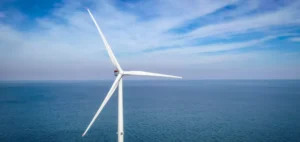
As part of the federal Floating Offshore Wind Shot initiative, the United States is investing in floating turbine technologies to harness energy resources located in deep waters. This technology promises to enhance the nation’s competitiveness in the renewable energy sector by addressing the challenges posed by the complex seabed topography along the East Coast.

The Gulf of Maine lease sale is part of this strategic approach, positioning the United States as a key player in offshore wind innovation, alongside other global leaders. The Biden-Harris administration continues to support this energy transition through incentive policies and subsidies to encourage private investment in clean energy.

The results of this first offshore wind lease sale in the Gulf of Maine are seen as a strong signal of the United States’ potential for innovation, laying the foundations for a greener and more resilient economy.
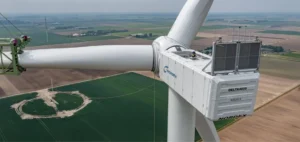
German manufacturer Nordex has secured an order for 34 turbines for a 200 MW project in the Canadian province of New Brunswick, marking its first entry into this region.
OX2 has started construction on three new onshore wind farms in Finland, bringing its total installed capacity in the country to 750 MW, a record level for a private energy sector player.
Italian group Enel has acquired two onshore wind farms in Germany for an enterprise value of €80mn ($86.5mn), strengthening its presence in a stable and strategic market as part of a targeted asset transfer.
EDF power solutions announces commercial operation of the San Kraal wind farm, the first unit of the 420MW Koruson 1 project, with full commissioning expected in early 2026.
Q ENERGY has announced the entry of three local and citizen-based partners into the capital of the Ventajou wind farm, marking its first strategic equity opening to institutional and community investors.
The Norwegian government has allocated two areas of the Utsira Nord project to the Equinor–Vårgrønn and EDF–Deep Wind Offshore consortia, launching a preparatory phase before a competitive state aid auction.
German group RWE has replaced 27 old turbines with three new high-performance units at its Muel wind farm, doubling energy output and earning ZeroWaste certification.
Synera Renewable Energy Group has signed a long-term power purchase agreement with Taiwan Smart Electricity & Energy, securing a portion of generation from the Formosa 4 wind farm.
Italian group Agsm Aim has completed the acquisition of four wind farms in Apulia totalling 52.6 MW, marking a new step in its national growth strategy in the renewable energy production sector.
Twenty-five years after the opening of the first offshore wind farm at Blyth, offshore wind now provides nearly a fifth of the United Kingdom’s electricity and supports a domestic industry employing 40,000 people.
Edison plans to launch over 500 MW of new wind and solar construction sites in Italy in 2026, backed by a €600mn ($647mn) investment, as part of its strategic growth plan in renewable energy.
GE Vernova will equip the Gurbanesti wind farm with 42 onshore 6.1 MW turbines in a second deal with Greenvolt in Romania, consolidating a combined capacity of around 500 MW.
RWE has secured contracts for four renewable energy projects totalling 68 MW in Italy, with construction set to begin in 2026, reinforcing its expansion strategy in the market.
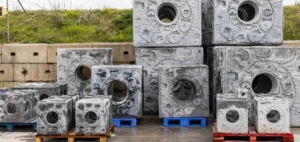
RWE and TotalEnergies will install 66 Reef cubes® around the foundations of 11 turbines at the OranjeWind wind farm, marking one of the largest applications of artificial reefs in the North Sea.
Swedish energy group Vattenfall introduces "Rewind", an interactive platform designed to commercially repurpose technical parts from dismantled wind turbines.
The rapid growth of onshore wind in Southeast Asia is at risk due to inflexible public policies and inadequate power transmission infrastructure.
Enefit Green has sold its only wind farm in Finland to Canadian fund TD Greystone Infrastructure Fund, refocusing operations on the Baltic states and Poland in a regional concentration strategy.
McDonald’s UK commits to purchasing all electricity from the Douglas West Extension Wind Farm, a 66 MW project developed by Capital Dynamics in Scotland, under a long-term agreement managed by ENGIE.
Swedish developer OX2 acquires three onshore wind projects totalling 235 MW in Romania, pushing its portfolio beyond 1.1 GW in a rapidly growing market.
Danish group Vestas is expanding its blade plant in Poland and creating more than 300 jobs to supply turbines to Germany, the leading onshore wind market in Europe.

All the latest energy news, all the time

Annual subscription

8.25$/month*

*billed annually at 99$/year for the first year then 149,00$/year ​

Unlimited access - Archives included - Pro invoice

Monthly subscription

Unlimited access • Archives included

5.2$/month*
then 14.90$ per month thereafter

*Prices shown are exclusive of VAT, which may vary according to your location or professional status.

Since 2021: 30,000 articles - +150 analyses/week.