IEA: Global Renewable Capacity Could Triple by 2030 with Support from the South

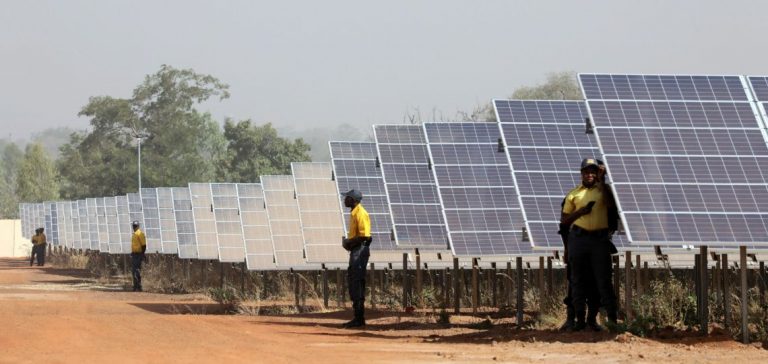
According to the International Energy Agency, the world can triple its renewable energy capacities by 2030 if increased support is provided to developing countries, particularly in Africa and Southeast Asia.

Share:

Comprehensive energy news coverage, updated nonstop

Annual subscription

8.25$/month*

*billed annually at 99$/year for the first year then 149,00$/year ​

Unlimited access • Archives included • Professional invoice

OTHER ACCESS OPTIONS

Monthly subscription

Unlimited access • Archives included

5.2$/month*
then 14.90$ per month thereafter

FREE ACCOUNT

3 articles offered per month

FREE

*Prices are excluding VAT, which may vary depending on your location or professional status

Since 2021: 35,000 articles • 150+ analyses per week

The International Energy Agency (IEA) announced on Wednesday that the goal set at the Conference of the Parties (COP28) to triple global renewable energy capacities by 2030 is within reach. This ambition particularly relies on supporting the development of renewable energies in the Global South, specifically in Africa and Southeast Asia.

Nearly 70 countries, collectively representing 80% of the world’s renewable energy capacity, are on the verge of reaching or exceeding their current renewable energy targets for 2030, according to the IEA’s annual report “Renewables 2024.” However, this progress is not entirely aligned with the tripling objective set during COP28, but the agency remains optimistic about achieving it if governments seize short-term action opportunities.

Growth of Renewable Energies

Global renewable energy capacity is expected to reach 2.7 times its 2022 level by 2030. Photovoltaic solar power alone is projected to account for 80% of this growth, while wind energy is expected to double its expansion rate between 2024 and 2030 compared to the 2017-2023 period. These figures illustrate a strong dynamic in the renewable sector, driven by massive investments and a continuous decrease in production costs.

China in the Lead

Geographically, China is expected to account for nearly 60% of all installed renewable capacities worldwide by 2030, housing nearly half of the world’s total renewable energy capacity, compared to one-third in 2010. This dominant position of China underscores the importance of its energy policies in the global transition towards more sustainable energy sources.

Challenges of Renewable Fuels

Despite these advancements, renewable fuels such as biofuels and hydrogen are significantly lagging. The IEA emphasizes the need for dedicated political support to decarbonize sectors that are difficult to electrify. These alternative energies are essential to achieving the most ambitious climate goals, notably limiting global warming to +1.5°C by 2050, in accordance with the Paris Agreement.

Renewables, a Cost-Effective Option

The rapid deployment of renewable energies is also facilitated by their economic competitiveness. Fatih Birol, Director General of the IEA, stated that renewables are currently the cheapest option to add new power plants in almost every country in the world. By 2030, the world is expected to add over 5,500 gigawatts of renewable energy capacity, equivalent to the current capacity of China, the European Union, India, and the United States combined.

Strengthening Climate Goals

To achieve the tripling of renewable capacities, states will need to be more bold in their enhanced climate targets, known as Nationally Determined Contributions (NDCs), which they are required to present by 2025 under the Paris Agreement. The IEA also recommends strengthening international cooperation to reduce the financing costs of renewables, which are high in emerging and developing economies and hinder their growth in high-potential regions such as Africa and Southeast Asia.

Integration and Flexibility of Energy Systems

The agency highlights the importance of effectively integrating photovoltaic solar power and wind energy into national electrical systems. This will require greater flexibility of the grids and an increase in storage capacities, particularly through batteries. This integration is crucial to stabilize electricity supply and maximize the use of renewable energies.

The think tank Ember commented that the growth observed in renewable energies so far is just the beginning. The market can meet the needs of renewable energies, and governments must now prioritize investments in storage, networks, and other forms of clean flexibility to enable this transformation, it stated in a comment submitted to AFP.
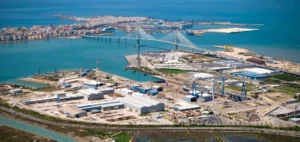
Un terminal portuaire en Espagne alliera réfrigération industrielle haute performance et production solaire pour optimiser les coûts énergétiques et les capacités logistiques de PTP Ibérica, avec un démarrage prévu d’ici mi-2026.
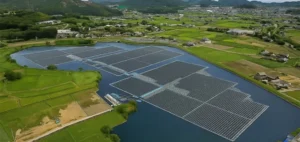
Toshiba’s subsidiary commits to acquiring non-fossil certificates from a floating solar power plant operated by OTS in Japan, under a virtual power purchase agreement coordinated by Digital Grid.
Terra-Gen has closed $383.3mn in financing for the construction of its Lockhart III and IV solar units, adding 205 MW to California’s grid with commercial operations expected in 2026.
US developer Ecoplexus has closed a $300mn financing deal with KKR and SMBC to support over 13GW of solar and storage projects under development across the country.
EDP will supply 30% of Carrefour Polska’s energy needs through a PPA combining solar and wind, marking a step forward in the development of renewable capacity in Poland.
French public funding will support the construction of ten solar power plants with storage in Mauritania, as the country works to expand its grid to reach universal electricity access by 2030.
Recurrent Energy has received authorisation to develop Tillbridge, a hybrid 1.3 GW solar and battery project in England, strengthening its expansion strategy in the UK market.
Le Koweït a publié une demande de propositions pour la construction d'une centrale solaire de 500 MW, dont l’électricité sera injectée dans le réseau national sur la base d’un contrat de rachat de 30 ans.
Mori Building has completed three solar-plus-storage plants in Japan to supply its real estate assets through an intra-group partnership structured by TEPCO Energy Partner.
Japanese grid operator OCCTO allocated 75.4MWAC in its third solar auction for FY2025, with an average feed-in-premium price of 7.13 yen per kWh, marking a session that fell short of initial subscription targets.
Octillion has fully converted its electric vehicle battery production facility in Pune to solar power, initiating the rollout of an energy strategy aimed at achieving energy autonomy for all its India-based operations by 2027.
Westbridge Renewable Energy has secured final regulatory approval in Alberta for its Dolcy Solar project, marking the last step before construction can begin.
Chinese firm Sunman will build Australia’s largest solar module plant in the Hunter Valley, backed by AUD171 mn ($111.92 mn) in public funding.
Botswana has concluded a series of energy agreements with Omani public investors, including the development of a 500 MW solar power plant and projects in fuel storage and petroleum trading.
With 16.8 MWp of capacity, the Triticum plant in Bavaria marks a strategic investment for MaxSolar, strengthening the agrivoltaic model in the German energy landscape.
Greencells has signed a partnership with Belgian company 3E to transfer over 3 GW of solar and storage capacity to SynaptiQ, a central monitoring and analytics platform.
Spanish group Grenergy has signed an agreement to sell seven solar projects with a total capacity of 88 MW to Ecopetrol, as part of its asset rotation strategy.
Zenith Energy has launched a tender for the construction of three solar plants totalling 7 MWp in Italy, with expected bank financing covering up to 90% of costs.
JA Solar unveils a pioneering white paper on photovoltaic systems in arid regions, with a module designed to withstand extreme desert conditions and improve long-term energy yield.
Shikoku Electric Power lowers its acquisition threshold for solar projects to 500kWAC and calls for proposals to develop floating plants on reservoirs of at least 15,000m².

All the latest energy news, all the time

Annual subscription

8.25$/month*

*billed annually at 99$/year for the first year then 149,00$/year ​

Unlimited access - Archives included - Pro invoice

Monthly subscription

Unlimited access • Archives included

5.2$/month*
then 14.90$ per month thereafter

*Prices shown are exclusive of VAT, which may vary according to your location or professional status.

Since 2021: 30,000 articles - +150 analyses/week.